
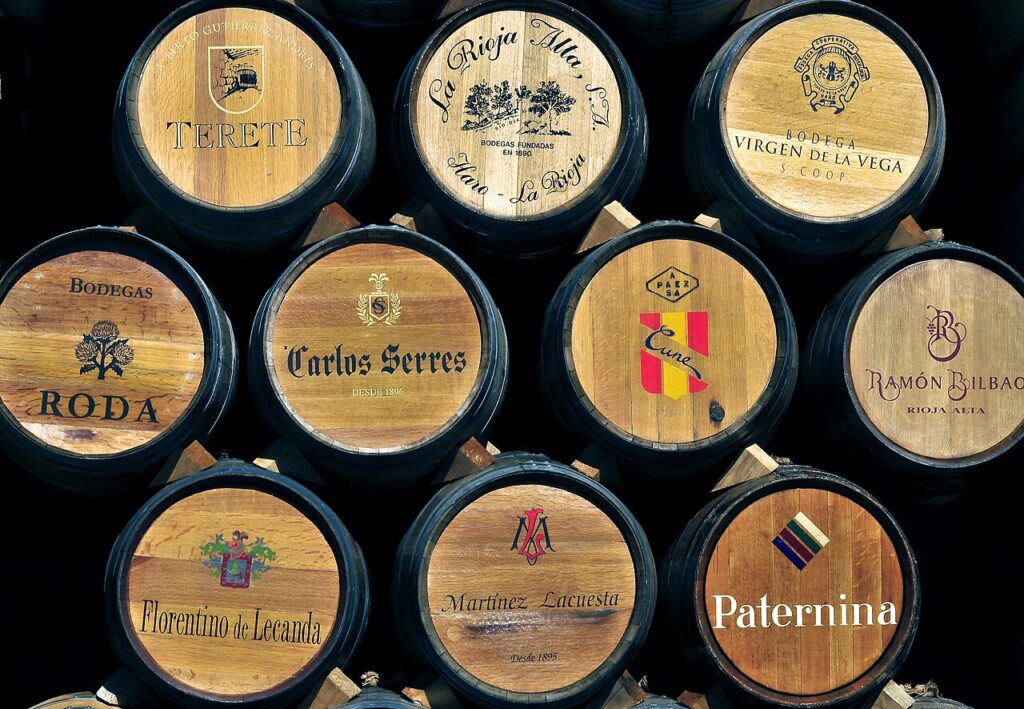
La Rioja produces Spain’s most celebrated red wine, but the region itself remains refreshingly unpolished. Between the Ebro River valley and the Sierra de Cantabria mountains, you’ll find stone villages barely touched by tourism, family-run bodegas pouring wines their great-grandparents planted, and tapas bars where a glass of crianza comes with a plate of chorizo al vino or patatas bravas—no charge.
The wine triangle of Haro, Logroño, and Laguardia anchors the region, each town offering a different slice of Rioja culture. You don’t need to book exclusive tastings or speak fluent Spanish. You just need to show up hungry.
Haro: The Traditional Heart
Haro feels like Rioja before the world discovered it. The compact old town centers on Plaza de la Paz, where locals gather at outdoor tables beneath plane trees, and the Barrio de la Estación—the train station quarter—holds the region’s most storied bodegas.
Walk down Avenida de Bretón de los Herreros and you’ll pass López de Heredia, Muga, CVNE, and Roda, all within a few blocks. López de Heredia offers the most atmospheric tours—their century-old cellars look like wine cathedrals, with dusty bottles stacked to vaulted ceilings. Book ahead, especially in fall harvest season.
For eating, skip the plaza restaurants and head to Calle Laurel—wait, wrong city. In Haro, it’s Calle Santo Tomás and the streets around Plaza de la Paz where you’ll find Bar Beethoven (classic tortilla, great house red) and Mesón Los Caballeros (grilled mushrooms with jamón). The local specialty is patatas a la riojana, a paprika-laced potato stew that soaks up wine beautifully.
Logroño: Pintxos and Young Rioja
Logroño is bigger, livelier, and home to Spain’s best wine-bar street outside San Sebastián. Calle Laurel and neighboring Calle San Juan pack more than fifty bars into four blocks, each specializing in one or two pintxos they’ve perfected over decades.
Start at Bar Soriano (Travesía de Laurel 2) for their legendary champis—mushrooms sautéed with garlic and jamón, served on bread, paired with a cold glass of young Rioja. Move to Blanco y Negro for their pincho de txistorra, then Jubera for stuffed piquillo peppers. The rhythm is simple: one drink, one pintxo, then move to the next bar. By 10 p.m. on weekends, Calle Laurel becomes shoulder-to-shoulder, glasses clinking, everyone grazing.
If you want to visit bodegas near Logroño, Marqués de Murrieta and Ontañón both offer excellent tours within a short taxi ride. Marqués de Murrieta’s nineteenth-century estate is particularly beautiful, with manicured gardens and a tasting room overlooking the vineyards.
Laguardia: Medieval Walls and Underground Cellars
Laguardia sits on a hilltop in Rioja Alavesa, the Basque province slice of the wine region. The entire medieval town is encircled by walls, and beneath the cobblestone streets run hundreds of private wine cellars—nearly every family has one.
Park outside the walls and walk through the Santa Engracia gate. The main street, Calle Mayor, is lined with small wine shops and restaurants. Stop at El Fabulista (Calle Mayor 44) for local cheese and sliced Ibérico, paired with wines from small producers you won’t find elsewhere.
For bodega visits, head just outside town to Ysios or Bodegas Eguren Ugarte. Ysios, designed by Santiago Calatrava, looks like a wave of aluminum rolling across the vineyards—architecture-forward but the wines are serious. Eguren Ugarte is family-run, more intimate, and their tastings include olives and almonds from their own estate.
Stay for sunset. The views from the northern wall over vine-covered hills and the Cantabria mountains are among the finest in Spain.
When to Visit and How to Get Around
September and October bring the vendimia—harvest season—when the entire region smells like fermenting grapes and bodegas run at full tilt. Spring is quieter, greener, and just as beautiful. Summer gets hot, but the thick-walled wine cellars stay cool.
Logroño has train connections to Madrid (four hours) and Bilbao (two and a half hours). From Logroño, you can reach Haro by bus in about an hour, but renting a car unlocks the region—you can visit hillside bodegas, stop in tiny villages like San Vicente de la Sonsierra, and drive the winding roads through Rioja Alavesa.
If you’re not driving, focus on Logroño’s Calle Laurel, book a bodega tour within walking distance or a short taxi ride, and save the smaller wine towns for a future trip with wheels.
What to Drink and What to Skip
Don’t get caught up in prestige labels. Some of the best wines in Rioja come from small producers you’ve never heard of, sold by the glass in neighborhood bars for three euros. Ask for a crianza (aged two years, one in oak) if you want balance and drinkability, or a reserva (three years, one in oak) if you want more structure.
Pair reds with everything—Rioja’s food is built around its wine. The local dish, chuletillas al sarmiento (lamb chops grilled over vine cuttings), is smoky, fatty, and made for a glass of reserva. You’ll also find pochas con chorizo (white beans with sausage), bacalao a la riojana (salt cod in red pepper sauce), and plenty of jamón.
White Rioja is underrated—look for viura-based whites, either young and citrusy or barrel-aged and richer. They’re perfect with the region’s piquillo peppers and fresh cheese.
Want more Spanish wine country, hidden tapas streets, and insider routes? Subscribe to the Love Spain newsletter and get one short story a day—the Spain beyond the guidebooks, straight to your inbox.
Tours & experiences in Spain


Powered by Viator. Some links are affiliate links — we may earn a small commission at no extra cost to you.