
Spain‘s train network is one of Europe’s best-kept secrets. The high-speed AVE system connects major cities in hours, while regional trains wind through mountains, vineyards, and coastal villages at a slower, more scenic pace. Whether you’re racing from Madrid to Barcelona or taking the long way through Andalusia, trains offer comfort, reliability, and views you’d miss from the highway.
Here’s what you need to know to navigate Spain by rail—from booking tickets to choosing the right routes.
The High-Speed AVE: Fast and Efficient
Spain’s AVE (Alta Velocidad Española) trains are sleek, punctual, and surprisingly affordable if you book ahead. The flagship route runs from Madrid to Barcelona in under three hours, cutting through Zaragoza with minimal stops. It’s faster than flying once you factor in airport security and transfers, and you arrive at Sants station right in the city.
The Madrid-Seville route is equally impressive—two and a half hours through the flat plains of Castile and Extremadura. You’ll leave Atocha station in central Madrid and arrive at Santa Justa in Seville, a short walk from the old Jewish Quarter and the cathedral.
Other key AVE routes include Madrid to Valencia (one hour forty minutes), Madrid to Málaga (under three hours), and Barcelona to Valencia (three hours along the coast). All AVE trains offer assigned seating, power outlets, and a café car. Book through Renfe, Spain’s national rail operator, at least two weeks ahead for the best fares—sometimes as low as €25 one-way.
Regional Trains: The Scenic Routes
Not every trip demands high speed. Spain’s regional trains—called Media Distancia and Cercanías—serve smaller cities and coastal towns at a fraction of the cost. The Cercanías network around Madrid, Barcelona, and Valencia functions like commuter rail, perfect for day trips to Toledo, Sitges, or Sagunto.
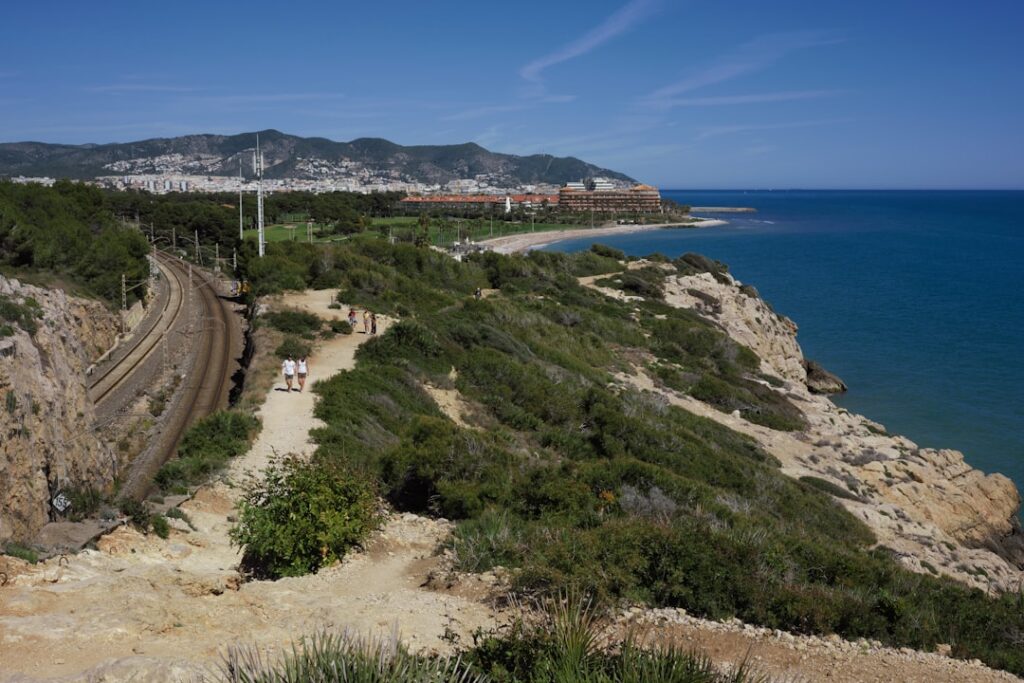
The coastal route from Barcelona to the French border hugs the Mediterranean through towns like Blanes, Calella, and Figueres. It’s slower than the highway but rewards you with sea views and easy beach access. In Andalusia, the regional line from Málaga to Fuengirola runs every twenty minutes and stops at beach towns along the Costa del Sol.
One standout is the narrow-gauge FEVE line across northern Spain, connecting Bilbao, Santander, and Oviedo through the Basque Country and Asturias. It’s slower—sometimes much slower—but the mountain and coastline views are unmatched. Perfect if you’re in no rush.
Booking Tickets and Navigating Stations
Renfe’s website and app are where you’ll book most tickets. Create an account, search routes, and download tickets to your phone—no need to print. For high-speed trains, book early; for regional trains, you can often buy tickets the same day at station kiosks or windows.
Spain’s major train stations are well-signed and easy to navigate. Madrid’s Atocha is a landmark in itself, with a tropical garden inside the old terminal. Barcelona’s Sants is modern and connected to the metro. Seville’s Santa Justa and Valencia’s Joaquín Sorolla are smaller but equally efficient.
Arrive fifteen minutes early for AVE trains—there’s a security check and bag scan before you board. Regional trains are more relaxed; just find your platform and hop on. Most stations have luggage storage (consigna) if you want to explore a city between connections.
Insider Tips for Train Travel in Spain
Renfe offers discounts for travelers under thirty and over sixty, as well as round-trip fares that beat two one-ways. If you’re planning multiple long-distance trips, check the Spain Pass, which offers flexible days of travel over a month.
First class on AVE trains (called Preferente) isn’t much more expensive and includes larger seats, complimentary drinks, and a quieter car. Worth it on longer routes like Madrid to Galicia or Barcelona to Málaga.
Spain’s train schedules are generally reliable, but summer delays can happen on regional lines. Always check Renfe’s live departure boards or app before heading to the station. And if you’re traveling in July or August, book AVE tickets well in advance—popular routes sell out fast.
One more tip: Spanish trains don’t announce every stop clearly, so keep an eye on the digital displays or set a phone alert. Missing your stop in a small town means waiting an hour for the next train back.
Spain’s trains connect you to the country in a way flying never will—watching the landscape shift from arid plains to green mountains to golden coast, all from a comfortable seat with a café con leche in hand. It’s the way locals travel, and once you try it, you won’t want to rent a car.
Want more insider guides to traveling Spain? Subscribe to the Love Spain newsletter—one short story a day, straight to your inbox.
Tours & experiences in Spain


Powered by Viator. Some links are affiliate links — we may earn a small commission at no extra cost to you.