
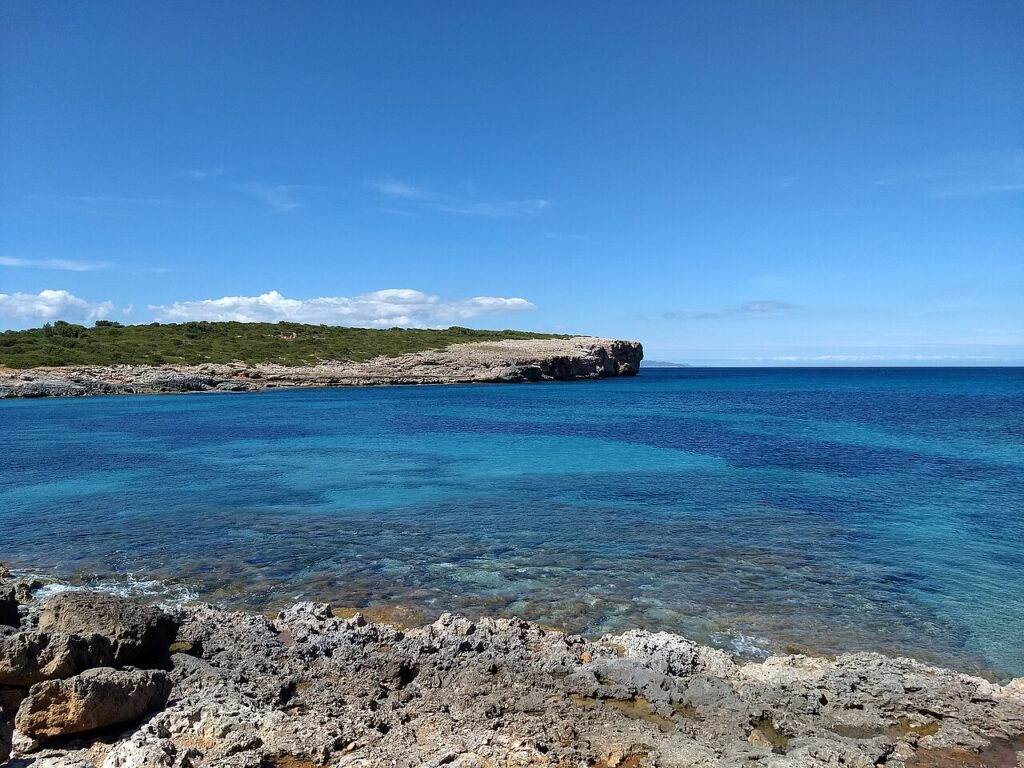
Mallorca has more than 250 beaches, ranging from packed resort strips to hidden rocky coves you’ll have almost to yourself. The island’s coastline runs 550 kilometers around pine-covered hills, limestone cliffs, and turquoise water that stays warm from June through October.
Forget the generic “best beaches” lists. Here’s where to actually swim, depending on what kind of day you want.
For Families: Alcúdia and Pollença
The northeast coast between Port d’Alcúdia and Port de Pollença offers the island’s calmest, shallowest water. Platja d’Alcúdia stretches for seven kilometers with fine white sand and water that stays knee-deep for 30 meters out — ideal if you’re traveling with small children.
The beach is backed by a promenade lined with cafés and ice cream stands. Parking is easy at the southern end near the yacht club, and you’ll find clean public bathrooms and showers every few hundred meters.
Platja de Muro, just south, is quieter and equally shallow. The section near Es Braç restaurant has almost no development behind it, just dunes and pine trees.
For Clear Water and Snorkeling: The East Coast
Cala Mondragó, inside a protected natural park on the southeast coast, has two beaches separated by a rocky headland. Both offer clear water over seagrass beds where you’ll see fish even in waist-deep water. The larger beach, S’Amarador, has a beach bar and lounger rentals. The smaller one, Cala Mondragó itself, is rockier but better for snorkeling along the left side.
Park at the lot off the Ma-19 near S’Alqueria Blanca (€6 for the day) and walk 15 minutes through pines. Arrive before 11 a.m. in July and August or you’ll circle for an hour looking for a spot.
Cala Varques, further north near Porto Cristo, requires a 20-minute walk from the nearest road but rewards you with transparent water and a cave you can swim into at the beach’s north end. No facilities, so bring everything you need.
For Drama: The Northwest Coast
The beaches along the Serra de Tramuntana aren’t always the easiest to reach, but the mountain backdrop makes them worth it. Cala Deià is a mix of pebbles and rocks at the bottom of a steep valley, with a couple of beach shacks serving grilled fish and cold beer. The water drops off quickly and stays cool even in August — serious swimmers love it.
Park at the top of the access road and walk down (15 minutes, steep). Get there early; parking fills by 10 a.m. and locals are ruthless about blocking in cars that park badly.
Sa Calobra, further north, is the island’s most dramatic beach: a small cove where the Torrent de Pareis canyon meets the sea, flanked by 200-meter cliffs. It’s mobbed with day-trippers who arrive by tour boat, but if you drive down before 9 a.m. or after 5 p.m., you’ll have the place nearly empty. The road is 12 kilometers of hairpin turns — not for nervous drivers.
For a Long Walk: Es Trenc
Es Trenc is Mallorca’s longest natural beach: three kilometers of white sand and shallow turquoise water backed by dunes and salt flats. It’s protected from development, so there are no high-rises, just a few seasonal chiringuitos serving pa amb oli and beer.
The western end near Ses Covetes gets crowded. For space, park at one of the lots further east along the access road and walk. The beach widens as you go, and past the third beach bar you’ll find long stretches with just a few umbrellas.
Wind picks up in the afternoon, which clears out the crowds but kicks up sand. Morning is calmer.
For Sunset: Cala Conta (Ibiza Transplants, Look Away)
On the southwest coast near Sant Josep, Cala Comte offers three small beaches facing west, with views across to the islands of S’Espartar and Es Bosc. The water glows every shade of blue depending on the depth, and the sunset crowd gathers at Sunset Ashram, the beach club on the rocks above the middle beach.
Arrive by 4 p.m. to claim a spot on the sand, or book a table at the club if you want a front-row seat with a drink in hand. Parking is tight — expect to walk 10 minutes from wherever you find a spot along the access road.
When to Go
Water temperature hits 22°C by late May and stays above 20°C through October. July and August bring the warmest water (26°C) and the biggest crowds. June and September offer a better balance: warm enough to swim all day, fewer people, and cheaper accommodation.
Beaches on the east coast get morning sun and calm water; western beaches are better for afternoons and sunsets but can be choppy when the wind picks up.
Want more stories like this in your inbox? Subscribe to the Love Spain newsletter — one short story a day about the Spain you came to find.
Tours & experiences in Spain


Powered by Viator. Some links are affiliate links — we may earn a small commission at no extra cost to you.