Flamenco is not a dance with a guitar behind it — the song came first, and for purists the voice remains the heart of the whole art. A singer, a guitarist and a pair of hands clapping intricate rhythm can make a complete performance with no dancer in sight at all. In 2010 UNESCO inscribed flamenco on its Representative List of the Intangible Cultural Heritage of Humanity, recognising something Andalusians had known for two centuries. This is Guide № 008 in The Love Spain Guide series.
Get the Full Collectible Guide (Free PDF)
Flamenco — in a beautifully designed, printable booklet. The Love Spain Guide № 008.
The Three Pillars: Cante, Toque and Baile
Flamenco rests on three elements. Cante is the song, traditionally considered the oldest and most important part; toque is the guitar playing; and baile is the dance that most foreign audiences come for. Binding them together is the compás, the rhythmic cycle, which performers mark with palmas (precise handclapping) and jaleo — the shouts of “olé”, “vamos” and “así se canta” that are not crowd noise but part of the performance, timed to lift the artist.
A good flamenco evening is improvised within strict limits. The singer and guitarist watch the dancer for cues; the dancer calls a llamada to signal a change; nothing is fully choreographed in the traditional setting. That tension between rigid rhythmic rules and spontaneous expression is what practitioners mean by duende — a term the poet Federico García Lorca explored in a famous 1933 lecture, describing it as a kind of dark, earthbound emotional force rather than mere technical skill.
Where It Actually Came From
Flamenco is Andalusian, not generically Spanish. It took shape in the south — in the triangle between Seville, Cádiz and the towns of Jerez de la Frontera and Morón — and emerged as a recognisable art form around the late 18th and early 19th centuries. Its development is usually credited to the region’s Romani (gitano) communities, drawing on a mix of Andalusian, and, as is commonly argued, Moorish and Sephardic Jewish musical traditions layered over centuries.
The commercial stage came later. Through the mid-19th century, flamenco moved into cafés cantantes, paying venues where singers and dancers performed for an audience, which helped professionalise the art and spread it beyond family gatherings. The origin of the word “flamenco” itself is genuinely disputed — theories link it to the Flemish, to a corruption of an Arabic phrase, or to the flamingo bird — and no explanation is settled.
The Palos: Flamenco’s Many Forms
Flamenco is not one thing but a family of forms called palos, of which there are more than fifty. Each has its own rhythmic pattern, mood and often its own geographic home: the soleá is solemn and twelve-beat; the bulería is fast and festive; the alegrías comes from Cádiz and is bright in tone; the seguiriya is among the most anguished. The deepest and most serious of these, including the seguiriya and soleá, are grouped as cante jondo, or “deep song”.
The twelve-beat compás of the soleá, bulería and alegrías is the detail that trips up most newcomers. The cycle carries accents on specific beats — commonly counted on 3, 6, 8, 10 and 12 — so the “one” you want to clap on is rarely where an untrained ear expects it. This is why sitting in on a class or a peña (a members’ flamenco club) is so revealing: the rhythm is a language before it is a feeling.
The Guitar, the Cajón and the Feet
A flamenco guitar is not simply a classical guitar played faster. It is lighter, with a lower string action for a percussive attack, and it carries a golpeador — a tap plate protecting the soundboard from the golpe, the rhythmic finger-tapping. Techniques such as rasgueado (rolling strums), picado (fast single-note runs) and alzapúa (thumb work) are specific to the tradition. The guitarist Paco de Lucía, from Algeciras, reshaped the instrument’s role from the 1970s onward and is widely credited with introducing the Peruvian cajón box drum into flamenco after a trip to Peru — it is now a fixture.
In the dance, the feet do the percussion. Zapateado — the hammered footwork in nailed shoes — functions as another instrument in the ensemble, not just decoration. Women’s dance often features the bata de cola (a dress with a long weighted train) and the mantón (a large fringed shawl), both handled as part of the movement. Hand and arm work, the braceo and floreo, matter as much as the feet.
Where to See It Done Properly
Today’s successor to the café cantante is the tablao. In Madrid, Corral de la Morería opened in 1956 and bills itself as the oldest flamenco tablao; its separate restaurant has held a Michelin star since 2018. In Barcelona, Tablao Cordobés has run shows on La Rambla since 1970. For context and daytime visits, the Museo del Baile Flamenco in Seville — founded by the dancer Cristina Hoyos in 2006 — combines exhibits with a nightly patio performance.
The festivals are where the art is at its most serious. The Bienal de Flamenco in Seville, running since 1980, is the field’s largest gathering and is held in even-numbered years across the city’s major theatres. The Festival de Jerez, in late winter, concentrates on dance and courses. Further east, the Festival Internacional del Cante de las Minas in La Unión, Murcia, has run since 1961 and awards the Lámpara Minera, the most coveted prize in flamenco singing. Beyond these, Granada’s Sacromonte caves and the towns of Jerez and Cádiz remain the places where flamenco lives outside the ticketed stage.
Myths Worth Retiring
Myth: Castanets are essential to flamenco. Fact: Most professional flamenco dancers do not use castanets at all. The hands, the fingers, the footwork and palmas carry the rhythm; castanets (palillos) appear in some pieces but are far from a requirement, and plenty of the greatest bailaores never touch them.
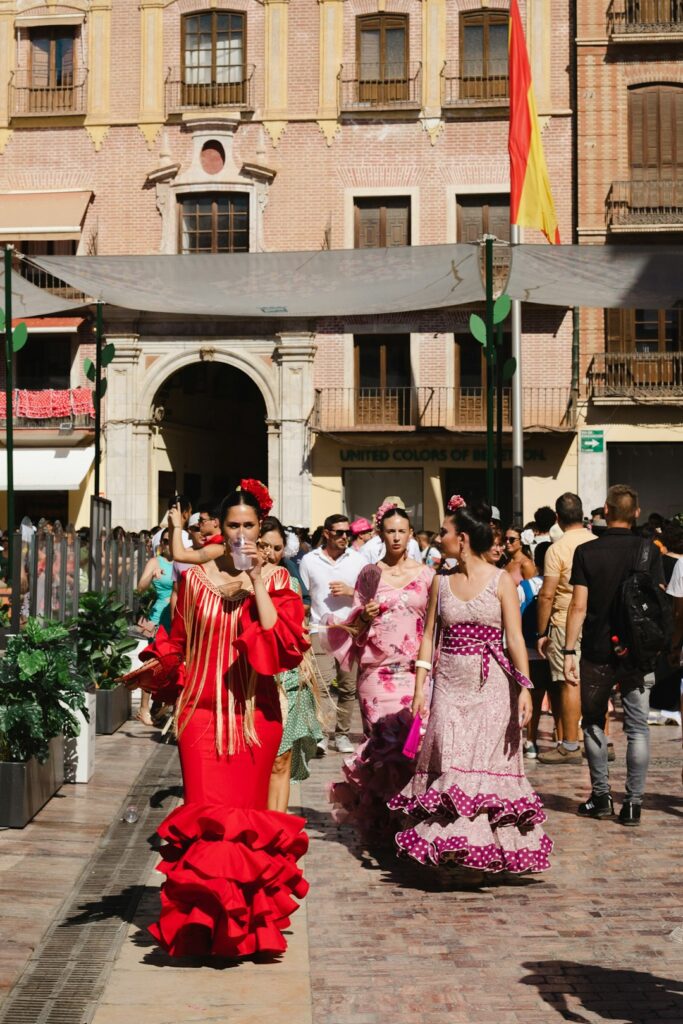
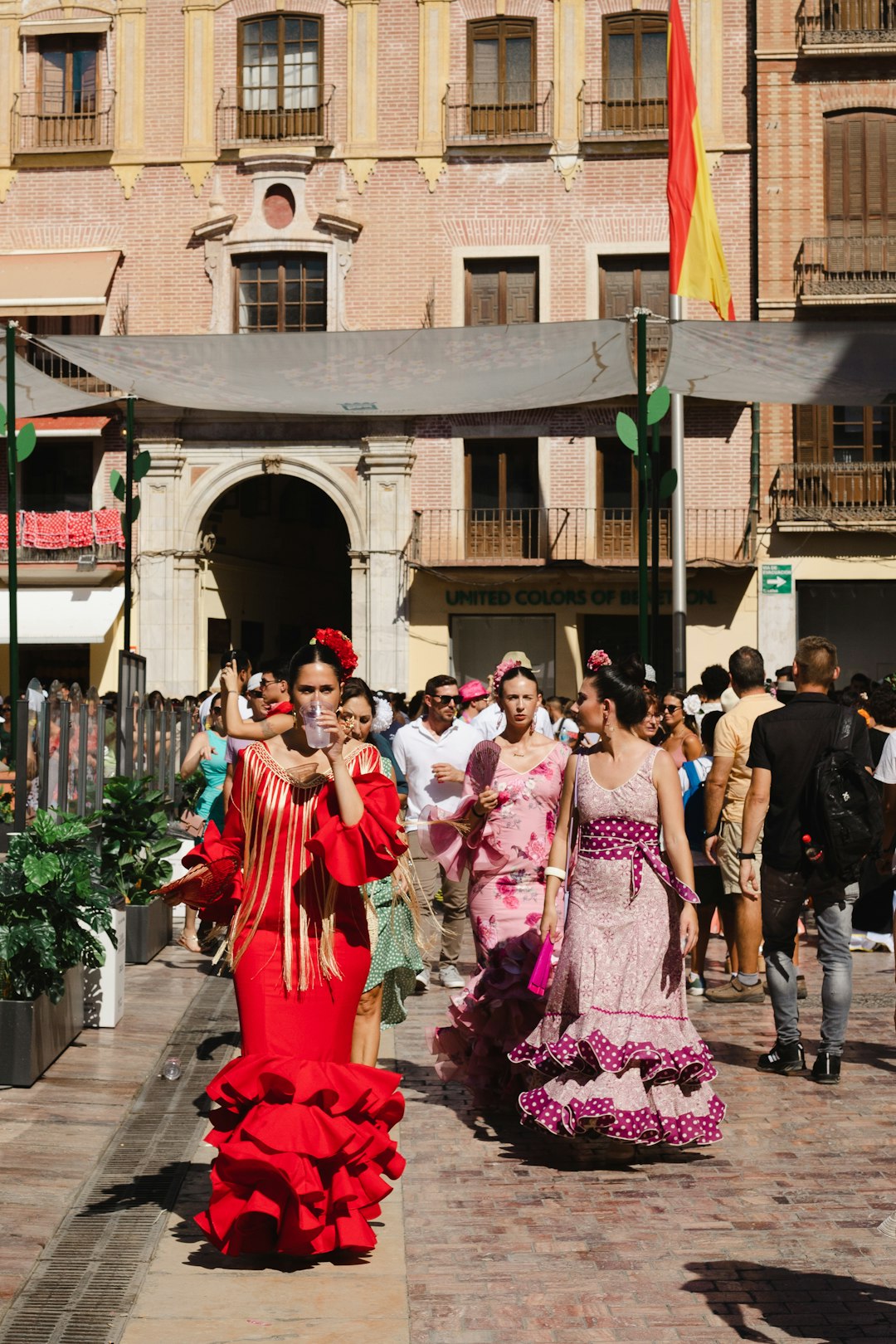
Myth: The polka-dot dress at the Seville fair is a flamenco costume. Fact: The traje de flamenca worn at the Feria de Abril is folk dress for dancing sevillanas, a social folk dance that is related to but technically distinct from flamenco proper. Professional flamenco performance costume is a different thing.
Myth: Flamenco is Spain’s national dance, from all over the country. Fact: It is specifically Andalusian in origin, rooted in the south and in Romani culture, and only became a national and international symbol much later.
Frequently Asked Questions
Do I need to understand Spanish to enjoy flamenco?
No. The lyrics of cante jondo are often fragmentary and hard even for native speakers to catch, delivered in a strained, ornamented voice. The emotional content carries through the delivery, the guitar and the body. Reading a short note on the palo being performed beforehand adds more than translating every word would.
When is the best time of year to see it?
Tablaos run year-round, so any visit works. If you want the major events, aim for the Festival de Jerez in late winter (February–March), the summer festivals including Cante de las Minas in late July and early August, and, in even-numbered years, the Bienal in Seville across September.
Is it rude to clap or shout during a performance?
The opposite — timed jaleo is encouraged and expected. The etiquette is restraint over volume: hold applause during a quiet cante, never clap over the singer’s phrasing, and avoid clapping along unless you can hold the compás, since mistimed palmas disrupt the performers. When in doubt, follow the regulars in the room.
More The Love Spain Guides
The Love Spain Guide is a numbered series — one tightly focused subject at a time, each with its own downloadable collectible edition. Guide № 001 is Jamón Ibérico, Guide № 002 is La Tomatina, Guide № 003 is The Fan (Abanico), Guide № 004 is Sangria, Guide № 005 is Tapas Bar Etiquette, Guide № 006 is Spanish Slang, Guide № 007 is Spanish Sherry, This is Guide № 008. More editions are on the way.
🇪🇸 Join Love Spain
Every week, get hidden stories, local secrets, and travel inspiration from people who live and love it.
Tours & experiences in Spain


Powered by Viator. Some links are affiliate links — we may earn a small commission at no extra cost to you.