The word itself gives away the origin: a tapa is a “lid,” and the most repeated story holds that bartenders once laid a slice of bread or cured ham across the mouth of a sherry glass to keep out dust and fruit flies between sips. Whether that exact tale is literal history or folklore, the verb tapar — to cover — is genuinely where the name comes from, and the ritual it describes still shapes how Spaniards drink and snack today. This is Guide № 005 in The Love Spain Guide series.
Get the Full Collectible Guide (Free PDF)
Tapas Bar Etiquette — in a beautifully designed, printable booklet. The Love Spain Guide № 005.
Where the Word Comes From
The Real Academia Española traces tapa to the sense of a cover or lid, and most etymological accounts link the food to the practice of covering a glass. Beyond the flies-and-dust version, other commonly told origins credit tavern keepers who served a bite of food to slow the effects of the wine, or a royal decree encouraging inns to serve something to eat alongside drink. We treat these as tradition rather than documented fact — what is certain is that “tapa” describes a format, not a single dish. Almost anything can be a tapa: olives, a wedge of tortilla, boquerones, a slice of chorizo, or a spoon of stew.
How Tapeo Actually Works
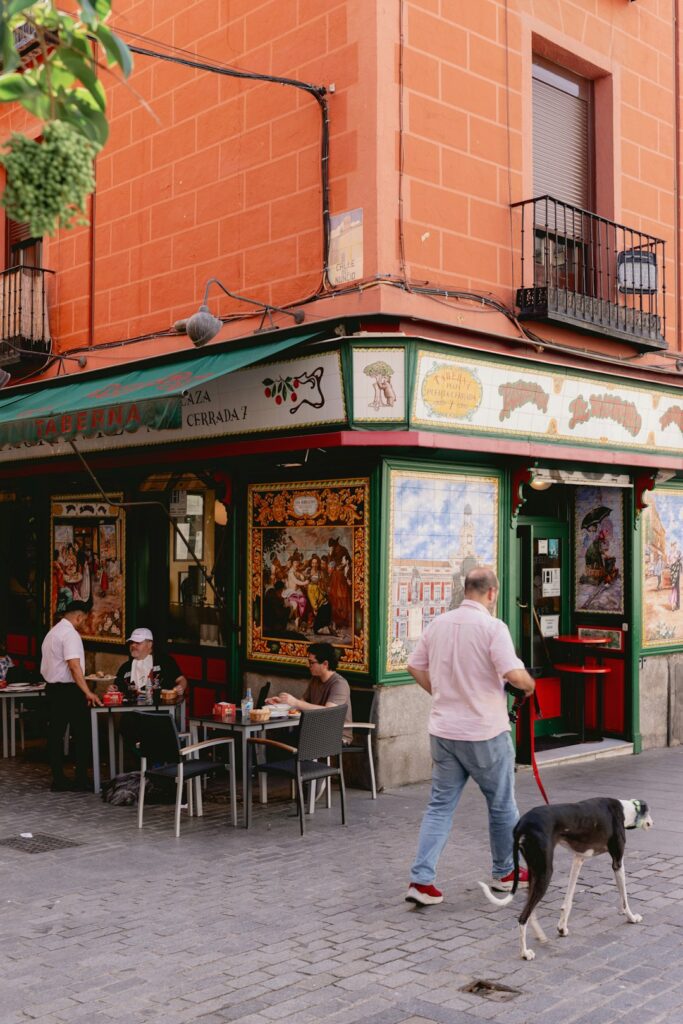
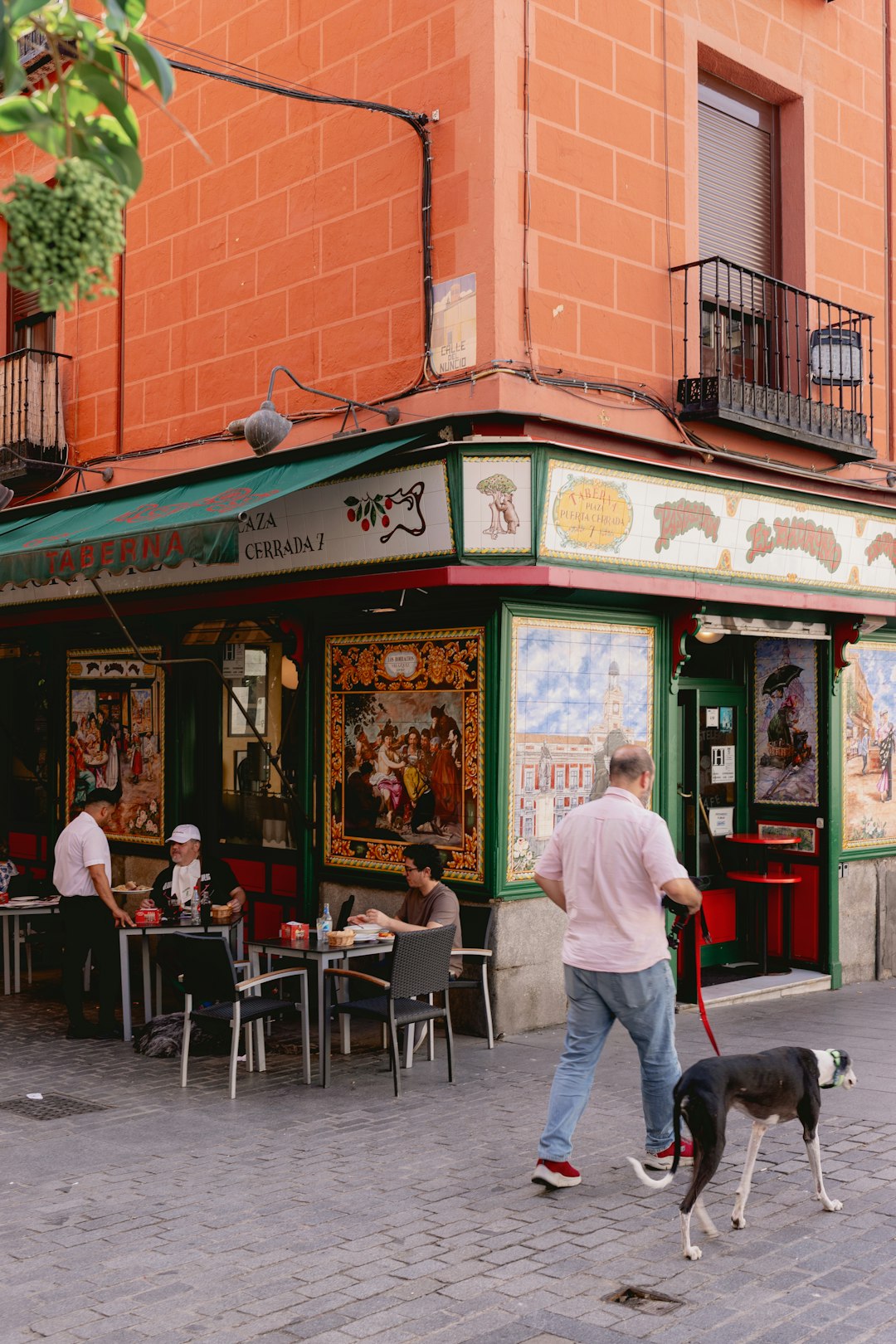
Going out for tapas is usually a moving feast. The phrase is ir de tapas or tapear: you have one drink and one small plate at a bar, then walk to the next, rather than settling in one place for a full meal. Portions come in three rough sizes — the small tapa, the larger ración meant for sharing, and the in-between media ración. Much of it happens standing at the bar, and in many places the counter price (precio de barra) is lower than sitting at a table or out on the terraza. Timing runs late by northern-European standards; the evening tapas hour rarely gets going before 8pm. Spain’s national tourism site covers regional variations for anyone planning a route.
Free Tapas — and Where You Actually Get Them
The idea that a tapa arrives free with every drink is true only in specific places. Granada is the city most associated with the custom, and it is widespread across parts of Andalusia as well as León, Jaén and Almería, where a caña or glass of wine typically comes with an unrequested small plate. In Madrid, Barcelona, Seville and most of the country, tapas are ordered and paid for like any other food. The regional tourism board for Andalusia is a reliable starting point for the free-tapa cities, several of which lean into the tradition as part of their appeal.
Pintxos: the Basque Variation
In the Basque Country and Navarre, the equivalent is the pintxo (Castilian pincho), named for the toothpick or small skewer that often holds a bite of food onto a slice of bread. Bars in San Sebastián and Bilbao line the counter with them, and the usual etiquette is to help yourself, keep the toothpicks, and hand them over at the end so the staff can count and total your bill on trust. The San Sebastián tourism office maps the busiest pintxo streets around the Parte Vieja, while the Basque Culinary Center documents the region’s outsized food culture.
What to Drink With It
Locals rarely reach for sangria. At the bar the default is a caña — a small draft beer, ordered small on purpose so it stays cold across a crawl — alongside wine, an increasingly popular glass of vermut (vermouth, often on tap before lunch), or a chilled sherry. Fino and manzanilla, the dry sherries from around Jerez and Sanlúcar, are a classic pairing and circle back to the drink that started the whole “lid” story; the Consejo Regulador of Jerez-Xérès-Sherry oversees the region’s wines. Ordering small and often is the point: the drink is a companion to the food and the walking, not the main event.
Bar-Counter Manners
A few unwritten rules smooth the experience. You generally order in rounds and pay at the end, not dish by dish, so keep a mental tally or let the bartender keep yours. Getting attention is direct but polite — a clear “oiga” or “perdona” rather than waving cash. The old sight of napkins and shrimp shells dropped on the floor once signalled a busy, popular bar, but many places now put out bins and ask you to use them, so follow the local cue. For a sense of the deep-rooted version of all this, Seville’s El Rinconcillo, open since 1670 and often described as the oldest tapas bar in the city, still chalks your running total straight onto the wooden counter.
Myths Worth Retiring
Myth: Tapas are always free. Fact: A complimentary tapa with your drink is a regional custom — strong in Granada, León and parts of Andalusia — not a nationwide rule. In most of Spain you order and pay for them.
Myth: “Tapas” is a type of food. Fact: It is a way of serving and eating — small portions, shared, on the move. The dishes themselves range from olives to tortilla to slow-cooked stews.
Myth: Sangria is the authentic tapas drink. Fact: Spaniards more often drink a small beer, wine, vermouth or dry sherry. Sangria is largely aimed at visitors and rarely seen at a local’s tapas counter.
Frequently Asked Questions
Do I need to tip at a tapas bar?
Tipping is not obligatory in Spain and staff are paid a regular wage. It is common to round up or leave the small coins from your change, especially after good service, but nobody expects a percentage-based tip on a round of drinks and tapas.
Should I stand at the bar or sit at a table?
Both are fine, but standing at the counter is the traditional way to tapear and is often the cheaper option, since many bars charge more for table or terrace service. If you plan to hop between several bars, the bar is where the atmosphere and the fastest service usually are.
How do I pay when I’m eating pintxos I picked up myself?
In the Basque Country you typically keep the toothpicks and skewers from each pintxo and hand them to the bartender at the end, who counts them to total your bill. It runs on trust, so keep your picks rather than discarding them, and pay before you leave for the next bar.
More The Love Spain Guides
The Love Spain Guide is a numbered series — one tightly focused subject at a time, each with its own downloadable collectible edition. Guide № 001 is Jamón Ibérico, Guide № 002 is La Tomatina, Guide № 003 is The Fan (Abanico), Guide № 004 is Sangria, This is Guide № 005. More editions are on the way.
🇪🇸 Join Love Spain
Every week, get hidden stories, local secrets, and travel inspiration from people who live and love it.
Tours & experiences in Spain


Powered by Viator. Some links are affiliate links — we may earn a small commission at no extra cost to you.