
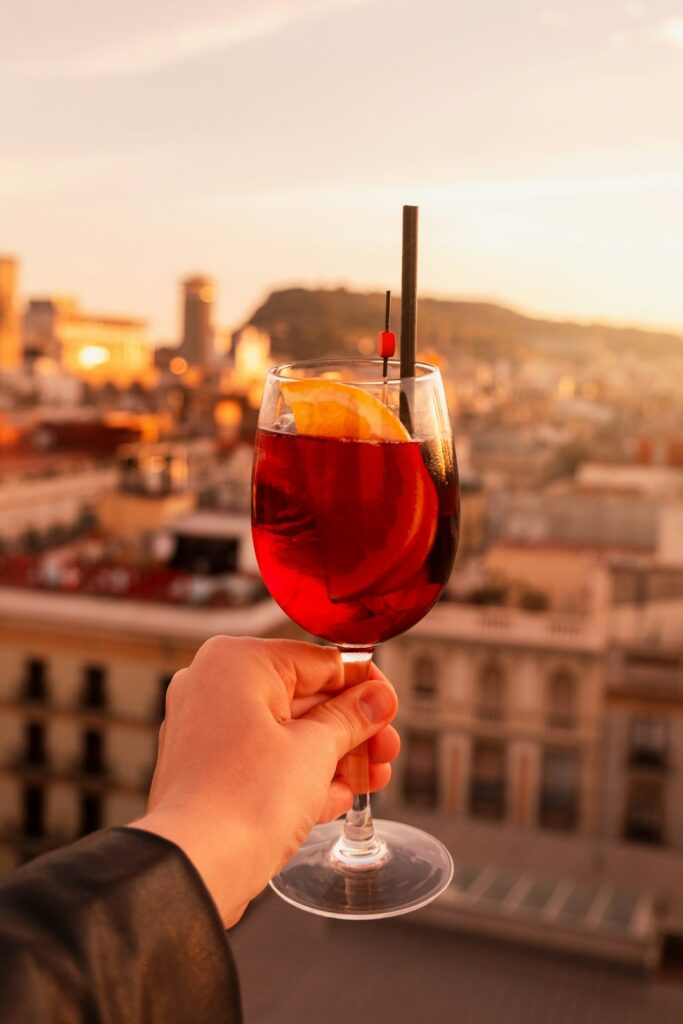
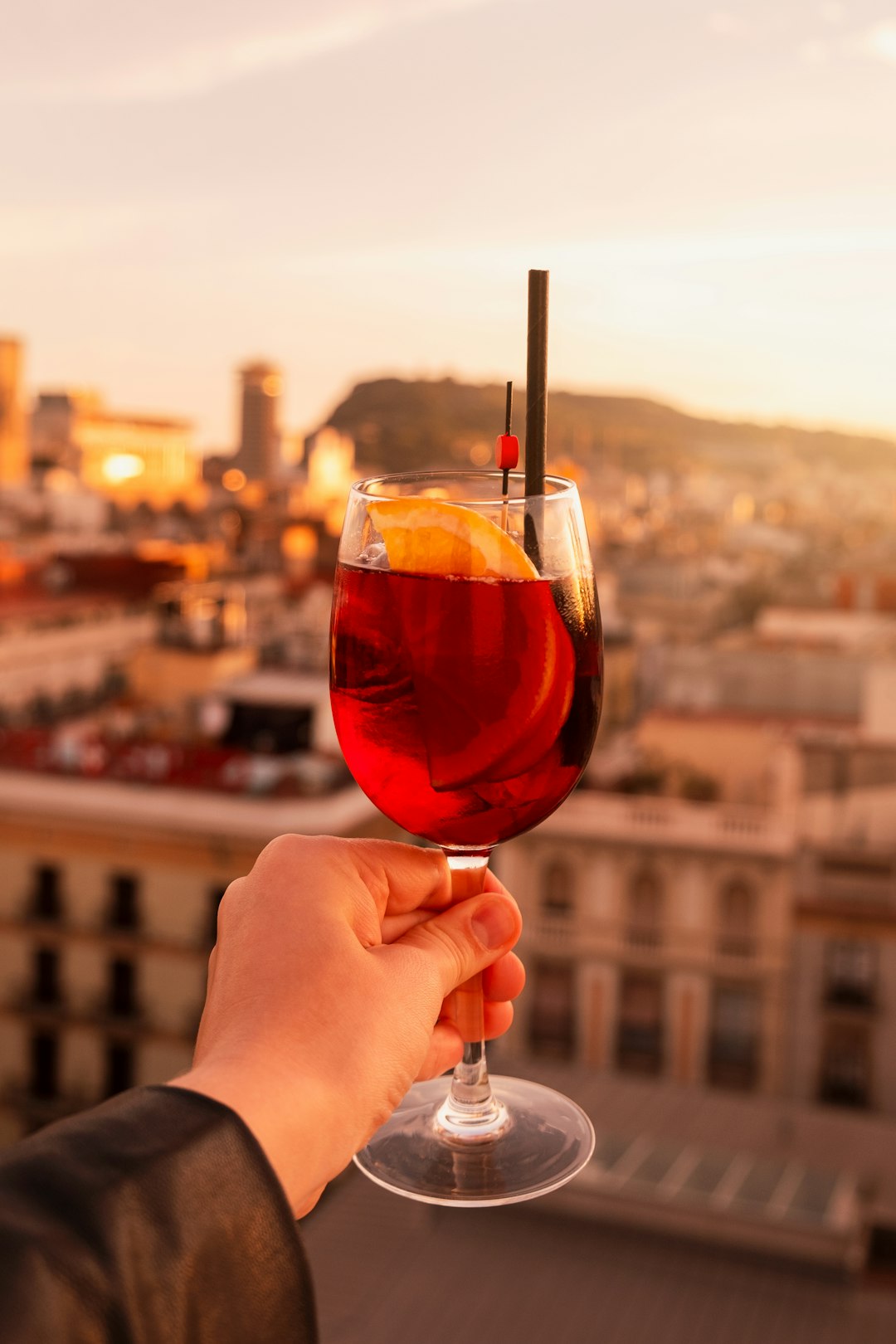
The word “sangria” comes from the Spanish sangre, meaning blood — a nod to the deep red colour of the traditional version made with Spanish red wine. Yet ask for a jug of it in a busy bar in Madrid or Barcelona and many locals will tell you they rarely drink it at home; it is far more a fixture of summer terraces, festivals, and celebrations than an everyday pour. This is Guide № 004 in The Love Spain Guide series.
Get the Full Collectible Guide (Free PDF)
Sangria — in a beautifully designed, printable booklet. The Love Spain Guide № 004.
What Sangria Actually Is
At its simplest, sangria is red wine mixed with chopped fruit, a sweetener, and often a splash of spirit such as brandy. The fruit — commonly orange, lemon, and apple — is left to steep so the wine takes on its flavour, and the mixture is served cold, frequently over ice. There is no single fixed recipe, which is part of the point: proportions vary by region, household, and the wine on hand.
Because it is built on inexpensive, everyday wine rather than a prized bottle, sangria has long been a practical, sociable drink for sharing from a large jug. Some versions add a little sparkling water or lemon soda for lift, while others fold in cinnamon or a spoonful of sugar. The result is meant to be refreshing and easy-drinking rather than a showcase for a fine vintage.
A Drink With European Protection
Since 2014, European Union rules have restricted the labelling of “Sangría” as a protected geographical designation: to be sold commercially under that name within the EU, the product must be made in Spain or Portugal. Drinks of the same style made elsewhere can still be produced, but they must be labelled with their country of origin rather than simply “Sangria.”
The regulation reflects how closely the drink is tied to the Iberian Peninsula in the popular imagination. It does not, however, dictate a recipe — it governs where the commercially bottled article may claim the name, not what goes into the jug you mix at home.
Tinto de Verano: The Everyday Cousin
If you want to drink the way many Spaniards actually do on a hot afternoon, order a tinto de verano — literally “red wine of summer.” It is red wine cut with a fizzy lemon soda (gaseosa) or soda water, served over ice, and it is simpler, lighter, and cheaper than sangria. It carries none of the added fruit and spirits, and locals often regard it as the genuine warm-weather staple.
Sangria, by contrast, is more likely to appear at a celebration, a shared meal with visitors, or a tourist-facing terrace. Both are perfectly Spanish; they simply occupy different corners of the table.
Regional Variations
Not all sangria is red. In Catalonia and other areas you will find sangría de cava, made with Spain’s sparkling wine, and white-wine versions built on crisp regional whites. The choice of fruit shifts too — peaches and berries in some kitchens, citrus in others — so no two jugs are quite alike.
Ordering well comes down to knowing what you want: a sweeter, fruit-heavy red for a leisurely afternoon, a sparkling cava version for something drier and livelier, or a plain tinto de verano when you simply want a cold, uncomplicated glass.
How to Spot the Good Stuff
Freshly made sangria uses real chopped fruit and is mixed to order or in batches through the day. Mass-produced canned or bottled sangria exists and is convenient, but it tends to be sweeter and more uniform than a jug made on the premises. On a tourist strip, an unusually cheap “free refill” pitcher is often a sign of a heavily diluted, sugar-forward mix.
A reasonable rule is to look for visible fresh fruit, a bar that makes it in-house, and a price in line with the local wine list. If in doubt, the tinto de verano is almost always a safe, authentic order.
Myths Worth Retiring
Myth: Sangria is what Spaniards drink every day. In practice, many locals reach far more often for a tinto de verano, wine, beer, or vermouth. Sangria leans toward festivals, celebrations, and terraces catering to visitors.
Myth: There is one authentic recipe. There is no single official recipe. Ingredients and proportions vary widely by region and household, and both red and sparkling versions are traditional.
Myth: Any fruit-and-wine punch can be sold as “Sangria.” Within the EU, the protected name is reserved for products made in Spain or Portugal; comparable drinks made elsewhere must state their country of origin on the label.
Frequently Asked Questions
Is sangria always made with red wine?
No. While the classic version uses red wine — hence the name, from sangre, “blood” — white-wine and sparkling cava versions are common, especially in regions like Catalonia.
What is the difference between sangria and tinto de verano?
Tinto de verano is simply red wine mixed with lemon soda or soda water over ice. Sangria is more elaborate, typically adding chopped fruit, a sweetener, and often a spirit such as brandy. Many locals consider tinto de verano the everyday summer drink.
Where can the name “Sangría” legally be used on a bottle?
Under EU rules in force since 2014, only sangria produced in Spain or Portugal may be sold commercially under the name “Sangría.” Similar drinks made in other countries must indicate their own country of origin on the label.
More The Love Spain Guides
The Love Spain Guide is a numbered series — one tightly focused subject at a time, each with its own downloadable collectible edition. Guide № 001 is Jamón Ibérico, Guide № 002 is La Tomatina, Guide № 003 is The Fan (Abanico), This is Guide № 004. More editions are on the way.
🇪🇸 Join Love Spain
Every week, get hidden stories, local secrets, and travel inspiration from people who live and love it.
Tours & experiences in Spain


Powered by Viator. Some links are affiliate links — we may earn a small commission at no extra cost to you.