
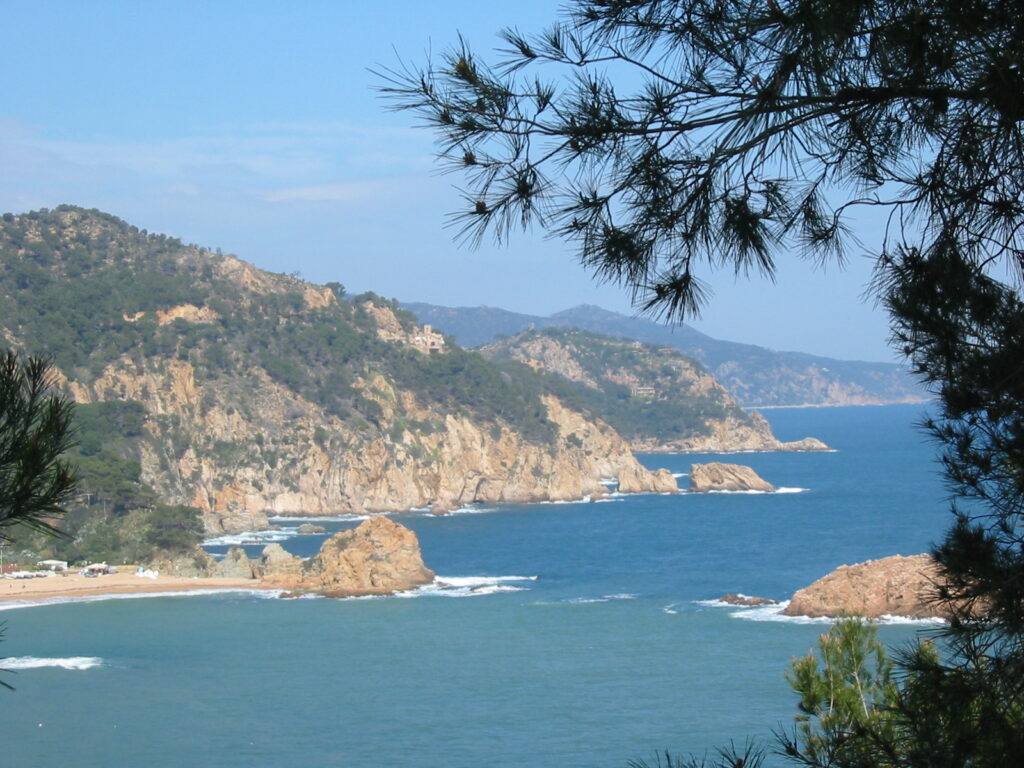
The Costa Brava—Catalonia’s “Wild Coast”—stretches 130 miles from Blanes north to the French border, and most travelers never see its best parts. They land in Girona, head straight for a package resort, and miss the medieval villages, clifftop monasteries, and crystalline coves that define this coastline’s character.
Here’s where to go when you’re ready to leave the beach umbrella behind.
Cadaqués and Cap de Creus
Cadaqués sits at the end of a winding road on the easternmost point of the Iberian Peninsula, and that remoteness has preserved its whitewashed charm. Salvador Dalí lived here, and you can visit his house-museum in nearby Portlligat—book weeks ahead in summer. The village itself is a tangle of narrow streets, small galleries, and restaurants serving rock mussels and grilled fish.
Drive or hike beyond the village to Cap de Creus, a lunar landscape of wind-sculpted rocks where the Pyrenees meet the Mediterranean. The lighthouse café serves coffee and simple bocadillos with views that stretch to France on clear days. Come at sunset.
Pals and the Medieval Triangle
Inland from the beaches, three perfectly preserved medieval villages—Pals, Peratallada, and Monells—form what locals call the “Medieval Triangle.” Pals is the most striking: a hilltop village with golden stone buildings, Gothic arches, and a Romanesque tower that dates to the 11th century.
Walk the cobbled streets early in the morning before the tour buses arrive from Barcelona. Stop at Vicus for coffee in the plaça, then browse the small artisan shops selling ceramics and olive oil. Peratallada, 15 minutes south, has a moat carved directly into the rock and one of the Costa Brava’s best restaurants, La Riera, where the tasting menu changes with the season.
Monells is the quietest of the three—just a beautiful stone square and a handful of houses. Come for lunch at Cal Fuster, where they’ve been grilling on the same wood fire since 1890.
Sant Pere de Rodes
This 10th-century Benedictine monastery sits 500 meters above the sea near the village of El Port de la Selva, and the views alone justify the drive up the serpentine mountain road. The monastery is one of Catalonia’s greatest Romanesque structures, built when this mountainside was a stopover on the pilgrimage route to Santiago de Compostela.
Explore the church, cloister, and tower, then walk the trail behind the complex to the ruined Sant Salvador castle above. The entire Gulf of Roses spreads out below. The site opens at 10 a.m. and closes at 5:30 p.m. in winter, 8 p.m. in summer. Arrive at opening to have the place nearly to yourself.
Begur and Its Beaches
The hilltop town of Begur doesn’t sit on the water—it overlooks eight beaches scattered along the coastline below, each reached by narrow roads that wind through pine forests. This is where you’ll find the Costa Brava’s most beautiful swimming coves.
Sa Riera is the largest and most accessible, with a handful of beachfront restaurants and calm water. For something more secluded, drive to Aiguablava—a horseshoe bay with turquoise water and the elegant Parador hotel perched on the rocks. Sa Tuna is a tiny fishing cove with two excellent seafood restaurants, Sa Tuna and El Bruel, where you should order suquet de peix, the local fish stew.
Begur itself is worth an evening stroll. Climb to the ruined castle at sunset, then eat at Fonda Caner on Carrer de Pi i Ralló, where they serve modern Catalan cooking in a 19th-century house.
Getting There and When to Visit
Fly into Girona or Barcelona. Rent a car—public transport connects the major towns, but you need your own wheels to reach the best beaches and villages. The coastal road, the GI-682, is slow but scenic; give yourself time.
Come in May, June, or September. July and August bring crowds and prices that triple. The water is warmest in September, the light is best in May, and everything is open by mid-June. Avoid winter—many restaurants and hotels close from November through March.
The Costa Brava rewards slow exploration. Pick a base—Begur, Pals, or Cadaqués—and spend your days driving the coast road, stopping when a view catches your eye or a cove beckons from below. That’s how you discover this coast.
Want more insider guides to Spain’s coast, cities, and hidden corners? Subscribe to the Love Spain newsletter—one short story a day, delivered to your inbox each morning.
Tours & experiences in Spain


Powered by Viator. Some links are affiliate links — we may earn a small commission at no extra cost to you.