
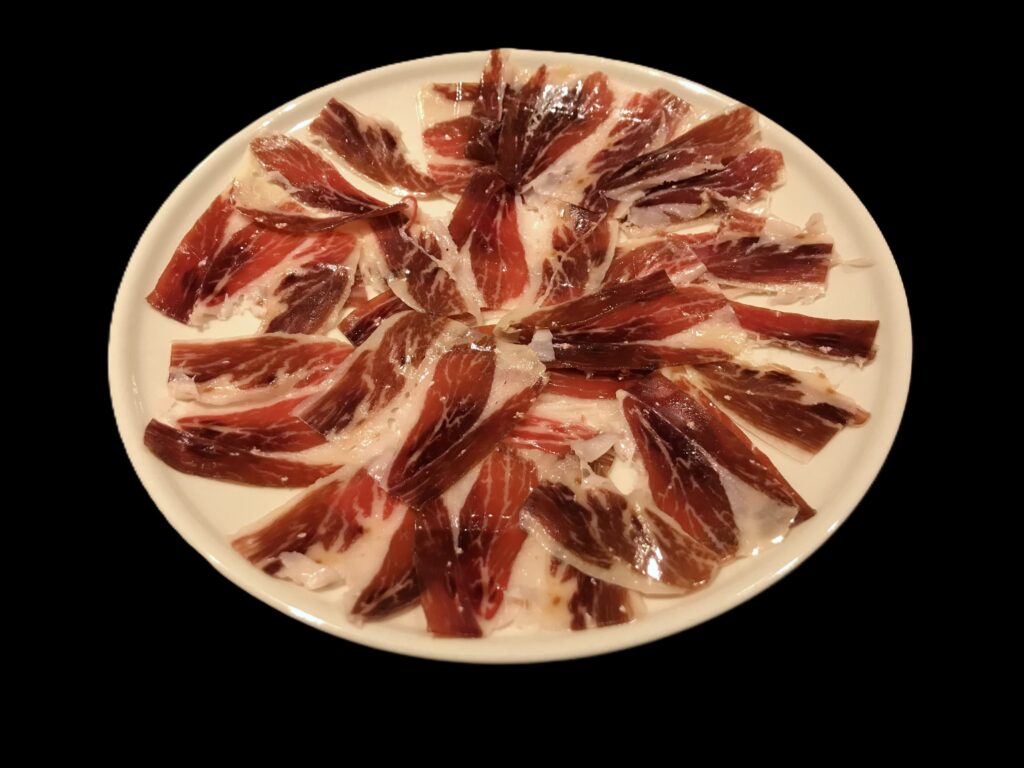

Walk into any bar in Spain and you’ll see them: dark ruby legs of cured ham hanging behind the counter, ready to be hand-carved into paper-thin slices. This is jamón ibérico, Spain’s most prized culinary treasure, and understanding it—from the pigs that produce it to the plates where you’ll taste it—transforms your experience of Spanish food culture.
Not all jamón is created equal. The pigs, the diet, the curing time, and the region all matter. Here’s how to navigate Spain’s ham culture like an insider.
Understanding the Grades: Bellota, Cebo, and Beyond
Jamón ibérico comes from black Iberian pigs, but what they eat determines the quality and price. At the top sits jamón ibérico de bellota, from pigs that roam oak forests eating acorns (bellotas) during the montanera season from October to March. The acorns give the fat a nutty, almost sweet flavor and a silky texture that melts on your tongue.
Below that is jamón ibérico de cebo de campo, from pigs raised on both pasture and grain feed, and jamón ibérico de cebo, from grain-fed pigs. All three are delicious, but bellota is the one connoisseurs seek out—and pay for.
The minimum curing time is 24 months, but the best jamón ages for 36 to 48 months. Look for black labels on packages, which indicate 100% ibérico de bellota. Red means 75% to 100% Iberian breed but cebo de campo diet. Green and white are lower grades.
Where to Taste the Best: Extremadura, Salamanca, and Huelva
Spain’s finest jamón comes from three main regions. Dehesa de Extremadura in western Spain produces some of the country’s most celebrated hams. In Salamanca province, the town of Guijuelo is synonymous with premium jamón, and the mountain air aids the curing process. Down south, Jabugo in Huelva province—specifically the village of the same name—is home to legendary producers like Cinco Jotas.
In Madrid, head to the Museo del Jamón chain for an affordable introduction, but for the real deal, visit Julepe on Calle Puigcerdà or Málaga 8 in Chueca, where sommeliers will guide you through tastings by region and grade. In Seville, Eslava in the Alameda neighborhood serves exquisite bellota by the plate, and Bar Eslava pairs it with local fino sherry—a classic Andalusian combination.
Barcelona’s La Boqueria market on La Rambla has excellent jamón stalls, but for a sit-down tasting, try El Xampanyet in El Born, where they pair jamón with cava, or Quimet & Quimet in Poble-Sec for a standing-room montadito of bellota on toasted bread.
How to Eat It (and What to Pair It With)
The best jamón ibérico needs nothing but a plate and maybe some bread. Let the slices come to room temperature so the fat softens—good jamón should be translucent at the edges, marbled with white streaks of fat that glisten.
Spaniards pair jamón with pan con tomate (bread rubbed with tomato), but purists eat it plain. The classic drink pairing is fino sherry from Jerez or a crisp Albariño from Galicia. In the Basque Country, locals pair it with txakoli, a slightly sparkling white wine. Avoid heavy reds—they overpower the delicate, nutty flavor.
If you’re buying jamón to take home, vacuum-sealed packages from the airport or specialty shops are your best bet. A hand-carved portion of 100% ibérico de bellota costs around €80 to €120 per kilo in Spain, far less than you’d pay abroad. Look for DO (Denominación de Origen) labels: Guijuelo, Dehesa de Extremadura, Jabugo, and Los Pedroches are the four protected appellations.
Visiting a Jamón Producer
For the ultimate jamón experience, visit a producer. In Jabugo, several farms and curing facilities offer tours where you’ll walk through oak forests, meet the pigs, and see the centuries-old curing cellars. Cinco Jotas and Sánchez Romero Carvajal both run tastings by appointment.
Near Salamanca, the town of Guijuelo hosts an annual jamón fair in October, but you can visit producers like Julián Martín year-round. The drive from Madrid takes about two and a half hours, and you’ll leave with a new appreciation for the craft—and likely a few kilos of ham in your trunk.
Spain’s jamón culture is more than food—it’s ritual, tradition, and a direct link to the land. Once you’ve tasted true jamón ibérico de bellota, carved by hand and paired with a cold glass of sherry, everything else is just ham.
Want more insider stories on Spain’s food, culture, and hidden corners? Subscribe to the Love Spain newsletter and get one short story a day, delivered straight to your inbox.
Tours & experiences in Spain


Powered by Viator. Some links are affiliate links — we may earn a small commission at no extra cost to you.