
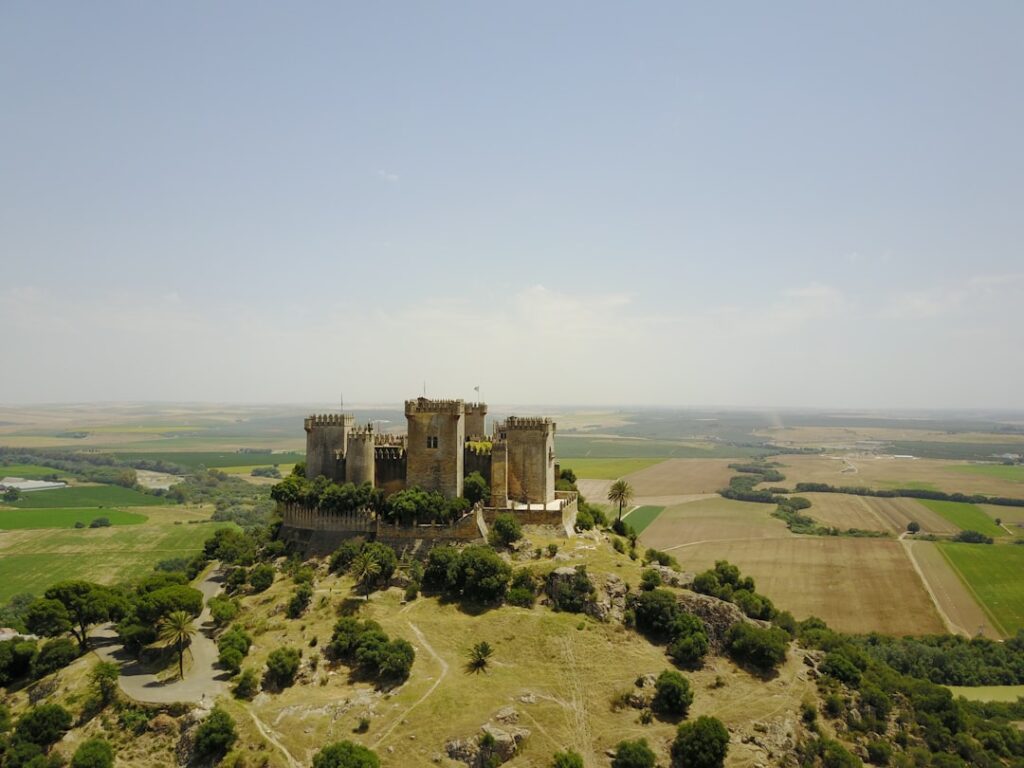
Most travelers experience Castile and León as a series of day trips from Madrid—Segovia’s aqueduct, Ávila’s walls, Toledo’s labyrinth. But Spain‘s largest autonomous region deserves more than a hurried morning and an afternoon train back to the capital. This is the historical heart of Spain, where Castilian became the national language, where queens and conquistadors were born, and where some of Europe’s finest Romanesque and Gothic architecture rises from the high meseta plateau.
Stretching across the northern interior, Castile and León encompasses nine provinces, each with its own provincial capital and distinct character. The region sits at an average elevation of 2,600 feet, which means bitterly cold winters, scorching summers, and crisp, luminous air that photographers dream about.
The Provincial Capitals Worth Your Time
Salamanca should be your first stop if you’re visiting only one city in the region. The Plaza Mayor here is Spain’s most beautiful—an enclosed Baroque square that glows honey-gold at sunset. The University of Salamanca, founded in 1218, is one of Europe’s oldest, and students still pack the bars along Calle Prior and Calle Meléndez. Look for the tiny carved frog on the university’s façade—legend says spotting it brings good luck in exams.
León, in the northwest, holds the region’s most stunning Gothic cathedral, with 19,000 square feet of stained glass that turns the interior into a kaleidoscope on sunny mornings. The city’s Barrio Húmedo (Wet Quarter) is the place for tapas—in León, most bars still serve a generous free tapa with every drink, a tradition that’s died out in much of Spain. Head to Calle Ancha or Plaza San Martín around 8 p.m. and follow the locals.
Burgos, hometown of El Cid, has a cathedral so ornate it took three centuries to complete. The city is a major stop on the Camino de Santiago, which means excellent infrastructure for travelers and a lively international vibe despite its modest size. Don’t miss morcilla de Burgos, the local blood sausage laced with rice and onions—it’s nothing like the versions you’ll find elsewhere in Spain.
Valladolid and the Ribera del Duero
Valladolid is the regional capital and the least picturesque of the major cities, but it’s surrounded by some of Spain’s most celebrated wine country. The Ribera del Duero denomination, just an hour south, produces some of the country’s most powerful reds from Tempranillo grapes grown in chalky soil at high altitude. Bodegas like Vega Sicilia and Pingus command stratospheric prices, but dozens of smaller wineries offer tastings and tours at reasonable rates.
The medieval village of Peñafiel, dominated by a ship-shaped castle, makes an excellent base for wine touring. The Museo del Vino inside the castle provides context before you start tasting. Book ahead if you want to visit specific bodegas—many require reservations, especially on weekends.
Food Beyond the Cities
Castilian cooking is the opposite of coastal Spanish cuisine: no seafood, few vegetables, lots of meat. Cochinillo asado (roast suckling pig) and lechazo (roast milk-fed lamb) are the region’s signature dishes, slow-roasted in wood-fired ovens until the meat falls off the bone. In Segovia, restaurants like Mesón de Cándido have been serving cochinillo the same way for generations—the waiter traditionally cuts the tender pig with the edge of a plate to prove how soft it is.
The region also produces Spain’s best legumes. Lentils from La Armuña, chickpeas from Fuentesaúco, and white beans from La Granja all have protected status. You’ll find them in hearty stews that make perfect sense when you’re walking medieval ramparts in a February wind.
Getting Around and When to Visit
The regional capitals are well connected to Madrid by AVE high-speed trains and Alvia medium-distance services, with journey times ranging from 30 minutes (Segovia) to two and a half hours (León). Traveling between provincial capitals usually requires a change in Madrid or a long bus ride—renting a car makes sense if you want to explore the smaller towns and wine country at your own pace.
Spring (April through June) and fall (September and October) offer the most comfortable weather for exploring. Summers are brutally hot on the plateau, with temperatures regularly exceeding 95°F, though the dry heat is more bearable than coastal humidity. Winters are cold and often beautiful, especially when snow dusts the castles and city walls, but be prepared for temperatures well below freezing.
Most cities observe traditional siesta hours—expect restaurants to close between 4 p.m. and 8 p.m., and shops between 2 p.m. and 5 p.m. Dinner reservations before 9 p.m. will mark you as a tourist, though no one will mind.
If you’re planning a deeper exploration of the region, the Love Spain newsletter delivers one short story every day—practical tips, hidden corners, and the kind of details that turn a good trip into an unforgettable one. Subscribe and we’ll help you see Spain beyond the guidebooks.
Tours & experiences in Spain


Powered by Viator. Some links are affiliate links — we may earn a small commission at no extra cost to you.