
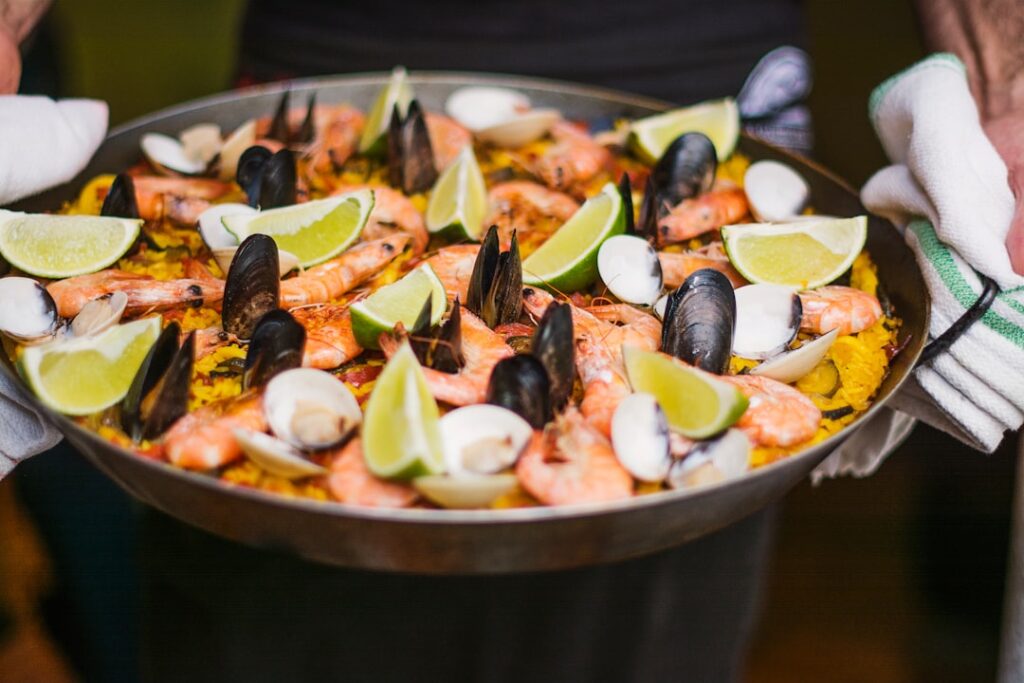
Ask a Valencian where paella comes from, and they’ll tell you without hesitation: right here. This isn’t just regional pride—it’s historical fact. The rice fields of the Albufera lagoon south of Valencia have been feeding this city for centuries, and paella valenciana, cooked over orange-wood fires in wide shallow pans, is the dish that made those fields famous.
But here’s what most visitors get wrong: paella in Valencia is a lunchtime dish, traditionally eaten on Sundays, and the best versions are rarely found in the tourist-packed restaurants around the Barrio del Carmen. Real paella takes time—at least 20 minutes to cook properly—and the restaurants that do it right know you can’t rush perfection.
What Makes Valencian Paella Different
Forget the seafood paella you’ve seen on menus across Spain. Authentic paella valenciana contains rabbit, chicken, wide green beans (ferraura), flat white beans (garrofón), tomato, and saffron. That’s it. The rice—specifically the short-grain bomba or senia varieties grown in the Albufera—is the star, and it should have a crispy golden crust on the bottom called socarrat. If your paella doesn’t have socarrat, it’s not done right.
Seafood paella exists, of course, and it’s delicious when done well. But if you’re in Valencia and ordering paella mixta (the meat-and-seafood combo), you’re marking yourself as a tourist. Locals will politely smile and judge you.
The Best Paella Restaurants in Valencia City
In the city center, La Riua on Calle del Mar is where Valencians take out-of-town guests when they want to show off. It’s been around since 1982, and their paella valenciana is textbook perfect. The dining room is unpretentious, the service is warm, and you’ll need to order paella for a minimum of two people—as it should be. Arrive early for lunch (by 1:30 p.m.) or book ahead.
Casa Roberto in the Benimaclet neighborhood is another local favorite, away from the tourist zones. Their wood-fired paellas have a smokiness you won’t find in gas-cooked versions, and their arroz al horno (oven-baked rice) is equally spectacular. This is a Sunday lunch destination for Valencia families, so expect a wait if you don’t reserve.
For a more central option, Navarro near the Mercado Central has been serving paella since 1951. It’s slightly more upscale, with white tablecloths and attentive service, but the cooking stays true to tradition. Their paella de marisco (seafood paella) is one of the few tourist-friendly versions worth ordering.
Paella by the Beach and in the Albufera
Head to Las Arenas beach in Valencia and you’ll find a string of beachfront restaurants serving paella with Mediterranean views. La Pepica is the most famous—Hemingway ate here, and they won’t let you forget it—but the food still delivers. Their paella marinera is loaded with fresh prawns, clams, and squid, and eating it with your toes practically in the sand feels quintessentially Valencian.
For the most authentic experience, though, drive 10 kilometers south to the Albufera lagoon, where paella was born. The village of El Palmar, surrounded by rice paddies, is home to a dozen traditional restaurants, nearly all of them excellent. Restaurante Mateu and Casa Ángel are two standouts, both family-run and both cooking paella over wood fires the way it’s been done for generations. Order the paella valenciana, sit on the terrace overlooking the wetlands, and understand why this dish is a UNESCO-recognized part of Spain’s cultural heritage.
Timing and Etiquette
Paella is lunch food. Period. Restaurants in Valencia serve it between 1 p.m. and 4 p.m., and if you try to order it at dinner, you’ll either be politely refused or served reheated rice from a batch made hours earlier. Don’t do that to yourself.
Always order paella for at least two people—it’s a communal dish, and solo portions don’t cook properly. Expect to wait 20 to 30 minutes after ordering; if it arrives in 10 minutes, walk out. And when it comes to the table, eat directly from the pan with a wooden spoon if you’re with close friends or family. It’s not required, but it’s how locals do it, and it somehow makes the rice taste better.
One last tip: drink Agua de Valencia (fresh orange juice, cava, vodka, and gin) with your paella if you’re feeling festive, or a cold Valencian beer like Turia if you prefer something lighter. Wine works too, but bubbles and paella are a match made in Mediterranean heaven.
Want more insider tips on Spain’s best food, hidden neighborhoods, and travel secrets? Subscribe to the Love Spain newsletter—one short story a day, straight to your inbox.
Tours & experiences in Spain


Powered by Viator. Some links are affiliate links — we may earn a small commission at no extra cost to you.