Menorca doesn’t shout for attention the way its Balearic siblings do. There are no mega-clubs like Ibiza, no cruise ship terminals like Mallorca. What you get instead is an island of pine-fringed coves, whitewashed fishing villages, and a landscape so carefully protected that UNESCO declared the entire island a Biosphere Reserve in 1993.
If you’re looking for Spain’s Mediterranean without the mayhem, Menorca delivers exactly that.
Getting There and Getting Around
Menorca’s airport, just outside the capital Mahón, has direct summer flights from Barcelona, Madrid, and various European cities. The island is small—just 50 kilometers end to end—but you’ll want a rental car to reach the best beaches and explore at your own pace.
The two main towns anchor opposite ends of the island. Mahón (Maó in Catalan) sits on the east coast around one of the Mediterranean’s deepest natural harbors. Ciutadella, the old capital on the west, feels more traditionally Spanish with its honey-colored palazzos and medieval squares. Both are worth a full day of wandering.
The Beaches: Menorca’s Real Draw
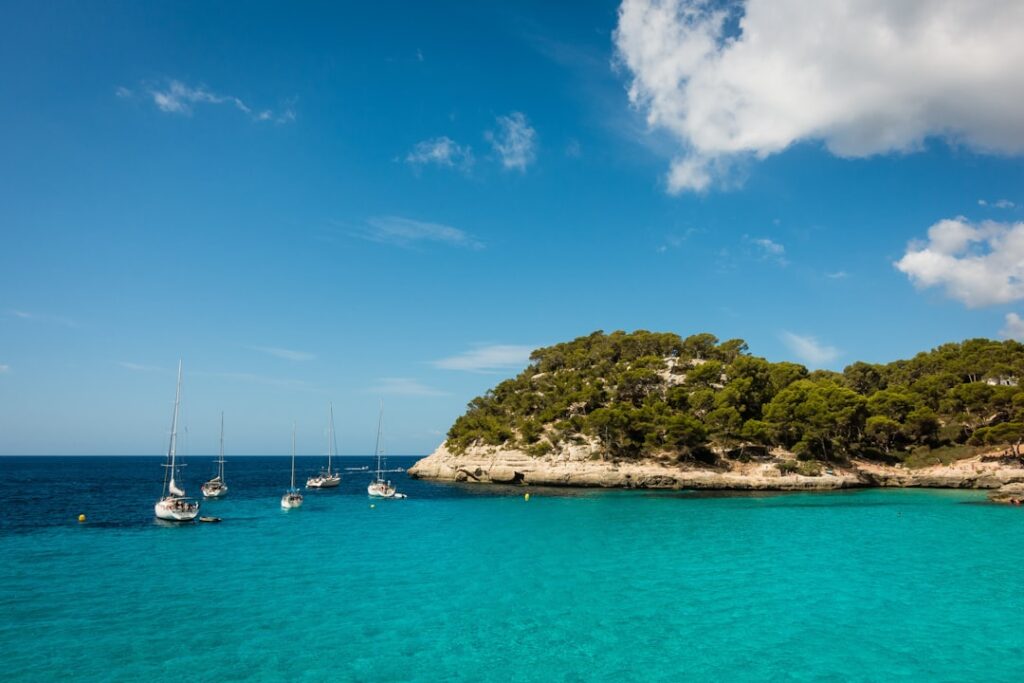
Menorca claims to have more beaches than Mallorca and Ibiza combined—over 120 calas and stretches of sand, many accessible only by foot or boat. The south coast beaches tend toward soft white sand and sheltered turquoise water. Cala Macarella and its smaller neighbor Cala Macarelleta are the poster children, and for good reason: crystalline water, dramatic cliffs, and sand so white it squeaks.
Get there early in summer, or better yet, walk the coastal trail Camí de Cavalls (more on that below) to reach them from neighboring coves. Cala Mitjana and Cala Trebalúger offer similar beauty with fewer sunbathers.
The north coast is wilder, with darker sand and rougher water when the Tramuntana wind blows. Cala Pregonda, with its reddish sand and scattered rock islands just offshore, feels almost otherworldly. It’s a 25-minute walk from the parking area—enough to thin the crowds considerably.
Mahón and Ciutadella: Two Sides of the Island
Mahón’s harbor is a stunner—walk down the steep lanes from the old town to the waterfront, where British colonial architecture (Menorca was briefly British in the 18th century) mixes with Spanish baroque. Don’t miss the Mercat de Claustre for local cheese, sobrassada, and gin. Yes, gin—the British left that legacy behind, and Xoriguer gin, distilled in Mahón, is now an island staple.
Ciutadella feels more intimate and aristocratic. The Plaça des Born, surrounded by grand palaces, opens onto narrow streets full of churches, craft shops, and tapas bars. Walk to the port at sunset when the old town glows gold and fishing boats bob in the protected inlet.
For dinner in Ciutadella, head to Carrer Marina and find a table at Smoix or Ca’s Ferrer for fresh fish and Menorcan wine. In Mahón, the harbor restaurants can be touristy, but a few blocks inland you’ll find spots like Ses Forquilles serving real island cooking.
Talayots, Taulas, and Ancient Menorca
Menorca has the highest concentration of prehistoric monuments in the Mediterranean, more than 1,500 sites dating back 4,000 years. The Talayotic culture left behind massive stone towers (talayots), T-shaped monoliths (taulas), and burial chambers scattered across the island.
The best-preserved site is Talatí de Dalt, just outside Mahón, where you can walk among the structures and get a real sense of scale. Torralba d’en Salort near Alaior has the tallest taula still standing. Most sites are free, minimally roped off, and wonderfully atmospheric at golden hour.
The Camí de Cavalls: Hiking Menorca’s Coast
This 185-kilometer trail circles the entire island, originally built so horsemen could patrol for pirates. Today it’s divided into 20 manageable stages, most between 5 and 15 kilometers, connecting beaches, cliffs, wetlands, and villages.
You don’t need to hike the whole thing. Pick a stage or two: Macarella to Cala Galdana is a popular stretch with beach rewards at both ends. The northern sections, like Cavalleria to Binimel·là, are more rugged and often empty even in July.
Wear good shoes—the trail crosses rocky headlands and sandy paths in quick succession. Bring water and sun protection. Trail markers are clear, and the Camí de Cavalls website has downloadable maps and GPS tracks.
When to Visit
July and August bring warm water and full beaches, but also crowds and high prices. June and September are ideal—still warm enough to swim, quieter, and better for hiking. Many beach restaurants and hotels close from November through Easter, though Mahón and Ciutadella stay lively year-round.
Spring is beautiful if you’re more interested in walking and culture than beaches. The island turns green, wildflowers bloom, and you’ll have the talayotic sites almost to yourself.
Menorca doesn’t try to compete with Ibiza’s nightlife or Mallorca’s infrastructure. It simply offers a version of the Mediterranean that feels increasingly rare: unhurried, undeveloped, and worth savoring slowly.
Want more insider stories on Spain’s hidden corners? Subscribe to the Love Spain newsletter and get one short story a day, straight to your inbox.
Tours & experiences in Spain


Powered by Viator. Some links are affiliate links — we may earn a small commission at no extra cost to you.