

La Rioja, tucked between the Basque Country and Castile in northern Spain, is the country’s most celebrated wine region. Its tempranillo-based reds have earned international acclaim, and the rolling vineyards, medieval villages, and cutting-edge wineries make this one of Spain’s most rewarding destinations for wine lovers.
Whether you’re a serious oenophile or simply enjoy a good glass with lunch, Rioja offers an approachable, beautiful introduction to Spanish wine culture—without the pretension you might find elsewhere.
Understanding Rioja Wine
Rioja produces primarily red wines from tempranillo grapes, though you’ll also find graciano, garnacha, and mazuelo in the blends. The region is divided into three subzones: Rioja Alta, Rioja Alavesa, and Rioja Oriental (formerly Rioja Baja). Alta and Alavesa produce the most elegant, age-worthy wines, while Oriental offers fuller-bodied, fruit-forward styles.
The aging classifications matter here. Crianza wines are aged at least two years, with one in oak. Reserva wines age three years, with at least one in barrel. Gran Reserva wines, the pinnacle, age at least five years, including two in oak. You’ll taste the difference—crianzas are bright and approachable, while gran reservas are complex, with notes of leather, tobacco, and dried fruit.
White Rioja, made from viura grapes, is often overlooked but excellent—especially the barrel-aged versions with nutty, creamy character.
Where to Taste: The Best Bodegas
Haro, the wine capital of Rioja, is home to some of the region’s oldest and most prestigious bodegas. López de Heredia, founded in 1877, offers tours through cobwebbed cellars and serves wines that feel like time travel—traditional, oxidative, and unforgettable. Muga, also in Haro, is family-run and known for its elegant, barrel-fermented whites and refined reds.
For modern architecture and wine, head to Marqués de Riscal near Elciego, where Frank Gehry designed a titanium-clad hotel and winery that looks like it landed from another planet. The wines here are polished and international in style. Nearby, Ysios, designed by Santiago Calatrava, offers stunning wave-like architecture against the Sierra de Cantabria backdrop.
Don’t miss the small producers. Bodegas Ramón Bilbao in Haro runs excellent tastings that explain Rioja’s terroir in clear, unpretentious terms. Bodegas Ontañón, just outside Logroño, is family-owned and welcoming, with tastings that pair wines with local cheese and chorizo.
Most bodegas require advance reservations. Book at least a few days ahead, especially in harvest season (late September through October).
Logroño: Your Home Base
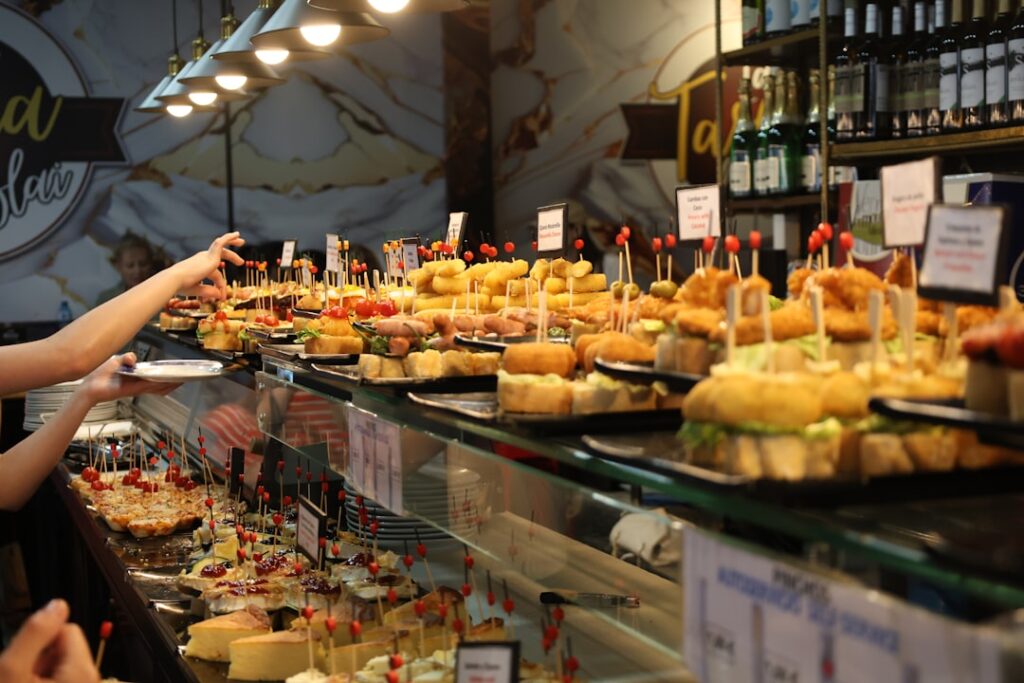
Logroño, the capital of La Rioja, is the perfect base for exploring wine country. It’s well-connected by train and has a lively tapas scene that rivals San Sebastián. Calle Laurel and Calle San Juan form the heart of the old town’s tapas crawl, with dozens of bars serving pinchos alongside local wines by the glass.
Stop at Bar Soriano for champis (mushrooms sautéed with garlic and jamón), Blanco y Negro for their famous champiñón relleno, and Torrecilla for croquetas. Order a glass of young Rioja (joven) or crianza to pair—these lighter styles work beautifully with tapas.
Logroño is about three and a half hours from Madrid by train, and just under two hours from Bilbao. If you’re driving, the region is compact—you can visit three or four wineries in a day without feeling rushed.
Beyond the Wineries
La Rioja isn’t just about wine. The region sits along the Camino de Santiago, and villages like Laguardia and San Vicente de la Sonsierra have medieval walls, cobbled streets, and hilltop views over endless vineyards. Laguardia, perched on a ridge in Rioja Alavesa, is especially photogenic and has underground cellars (calados) you can explore beneath the old town.
The San Millán de la Cogolla monasteries—Suso and Yuso—are UNESCO World Heritage Sites and considered the birthplace of the Spanish language. They’re a short drive from the main wine route and worth a detour if you’re interested in history.
Visit in late June for the Batalla del Vino in Haro, when locals douse each other with thousands of liters of red wine in a raucous, joyful mess. It’s one of Spain’s most unusual fiestas, and you’ll never forget it.
When to Go
Spring (April through June) and fall (September and October) are ideal. The vineyards are green in spring and golden-red in autumn, and the weather is perfect for touring. Harvest season in late September and early October is magical—you’ll see pickers in the fields and smell fermentation in the air—but book accommodations early.
Summer can be hot, with temperatures pushing into the 90s°F, but the evenings cool down pleasantly. Winter is quiet, and some smaller bodegas close or reduce hours, though Logroño’s tapas bars are lively year-round.
If you’re planning a broader northern Spain itinerary, Rioja pairs perfectly with the Basque Country (Bilbao and San Sebastián are close) or a loop through Burgos and medieval Castile.
Want more insider tips on Spain’s wine regions, hidden villages, and where to eat like a local? Subscribe to the Love Spain newsletter—we’ll send you one short story a day to help you explore Spain beyond the guidebooks.
Tours & experiences in Spain


Powered by Viator. Some links are affiliate links — we may earn a small commission at no extra cost to you.