
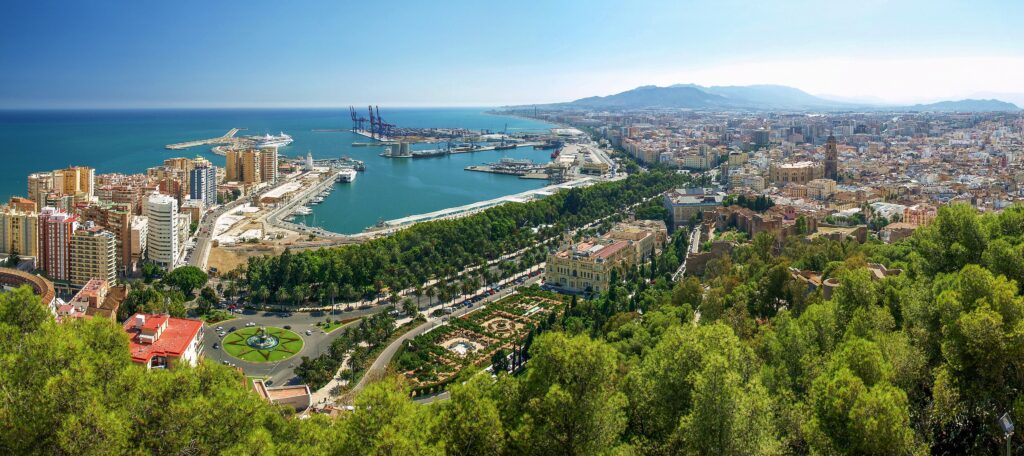
Málaga doesn’t need to prove anything anymore. For decades it existed as the airport city for the Costa del Sol, a place travelers passed through on their way to beach resorts. But the city has quietly transformed into one of Spain’s most compelling destinations—a place where you can spend mornings in world-class museums, afternoons on city beaches, and evenings working your way through wine bars that serve some of Andalusia’s best food.
The city has kept its grit and authenticity even as it’s polished its rough edges. The historic center still feels like a working Andalusian city, not a museum. And unlike Barcelona or Madrid, Málaga remains refreshingly manageable in scale and surprisingly affordable.
Where to Stay in Málaga
The Centro Histórico puts you in the heart of everything. Stay near Calle Larios, the elegant pedestrian boulevard that runs from the port to Plaza de la Constitución, and you’re a five-minute walk from the cathedral, the Picasso Museum, and dozens of excellent restaurants. The narrow streets around Plaza de la Merced—where Picasso was born—have the best concentration of neighborhood bars and morning coffee spots.
For something quieter with beach access, La Malagueta sits just east of the port. The neighborhood takes its name from the city beach, a wide strip of dark sand that gets packed on summer weekends but empties out by September. Paseo Marítimo Pablo Ruiz Picasso runs along the water, lined with seafood restaurants that range from tourist traps to genuinely good chiringuitos. Stay here if you want to swim before breakfast.
Soho, the arts district west of the port, has become the city’s creative center. Street art covers entire building facades, small galleries occupy converted warehouses, and new restaurants open constantly. It’s grittier than the historic center and younger in feel. The Contemporary Art Centre anchors the neighborhood, and on Thursday evenings the surrounding streets fill with people doing the gallery crawl.
What to Eat and Drink
Málaga’s food scene centers on two things: incredibly fresh seafood and wines you’ve probably never heard of. The city sits in the heart of Andalusia’s lesser-known wine country, producing sweet Málaga wines and dry whites from the nearby Montes region.
Start with espetos—sardines skewered on cane sticks and grilled over olive wood fires on the beach. El Tintero II in El Palo (take bus 11 from the center) does them perfectly, but the real draw is the restaurant’s chaotic ordering system: waiters emerge from the kitchen holding plates and shouting what they have, and you wave them down if you want it. Everything from grilled prawns to fried anchovies to whole sea bream appears this way.
In the historic center, El Pimpi is the city’s most famous bodega, housed in an 18th-century palace near the Roman theater. It’s touristy but legitimately good—the barrel-lined patios, the signed wine casks from visiting celebrities, the view of the Alcazaba fortress all add to the experience. Order a bottle of sweet Málaga wine and a plate of Iberian ham.
For a more local scene, hit the wine bars along Calle Strachan and Calle San Juan. La Tranca packs in neighborhood regulars who come for montaditos—small open-faced sandwiches piled with everything from octopus to pork cheek. Uvedoble Taberna specializes in natural wines and inventive tapas that change daily based on market finds.
Beyond the Plate
Málaga’s dining culture follows a rhythm worth understanding. Breakfast means coffee and a tostada (toasted bread) with tomato and olive oil, usually taken standing at a bar counter. Lunch happens late—2 p.m. at the earliest—and many restaurants offer a menú del día that delivers three courses and wine for €12 to €15.
The evening tapeo (tapas crawl) starts around 8 p.m. and continues until dinner proper begins at 10 p.m. or later. Don’t try to do a full meal at every stop—the point is to move, to try one or two dishes with a glass of wine, then move to the next place. The neighborhood around Plaza de la Merced and the streets radiating from Plaza de Uncibay give you the densest concentration of options within easy walking distance.
The Atarazanas Market, in a 19th-century building with original Moorish gates, operates mornings Tuesday through Saturday. Even if you’re not cooking, it’s worth walking through to see the seafood displays—whole tuna being butchered, prawns still twitching, razor clams the size of your hand. The small bars around the market’s perimeter serve breakfast and early lunch to vendors and shoppers.
Getting Around and Timing Your Visit
The historic center is entirely walkable, and most of what you’ll want to see falls within a 20-minute radius. City buses connect the beaches and outlying neighborhoods, and the metro runs from the airport to the center in 12 minutes for €1.80.
September and October offer the best visiting weather—still warm enough for the beach but without the August crowds. Spring (April and May) works equally well. Winters are mild but can be rainy, though hotel prices drop significantly and the museums are empty.
Málaga works as a base for exploring Andalusia—Ronda sits an hour inland, Granada is 90 minutes by bus, and the white villages of the Axarquía region make excellent day trips. But give the city itself at least two full days. It deserves more than a quick pass-through on your way somewhere else.
Want more stories like this in your inbox? Subscribe to the Love Spain newsletter—one short story a day about the Spain you came to find.
Tours & experiences in Spain


Powered by Viator. Some links are affiliate links — we may earn a small commission at no extra cost to you.