
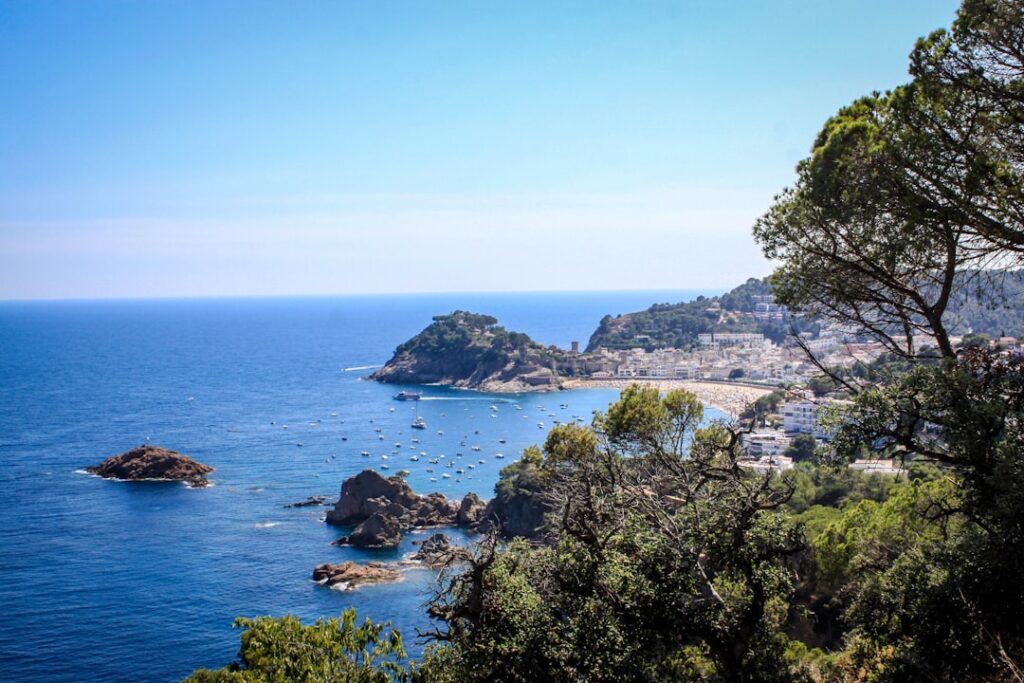
Most travelers know the Costa Brava for its dramatic cliffs and turquoise waters, but the real magic of Catalonia’s northern coast lies in the medieval villages perched above those beaches. Between Blanes and the French border, you’ll find stone-walled towns that haven’t changed much in 500 years, Roman ruins overlooking the Mediterranean, and coves you can only reach on foot.
The name means “wild coast,” and it delivers. This isn’t the high-rise sprawl of the Costa del Sol. The Costa Brava keeps its character—fishing villages where locals still mend nets in the morning, restaurants serving seafood caught that day, and enough history to fill a month of exploring.
Pals and Peratallada: Two Medieval Gems
Start inland with Pals, a perfectly preserved medieval village about 6 kilometers from the coast. Park below the old town and walk up through the stone archway into narrow streets lined with honey-colored buildings. The Torre de les Hores (clock tower) dates to the 11th century, and you can climb it for views across rice fields to the sea.
Twenty minutes south, Peratallada rivals any village in France for sheer medieval atmosphere. The entire town sits inside its original walls and moat—carved directly from rock, hence the name (“carved stone”). Wander the maze of streets, duck into the Romanesque church of Sant Esteve, and have lunch at one of the restaurants on Plaça del Castell. Can Nau serves excellent grilled vegetables and local sausages.
Both villages see day-trippers, but stay past 4 p.m. and you’ll have the streets nearly to yourself. Summer evenings here, with swifts diving between the buildings and golden light on ancient stone, justify the entire trip north.
Cadaqués and the Dalí Connection
On the eastern tip of the Cap de Creus peninsula, Cadaqués remains the Costa Brava’s most striking village. White-washed houses cascade down to a pebble beach, backed by bare hills that look almost Greek. Salvador Dalí kept a house in nearby Portlligat for decades, and the stark landscape here—twisted rocks, intense light, howling tramontana wind—shows up in dozens of his paintings.
You can visit the Casa-Museu Dalí in Portlligat (book ahead; it sells out), but even without going inside, the walk along the coast from Cadaqués takes you past the same coves and rock formations the artist obsessed over. The village itself has kept cars out of the center, so exploring means walking the narrow lanes between shops selling local ceramics and galleries showing contemporary art.
For the best meal in town, head to Compartir on Carrer de Riera. Three former El Bulli chefs run this relaxed spot, serving small plates like tuna tartare with wasabi and grilled octopus with black garlic. Expect to wait for a table if you haven’t booked.
Calella de Palafrugell and the Camí de Ronda
The Camí de Ronda, a coastal path that once let guards patrol for smugglers and pirates, now connects most Costa Brava towns and beaches. One of the finest sections runs from Calella de Palafrugell south to the botanical gardens at Cap Roig.
Calella itself is a former fishing village with low white houses facing a small bay. The beach gets crowded in August, but walk 10 minutes south on the coastal path and you’ll reach Golfet, a tiny cove with clear water perfect for snorkeling. Keep going another 20 minutes to reach Cap Roig, where terraced gardens full of Mediterranean plants overlook the sea. The gardens host a music festival in summer—everyone from Diana Krall to Sting has played here.
Back in Calella, several restaurants line the seafront. Pa i Raïm serves traditional Catalan seafood: suquet de peix (fish stew), grilled squid, and romesco sauce with everything. Go at lunch when locals fill the tables.
Tossa de Mar: Castle Walls and Artist History
Tossa de Mar gives you the best of both worlds: a proper beach town with restaurants and hotels, plus a walled medieval quarter (Vila Vella) rising above the main bay. The 12th-century walls and towers are the only fortified medieval town on the Catalan coast still standing.
Climb up through the old gateway and explore the narrow streets inside the walls. The Museu Municipal, housed in the former governor’s residence, has a modest collection including a Chagall—the artist spent time here in the 1930s, part of a community of writers and painters drawn to Tossa’s light and cheap living.
For swimming, the main beach (Platja Gran) works fine, but walk around the headland to Cala Pola, a smaller bay with rockier shores and fewer crowds. The water here is exceptionally clear—bring a mask.
Getting There and When to Visit
Girona makes the best base for exploring the Costa Brava, with the airport receiving flights from across Europe. Rent a car—many villages have limited bus service, and the freedom to explore small coves and inland towns makes driving essential. From Barcelona, it’s 90 minutes to Tossa, two hours to Cadaqués.
July and August bring crowds and high prices. June and September offer warm weather, swimmable seas, and half the tourists. Even October works—the water stays mild, and you’ll have medieval villages almost to yourself.
Pack walking shoes. The coastal paths and village streets mean cobblestones and uneven surfaces, and you’ll want to hike at least part of the Camí de Ronda.
The Costa Brava rewards slow travel. Pick two or three villages, rent an apartment for a week, and settle in. That’s when you’ll find the best meals, the hidden beaches, and the reason people have been falling in love with this coast for centuries.
Want more stories from Spain’s coast, cities, and hidden corners? Subscribe to the Love Spain newsletter—one short story a day, straight to your inbox.
Tours & experiences in Spain


Powered by Viator. Some links are affiliate links — we may earn a small commission at no extra cost to you.