
Semana Santa—Holy Week—transforms Spanish cities into open-air theaters of devotion every spring. From Palm Sunday through Easter, religious brotherhoods carry elaborate floats through narrow streets while crowds fall silent or erupt in spontaneous song. It’s Spain at its most dramatic, a centuries-old tradition that blends Catholic ritual with regional pride and artistic spectacle.
If you’re planning to witness Semana Santa, timing and location matter. The celebrations peak during the final days before Easter Sunday, particularly Thursday and Good Friday. Book accommodations months ahead for the most famous processions, and prepare for crowds, late nights, and moments of unexpected beauty.
Seville: The Gold Standard
Seville hosts Spain’s most famous Semana Santa, and for good reason. More than 60 brotherhoods parade through the city over seven days, carrying pasos—ornate floats bearing religious statues—from their home churches to the cathedral and back again. Some processions last 12 hours or more.
The floats themselves are astonishing: gilded, candlelit platforms weighing up to 5,000 pounds, carried by teams of 40 or more costaleros hidden beneath. Above them, statues of Christ or the Virgin Mary sway through the streets, adorned with flowers, silver, and centuries of devotion.
Stake out a spot along Calle Sierpes or near the cathedral in the old town. The processions move slowly—walking pace or slower—so you can watch multiple brotherhoods pass the same corner. Listen for the saeta, a spontaneous flamenco-style song directed at the Virgin, often sung from a balcony by someone moved by the moment. When it happens, the entire procession stops.
The Madrugá—the early morning hours of Good Friday—brings the most revered brotherhoods through the streets. Arrive by midnight if you want a view. The silence, broken only by drums and the shuffle of feet, is unforgettable.
Málaga: Raw and Physical
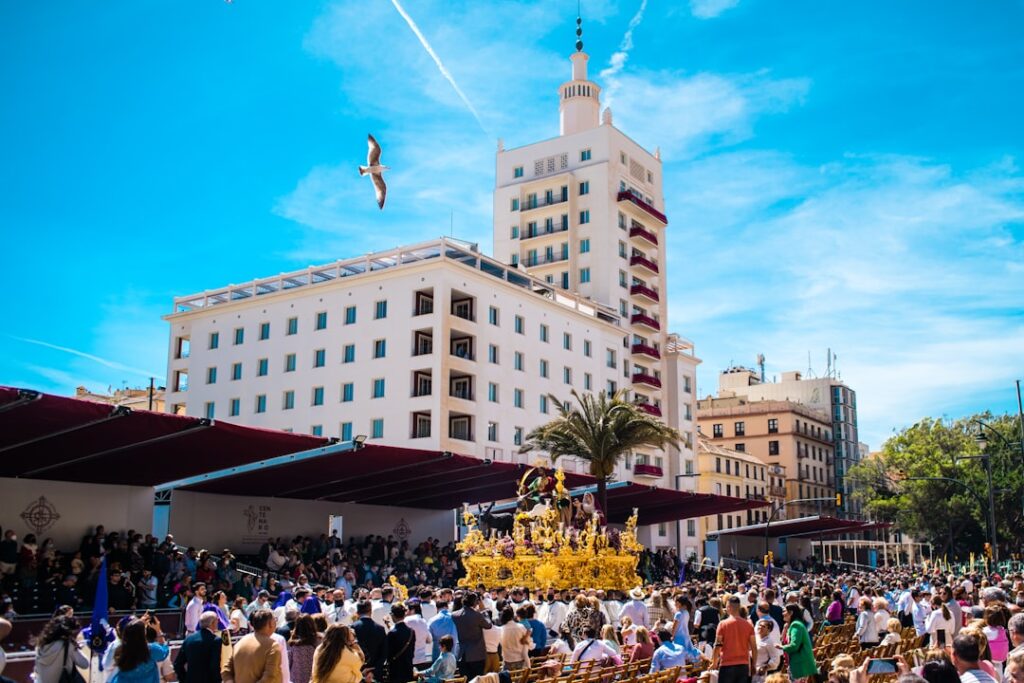
Málaga’s Semana Santa has a grittier, more visceral energy. Here, the throne bearers—legionarios and other participants—carry the pasos at a faster clip, almost running at times. The crowds are thick, passionate, and local. This isn’t a performance for tourists; it’s a deeply rooted tradition.
The star procession features the Cristo de la Buena Muerte, carried by Spanish Legion soldiers in full uniform. The emotional intensity is palpable. You’ll also see the Virgen de la Esperanza pass through Plaza de la Constitución, where locals break into song.
Watch from Calle Larios, the main shopping street, or find a café table along the route. The processions here feel more spontaneous, less choreographed than Seville’s, and the throne bearers’ physical exertion is part of the spectacle.
Valladolid and Zamora: Solemn and Medieval
For a quieter, more meditative Semana Santa, head to Castile. Valladolid’s processions feature sculptures by Renaissance masters like Gregorio Fernández, carried through lamplit streets with minimal fanfare. The silence here isn’t punctuated by saetas—it’s simply silence, heavy with centuries.
Zamora, a small city near the Portuguese border, hosts 18 brotherhoods and claims Spain’s oldest Semana Santa traditions. The processions wind through a medieval old town barely changed since the Middle Ages. Fewer tourists mean easier viewing and a more intimate experience.
Practical Tips for Attending
Semana Santa dates change each year based on the lunar calendar, falling anywhere from late March to late April. Check the specific dates before booking travel.
Dress respectfully—this is a religious observance. Locals appreciate visitors who understand the gravity of the event. Silence during key moments is expected, especially when a saeta is sung or when the pasos enter or leave a church.
Procession schedules are published weeks in advance by each city’s tourism office. Study them: some brotherhoods are more renowned than others, and certain routes offer better vantage points. In Seville, the Official Semana Santa app is invaluable for tracking processions in real time.
Bring snacks and water—processions can last hours, and stepping away means losing your spot. Wear comfortable shoes; you’ll be standing on cobblestones. And charge your phone: the low light and candlelit floats make for challenging but rewarding photography.
If the major cities feel overwhelming, consider smaller Andalusian towns like Carmona or Úbeda, where processions are equally sincere but far less crowded.
Ready to explore more of Spain’s traditions and hidden corners? Subscribe to the Love Spain newsletter and get one short story a day, straight to your inbox.
Tours & experiences in Spain


Powered by Viator. Some links are affiliate links — we may earn a small commission at no extra cost to you.