
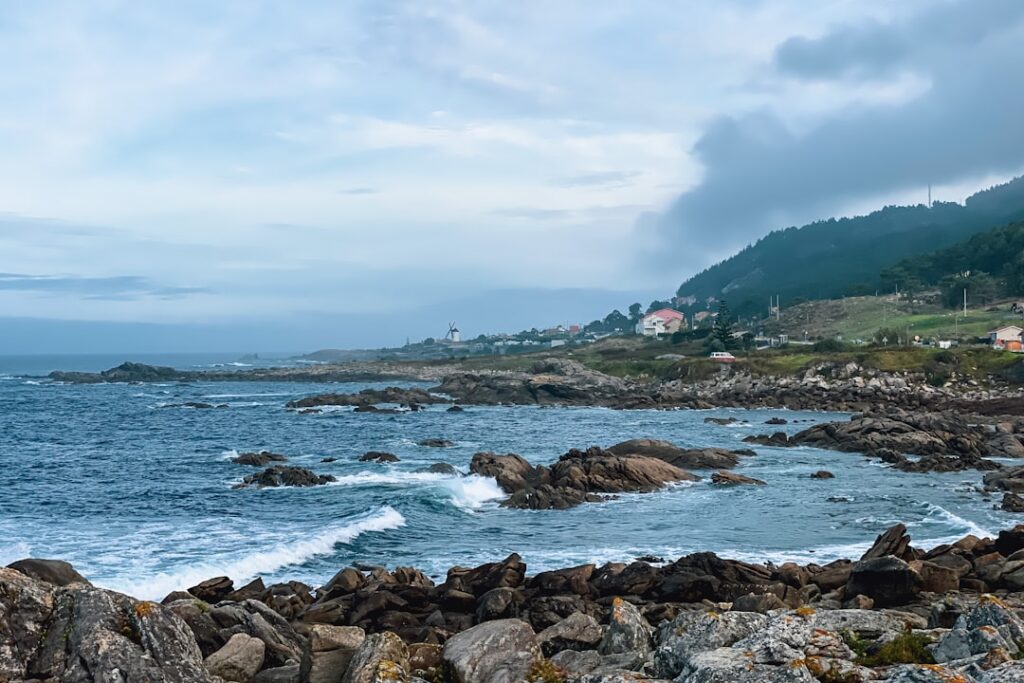
Tucked into Spain‘s northwestern corner, Galicia feels like a world apart. Green hills roll down to a ragged Atlantic coastline, Celtic bagpipes echo through granite villages, and rain is as much a part of the landscape as sunshine. This is Spain at its most verdant, its most mysterious, and for many pilgrims, its most spiritual.
Whether you’re walking the final stretch of the Camino de Santiago, exploring fishing villages along the Rías Baixas, or feasting on the country’s finest seafood, Galicia rewards travelers who venture beyond the usual stops.
Santiago de Compostela: The Heart of Galicia
All roads—literally—lead to Santiago de Compostela. The capital of Galicia has been the endpoint of the Camino de Santiago pilgrimage for over a thousand years, and the city’s cathedral remains one of Europe’s most sacred sites. The baroque façade of the Cathedral of Santiago dominates the Praza do Obradoiro, where pilgrims arrive, often in tears, after weeks of walking.
Inside, the Pórtico de la Gloria is a masterpiece of Romanesque sculpture, recently restored to its original polychrome glory. If you’re there at noon, catch the famous Botafumeiro—a giant incense burner that swings through the cathedral on a pulley system during special masses.
Beyond the cathedral, the old town is a maze of arcaded streets, hidden plazas, and centuries-old stone buildings. Walk Rúa do Franco and Rúa da Raiña for seafood restaurants and tapas bars packed with locals. Try pulpo a la gallega (boiled octopus with paprika and olive oil) at O Curro da Parra or A Curtidoría—both are reliable, unpretentious, and packed at lunch.
The Rías Baixas and Coastal Villages
South of Santiago, the Rías Baixas are a series of estuaries that bite deep into Galicia’s coastline. This is prime seafood country—mussels, clams, scallops, and percebes (goose barnacles) come straight from the cold Atlantic waters to your plate.
The town of Cambados is the capital of Albariño wine country. Visit a bodega like Pazo de Señorans or Martín Códax for tastings of this crisp, citrusy white wine that pairs perfectly with shellfish. The Mercado de Abastos in Cambados is worth a morning visit—stalls overflow with fresh catches and local cheeses.
Further north, Combarro is a postcard-perfect village with hórreos (traditional raised granaries) lining the waterfront. It’s touristy, yes, but still charming. For something quieter, head to the fishing port of O Grove on the Salnés peninsula, especially during the Festa do Marisco in October, a seafood festival that draws crowds from across Spain.
A Coruña and the Costa da Morte
A Coruña, Galicia’s largest city, sits on a dramatic peninsula jutting into the Atlantic. The Tower of Hercules, a Roman lighthouse still in use, offers panoramic views of the coast—it’s the oldest working lighthouse in the world. The city’s glass-enclosed balconies, called galerías, line the harbor promenade and give the waterfront a distinctive character.
West of A Coruña lies the Costa da Morte—the Coast of Death—named for the countless shipwrecks along its rocky shore. Cape Finisterre, once believed to be the end of the known world, is where many pilgrims continue after Santiago to burn their hiking boots and watch the sunset over the Atlantic. The lighthouse at Cabo Fisterra is stark and windswept, the kind of place that feels mythic even on a calm day.
Stop in the village of Muxía to see the Sanctuary of Nosa Señora da Barca, perched on a headland above crashing waves. Local legend says the Virgin Mary arrived here in a stone boat to encourage Saint James—the rocks nearby are said to be the remnants.
Practical Tips for Visiting Galicia
Galicia is best explored by car, especially along the coast. Trains connect Santiago, A Coruña, and other cities, but buses are your best bet for smaller villages. Santiago’s airport has direct flights from Madrid, Barcelona, and several European cities.
Pack layers and a rain jacket—Galicia’s weather is famously unpredictable. Locals joke that you can experience all four seasons in a single day. Summer is the driest time, but even then, expect occasional showers.
For food, embrace the seafood and the simplicity. Galician cooking doesn’t hide behind heavy sauces—it’s about the quality of the catch. Order navajas (razor clams), vieiras (scallops), and empanada gallega (a savory pie filled with tuna, cod, or pork). Wash it down with Albariño or a crisp Ribeiro white.
If you’re walking the Camino, the final 100 kilometers from Sarria to Santiago is the most popular section and qualifies you for a Compostela certificate. Book accommodations in advance during summer, especially in July and August.
Want more stories from Spain’s hidden corners? Subscribe to the Love Spain newsletter—one short story a day, straight to your inbox.
Tours & experiences in Spain


Powered by Viator. Some links are affiliate links — we may earn a small commission at no extra cost to you.