
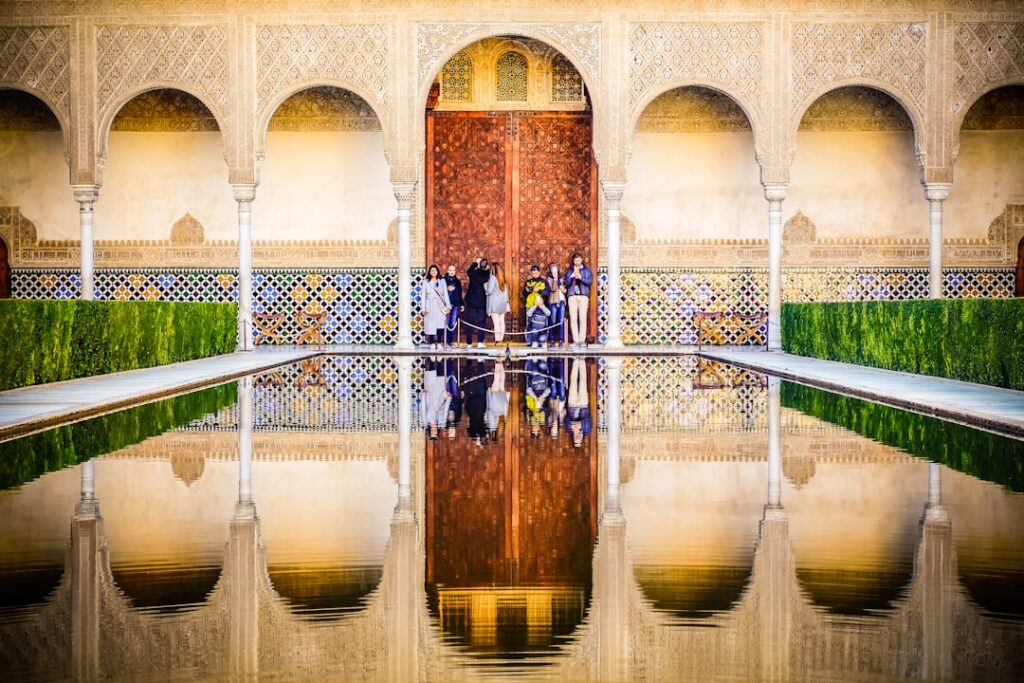
The Alhambra is the single most visited monument in Spain, and for good reason. This sprawling palace-fortress complex rising above Granada tells the story of Al-Andalus—the Islamic civilization that shaped southern Spain for nearly 800 years. Walking through its carved stucco halls, tranquil courtyards, and impossibly detailed tile work feels like stepping into another world entirely.
But visiting the Alhambra requires planning. Tickets sell out weeks in advance, timed entries are strict, and the complex is far larger than most visitors expect. Here’s how to make the most of your visit.
Book Your Tickets Early—Very Early
The Alhambra admits only 6,600 visitors per day, and tickets for peak season (April through October) routinely sell out a month or more in advance. You can book up to three months ahead through the official website, and you should do so the moment your travel dates are confirmed.
General admission tickets cost €19.09 and include the Nasrid Palaces, the Alcazaba fortress, the Generalife gardens, and the Palace of Charles V. The Nasrid Palaces—the true highlight—operate on a strict 30-minute entry window. Miss your time slot and you won’t get in.
If tickets are sold out, check the official site daily. Cancellations do appear. You can also try booking a guided tour through Viator, which sometimes has access to reserved inventory when individual tickets are gone. Another option: the night visit, which covers only the Nasrid Palaces but offers a haunting, crowd-free experience.
What You’ll Actually See Inside
The Alhambra isn’t one building—it’s a small city. Budget at least three hours, ideally four. Start with the Generalife, the summer palace and gardens on the hill east of the main complex. The terraced gardens, lined with roses and cypress trees, offer your first views over Granada and the Sierra Nevada beyond.
From there, walk down to the Alcazaba, the oldest section and the Alhambra’s military heart. Climb the Torre de la Vela for panoramic views—this is where the Catholic Monarchs raised the Spanish flag in January 1492, ending Moorish rule.
Then comes the main event: the Nasrid Palaces. Move through the Mexuar (the administrative hall), the Comares Palace with its astonishing Court of the Myrtles, and finally the Palace of the Lions. The Court of the Lions, with its marble fountain supported by twelve carved lions, is the most photographed spot in Spain for a reason. The muqarnas ceilings—intricate honeycomb vaulting—and Arabic inscriptions praising God cover nearly every surface.
End at the Renaissance Palace of Charles V, a jarring but impressive circular courtyard built after the Christian conquest. It now houses the Alhambra Museum, worth a quick visit for Nasrid ceramics and architectural fragments.
Practical Tips for a Better Visit
Arrive at least 20 minutes before your Nasrid Palaces entry time. Security lines can be long, and the walk from the main gate to the palaces takes ten minutes. Wear comfortable shoes—the complex covers 35 acres, much of it uphill on cobblestones.
Go early or late if you can. The first entry slot (8:30 a.m.) offers cooler temperatures and smaller crowds. Late afternoon light (after 4 p.m.) is magic in the courtyards, though summer heat can be brutal.
Bring water and sunscreen—there’s limited shade and only a couple of overpriced cafés inside. The best bet for lunch is to leave the complex mid-visit (your ticket allows re-entry) and walk down to Carmen de los Mártires, a peaceful garden park just outside the walls, or grab a seat at one of the simple bars along Cuesta de Gomérez.
Don’t skip the audio guide or a tour. The Alhambra’s beauty is obvious, but understanding the symbolism behind the design—water as paradise, geometry as divine order—deepens the experience immeasurably.
Getting There and Where to Stay
The Alhambra sits on Sabika Hill overlooking Granada’s old town. From Plaza Nueva, it’s a steep 15-minute uphill walk along Cuesta de Gomérez, or you can take the C3 minibus from the Gran Vía stop. Taxis and ride-shares drop you at the main entrance.
Stay in the Realejo, the old Jewish quarter directly below the Alhambra, for easy access and excellent tapas bars. The Albaicín, across the valley, offers the best views of the Alhambra backlit at sunset from the Mirador de San Nicolás, but it’s a longer walk to the entrance.
If you’re visiting in summer, book accommodations with air conditioning. Granada sits in a basin and regularly hits 100°F in July and August. Spring (March to May) and fall (September to October) offer perfect weather and slightly better ticket availability.
The Alhambra is one of those rare places that exceeds even the highest expectations. Plan ahead, take your time, and let the craftsmanship speak for itself. Subscribe to the Love Spain newsletter for one short story a day about the country’s most unforgettable places.
Heads up — some links in this article are affiliate links. If you sign up through them, we may earn a small commission at no extra cost to you. We only recommend tools we use ourselves.
Tours & experiences in Spain


Powered by Viator. Some links are affiliate links — we may earn a small commission at no extra cost to you.