Every July, the northern Spanish city of Pamplona transforms into the epicenter of one of the world’s most thrilling and controversial traditions. San Fermín, the week-long festival honoring the city’s patron saint, draws over a million visitors who come for the daily running of the bulls—the encierro—along with nonstop street parties, traditional processions, and enough wine to turn the entire city red.
Whether you’re brave enough to run or just want to witness the spectacle, here’s what you need to know about experiencing San Fermín.
Understanding the Encierro
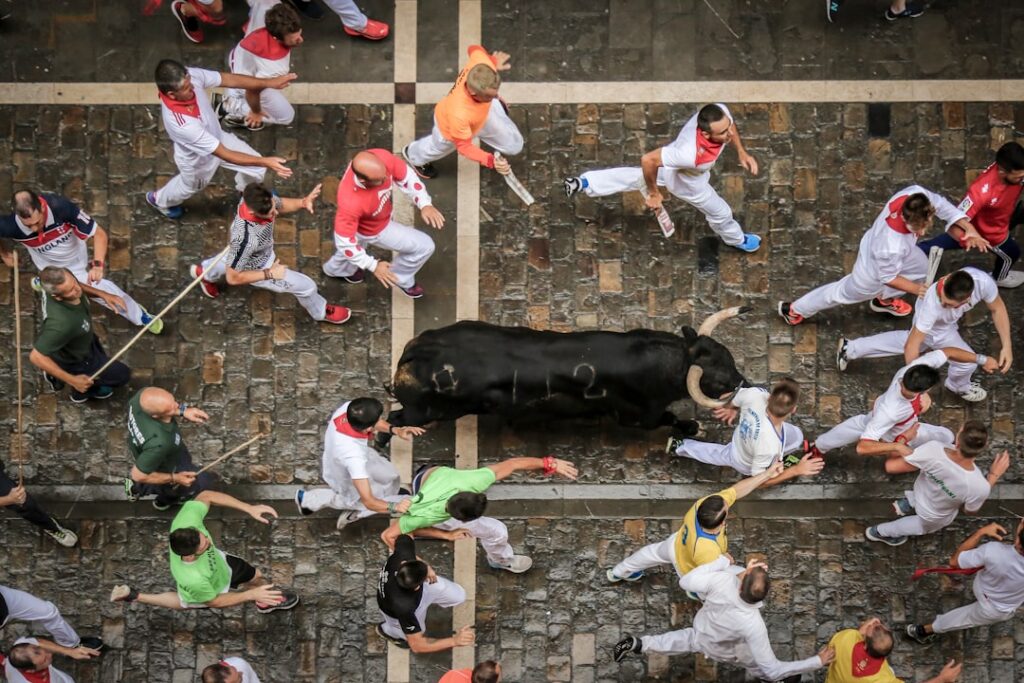
The running of the bulls happens every morning from July 7 through July 14 at exactly 8:00 a.m. Six fighting bulls and several steers charge through a half-mile course from the Santo Domingo corrals through Pamplona’s old town to the Plaza de Toros bullring. The entire run lasts between two and four minutes, though those minutes can feel like a lifetime if you’re in front of 1,200 pounds of muscle and horn.
The route winds through Calle Santo Domingo, narrows dangerously at Mercaderes corner, continues along Calle Estafeta—the longest and most famous stretch—and finishes with a sharp turn into the bullring at Telefónica. Each section presents different challenges and attracts different types of runners.
If you’re seriously considering running, arrive in Pamplona at least a day early to walk the route when it’s empty. Notice the wooden barriers, the slippery cobblestones, the turns where bulls lose traction and crash. Locals recommend running your first time on the relatively straight Calle Estafeta rather than the treacherous corners.
Wear proper running shoes with good grip—never new shoes. The traditional dress is all white with a red pañuelo (neckerchief) and red sash, though this isn’t mandatory. Don’t run drunk, don’t touch the bulls, don’t stop in doorways, and absolutely don’t take selfies. People are seriously injured every year, and several have died. This isn’t a tourist attraction you can treat lightly.
Watching Without Running
Most visitors—wisely—choose to watch rather than run. The best viewing spots fill up hours before the 8:00 a.m. start. Locals stake out positions on the wooden fences along the route by 6:00 a.m., though you’ll find less crowded viewpoints near the beginning of the route at Santo Domingo.
For a guaranteed view and a seat, buy tickets to the bullring itself. You’ll watch runners and bulls pour into the arena, followed by the suelta de vaquillas—when young cows are released and anyone in the ring can try their luck dodging them. It’s chaotic, relatively safer than the street run, and wildly entertaining.
Balconies overlooking the route are the premium viewing option. Many apartment owners rent their balconies during San Fermín—expect to pay €100-300 per person depending on location. Book months in advance through local agencies or your hotel.
Television screens throughout the city broadcast the entire run live, so you can watch from a plaza café with coffee and churros if you prefer a more relaxed morning.
Beyond the Bulls
San Fermín is nine days of nearly nonstop celebration. The festival officially kicks off at noon on July 6 with the chupinazo—a rocket launched from the town hall balcony that signals the start. Thousands pack into Plaza del Ayuntamiento, champagne and wine spraying everywhere, the crowd roaring “Viva San Fermín!”
Each afternoon at 4:30 p.m., the bulls that ran that morning face matadors in traditional bullfights at the Plaza de Toros. Whatever your feelings about bullfighting, these are some of Spain’s most prestigious corridas, featuring top-tier matadors and bulls from famous ranches.
The streets become one massive party. Brass bands called peñas parade through town in matching colored shirts, playing traditional music and modern songs. Join the crowds following them through the old quarter, dancing and drinking from botas (wine skins) and plastic bottles of kalimotxo—the Basque mixture of red wine and Coca-Cola that tastes better than it sounds after your third one.
Don’t miss the Gigantes y Cabezudos parade—enormous papier-mâché figures representing kings, queens, and traditional characters that process through the streets each morning, followed by drummers and dancers. It’s a beautiful reminder that San Fermín is, at its heart, a religious festival with centuries of tradition.
Practical Tips for Surviving the Festival
Book accommodation at least six months ahead—preferably a year. Hotels within walking distance of the old town sell out entirely, and prices triple. Consider staying in nearby towns like Tafalla or Olite and taking early morning buses to Pamplona.
The festival runs nonstop. Expect little sleep. Locals will tell you that you sleep in August. Earplugs help if you need a few hours of rest—your hotel will be surrounded by revelers at all hours.
Wear clothes you don’t mind ruining. The tradition of throwing wine creates a sticky, stained mess. Those pristine white outfits will be purple-red by day two. Bring multiple changes of clothes and prepare for everything to smell like wine.
Eat at off-hours. Restaurants are mobbed during normal lunch and dinner times. Try eating at 11:00 a.m. or 4:00 p.m. for shorter waits. The pintxos bars on Calle San Nicolás and around Plaza del Castillo serve excellent Navarrese specialties—try the txistorra sausage, pimientos del piquillo, and local Navarra wines.
Stay hydrated and pace yourself. The combination of July heat, alcohol, and little sleep fells more visitors than the bulls do. Drink water between drinks, eat regularly, and take breaks in shaded plazas.
The festival ends at midnight on July 14 with the Pobre de Mí ceremony. Thousands gather in Plaza del Ayuntamiento with candles, singing a mournful goodbye to San Fermín until next year. It’s surprisingly emotional after a week of chaos.
San Fermín is wild, exhausting, occasionally dangerous, and utterly unforgettable. Whether you run or watch, party till dawn or observe from a safe distance, you’ll understand why Hemingway fell in love with this festival—and why Pamplona natives spend the other 51 weeks of the year waiting for it to return.
Want more insider guides to Spain’s greatest festivals and hidden corners? Subscribe to the Love Spain newsletter and get one short story a day delivered to your inbox.
Tours & experiences in Spain


Powered by Viator. Some links are affiliate links — we may earn a small commission at no extra cost to you.