
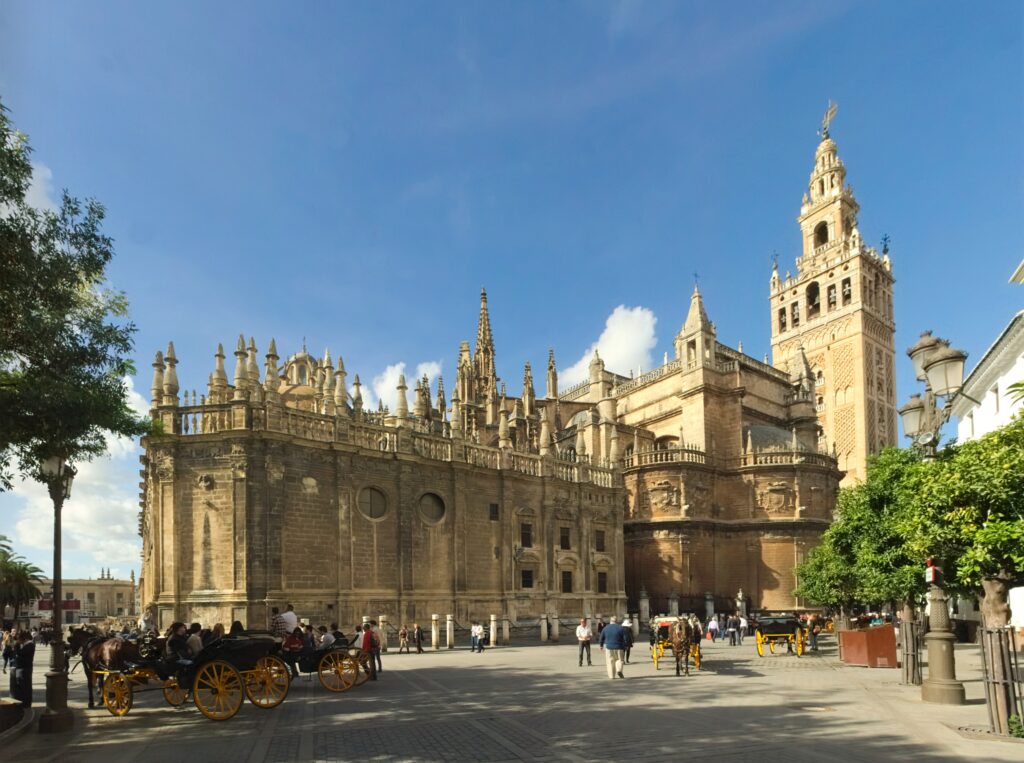
Seville rewards those who stay a while. This is a city best experienced at ground level, wandering from tapas bar to hidden plaza, stumbling upon neighborhood festivals and impromptu flamenco. Where you stay shapes what you see, and each of Seville’s historic neighborhoods offers something different.
Santa Cruz: The Postcard Quarter
Santa Cruz is the old Jewish quarter, a maze of whitewashed alleys, wrought-iron balconies dripping with geraniums, and pocket-sized plazas where orange trees provide shade. It’s beautiful, atmospheric, and intensely touristy. You’ll be steps from the Cathedral and the Alcázar, which means early starts before the crowds arrive.
The upside: unbeatable location and undeniable charm. The downside: inflated restaurant prices and selfie sticks at every corner. Stay here if it’s your first visit and you want classic Seville within walking distance of everything. Calle Santa María la Blanca and Plaza de Doña Elvira are among the prettiest spots, though you’ll share them.
Insider tip: book a small hotel or apartment rather than a large chain. The intimate casas palacio—converted noble houses with interior courtyards—capture the neighborhood’s soul better than generic accommodations.
El Arenal: Bulls, Bars, and River Views
Just west of Santa Cruz, El Arenal runs along the Guadalquivir River and centers around the Plaza de Toros de la Maestranza, Spain’s most famous bullring. The neighborhood feels less manicured than Santa Cruz but more lived-in, with excellent tapas bars frequented by locals and a riverside promenade perfect for evening strolls.
You’re still close to major sights—the Torre del Oro is here, and the Cathedral is a five-minute walk—but accommodations tend to be better value. Calle Adriano and the streets around Calle Antonia Díaz are lined with solid neighborhood bars serving cold manzanilla and crispy pavía de bacalao.
Stay here if you want proximity to monuments without quite so many tour groups, and if you appreciate being near the Triana bridge for quick access to Seville’s most authentic neighborhood.
Triana: Across the River, Into the Real Seville
Cross the Puente de Isabel II and you’re in Triana, the historic ceramics and flamenco quarter that retains a fierce local identity. This is where Sevillanos actually live, shop at the Mercado de Triana, and drink at century-old taverns that have never seen a tour bus.
Triana isn’t as polished as the center—you won’t find grand monuments here—but the neighborhood’s authenticity is precisely the point. Calle Betis runs along the river with bars and restaurants offering views back toward the city. Calle Pureza and Calle San Jacinto are the main arteries, lined with azulejo-tiled facades, family-run ceramics shops, and no-frills bars.
For flamenco, this is ground zero. Peñas (flamenco clubs) like La Anselma offer raw, unpredictable performances nothing like the polished tourist shows. Stay here if you want to experience Seville as locals do, don’t mind a ten-minute walk to major sights, and value neighborhood life over postcard views.
Centro and Plaza de la Encarnación: Modern Seville
North of the Cathedral lies Centro, a broader area anchored by Plaza de la Encarnación and the controversial Metropol Parasol—the giant wooden mushroom structure locals call Las Setas. This is shopping-district Seville: Calle Sierpes, Calle Tetuán, and the lanes around Plaza del Salvador buzz with commercial energy.
You’ll find mid-range chain hotels, excellent public transport connections, and a younger, less tourist-focused crowd in the bars and restaurants. Plaza del Salvador, just behind the Cathedral, is one of Seville’s great social hubs—locals pack the plaza’s terrace bars every evening, beer and montadito in hand.
This area works well if you’re blending sightseeing with everyday Spanish life, want easy metro access, or traveling with teens who’ll appreciate the shopping streets and modern vibe.
What to Know Before You Arrive
Seville operates on a rhythm that catches first-time visitors off guard. Lunch runs from 2:00 to 4:00 p.m., dinner starts at 9:00 p.m. or later, and many shops close for siesta between roughly 2:00 and 5:00 p.m. Plan accordingly.
Summer—particularly July and August—brings scorching heat, often exceeding 100°F. If you’re visiting then, book accommodations with air conditioning (not all older buildings have it), plan sightseeing for early morning and late afternoon, and embrace the siesta. Spring (April and May) and fall (September and October) offer far more comfortable temperatures and are peak visiting seasons.
The city is compact and walkable, though cobblestones and uneven pavement make comfortable shoes essential. Taxis are plentiful and affordable for longer trips, and the metro connects outlying areas, though you’ll rarely need it in the historic center.
One final note: Seville rewards spontaneity. The best moments often happen when you’re wandering without a plan—a neighborhood festival you didn’t know about, a tiny bar where the bartender insists you try his mother’s tortilla, a guitarist practicing scales in a hidden courtyard. Choose your neighborhood, but leave room to get pleasantly lost.
Want more insider stories from Seville and across Spain? Subscribe to the Love Spain newsletter—one short story delivered daily, written for travelers who want to go deeper.
Tours & experiences in Spain


Powered by Viator. Some links are affiliate links — we may earn a small commission at no extra cost to you.