
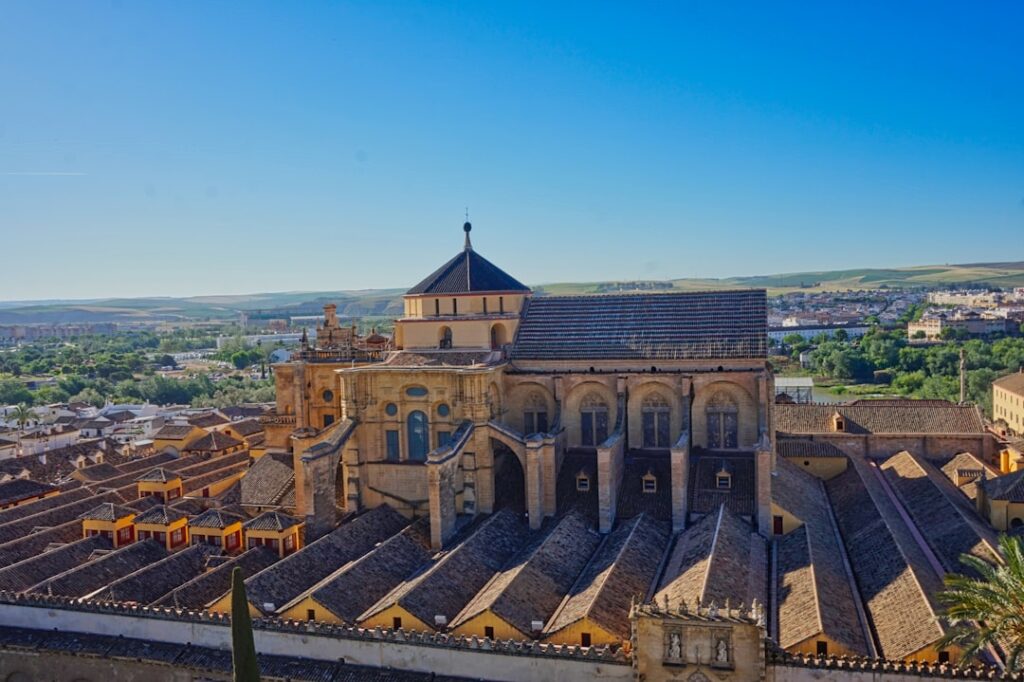
The Mezquita of Córdoba ranks among the world’s most astonishing buildings—a UNESCO World Heritage site where Islamic and Christian architecture coexist in ways that will stop you in your tracks. Walking into the prayer hall feels like entering an enchanted forest: 856 columns rise from the floor, topped with red-and-white striped arches that seem to multiply endlessly in every direction. Then, in the center, a full Renaissance cathedral rises from the heart of the mosque. It shouldn’t work, but somehow it does.
This is Córdoba’s masterpiece, and it deserves more than a quick photo. Here’s how to experience the Mezquita properly.
The History You Need to Know
Construction began in 784 when Córdoba was the capital of Al-Andalus, the most powerful city in Western Europe. The Umayyad caliph Abd al-Rahman I built the original mosque on the site of a Visigothic church, and successive rulers expanded it over two centuries until it became the second-largest mosque in the world.
After the Christian conquest in 1236, the building became a cathedral. The most dramatic change came in the 16th century when Charles V authorized construction of a Renaissance nave right through the center of the prayer hall. The result is architecturally shocking: a Catholic cathedral literally carved into the heart of an Islamic mosque. Legend has it that when Charles V saw the finished work, he told the cathedral chapter, “You have built what you or others might have built anywhere, but you have destroyed something that was unique in the world.”
Today it’s officially the Cathedral of Our Lady of the Assumption, but everyone calls it the Mezquita, and its layered history is exactly what makes it unforgettable.
What to See Inside
Enter through the Patio de los Naranjos, the orange tree courtyard where worshippers once performed ritual ablutions. The trees are arranged in rows that align perfectly with the columns inside—step through the Puerta de las Palmas and you’ll see why. The transition from courtyard to prayer hall is breathtaking.
The forest of columns creates a hypnotic rhythm. The double arches—horseshoe arches below, semicircular arches above—use alternating red brick and white stone in a striped pattern inspired by the Dome of the Rock in Jerusalem. Walk slowly and let the perspective shift. The columns seem to multiply as you move.
Head toward the center to find the cathedral nave, a soaring Gothic and Renaissance structure with a baroque choir and mahogany stalls. The contrast is jarring but fascinating—ornate Christian altarpieces surrounded by Islamic arches.
Don’t miss the mihrab, the prayer niche facing Mecca, in the southern wall. Its horseshoe arch is covered in gold mosaics, intricate marble work, and Quranic inscriptions. The craftsmanship is extraordinary—Byzantine artisans were brought from Constantinople to create the decorations. The dome above features an eight-pointed star pattern that seems to float.
Look for the Capilla de Villaviciosa, where Gothic vaulting meets Moorish arches in yet another architectural collision. And if you can, climb the bell tower (the former minaret) for views across Córdoba’s rooftops to the Sierra Morena beyond.
Practical Visiting Tips
The Mezquita is open Monday through Saturday from 10 a.m. to 7 p.m. in summer, with shorter hours in winter, and Sunday hours are limited with free entry for morning mass. Buy tickets online in advance—lines can stretch around the block, especially in spring and fall.
General admission is €13, and an audio guide adds €6 (worth it for the historical context). If you want the tower, that’s a separate €3 ticket with timed entry.
The best time to visit is right at opening or late afternoon when tour groups thin out. The play of light through the arches changes throughout the day—morning light enters from the courtyard side, while late afternoon sun streams through the western windows.
Early birds get a special treat: weekday mornings from 8:30 to 9:30 a.m., entry is free. You’ll share the space with worshippers, and photography is restricted, but experiencing the Mezquita in near-silence is worth the early alarm.
After your visit, wander the surrounding Judería, Córdoba’s old Jewish quarter. The narrow whitewashed streets—Calleja de las Flores offers the classic Mezquita tower view framed by geraniums—lead to hidden patios and excellent taverns. Try Bodegas Mezquita Céspedes on Calle Céspedes for salmorejo and local Montilla-Moriles wine.
Getting There
Córdoba is an easy day trip from Seville (45 minutes by high-speed train) or Madrid (under two hours). The Mezquita sits in the historic center, a 15-minute walk from the train station or a short taxi ride. If you’re staying overnight—recommended, to see the monument and the Judería at a relaxed pace—hotels in the old quarter put you steps from the entrance.
The Mezquita represents something rare: a monument that preserves competing narratives rather than erasing them. It’s a building that refuses to choose, and the result is one of the most moving architectural experiences in Spain.
Want more insider guides to Spain’s greatest landmarks and hidden corners? Subscribe to the Love Spain newsletter—one short story a day, straight to your inbox.
Tours & experiences in Spain


Powered by Viator. Some links are affiliate links — we may earn a small commission at no extra cost to you.