
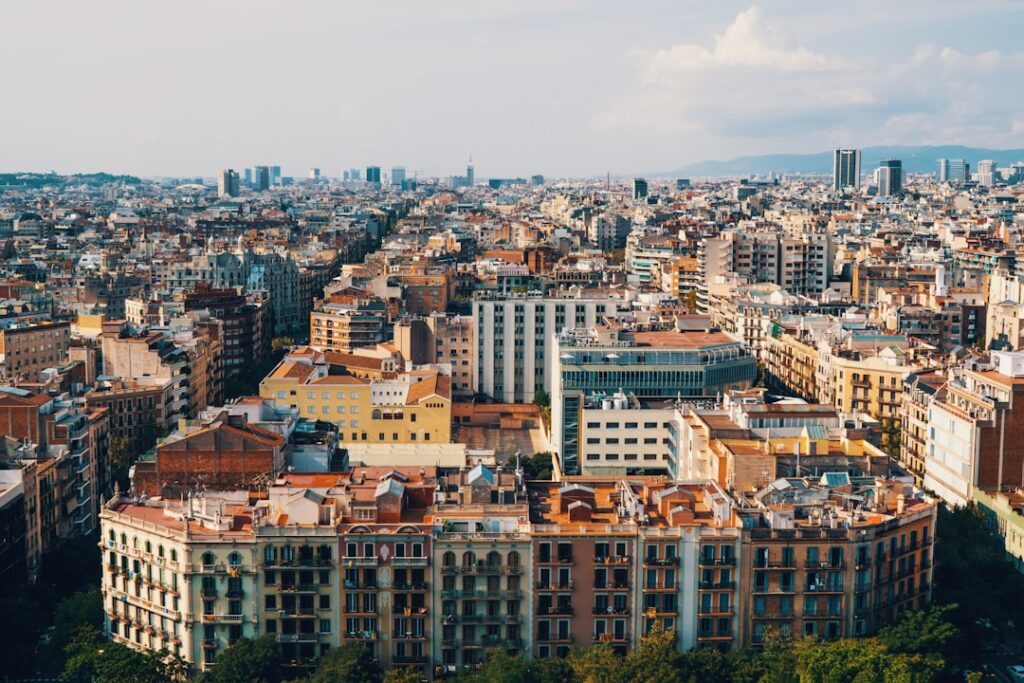
Barcelona isn’t a city you visit—it’s a collection of distinct neighborhoods, each with its own rhythm, character, and appeal. Choose the wrong base and you’ll spend half your trip on the metro. Pick the right one and you’ll fall into the city’s daily life: morning café con leche at a corner bar, evening paseos down tree-lined boulevards, late dinners in squares where locals actually outnumber tourists.
Here’s how to choose where to stay in Barcelona, neighborhood by neighborhood.
Barri Gòtic: Medieval Streets and Gothic Grandeur
The Gothic Quarter is Barcelona at its most atmospheric. Narrow medieval lanes open onto sunlit plazas, Roman walls peek between tapas bars, and the Cathedral rises above it all. You’re steps from Las Ramblas, the waterfront, and El Born, with enough bakeries, wine bars, and hidden squares to fill a week.
Stay here if you want walkability and old-world charm. The trade-off? It’s touristy, especially around the Cathedral and Plaça Reial, and some streets can feel claustrophobic. Look for hotels on quieter lanes like Carrer dels Boters or near Plaça Sant Felip Neri, where the crowds thin out after dark.
Expect to pay premium rates for boutique hotels in restored palaces. Budget travelers can find hostels, but light sleepers should avoid anything facing Las Ramblas—it’s loud until 3 a.m.
El Born: The Cool Neighborhood Everyone Wants
Just across Via Laietana from the Gothic Quarter, El Born (officially Sant Pere, Santa Caterina i la Ribera) is where Barcelona’s creative class lives, eats, and hangs out. The Picasso Museum, Santa Maria del Mar basilica, and the old Mercat del Born cultural center anchor the neighborhood, but the real draw is the vibe: independent boutiques on Carrer del Rec, natural wine bars on Carrer de la Vidreria, and some of the city’s best restaurants tucked into medieval buildings.
Passeig del Born is the main artery—a wide promenade lined with cafés perfect for people-watching. Stay near here or closer to the Parc de la Ciutadella for greenery and a neighborhood feel. El Born is less congested than the Gothic Quarter but just as central, with easy access to Barceloneta beach and the Ciutadella-Vila Olímpica metro.
Accommodations run the gamut from design hotels to vacation rentals. Book early—this is Barcelona’s most in-demand neighborhood.
Eixample: Modernisme and Wide Boulevards
If you came to Barcelona for Gaudí, stay in the Eixample. This 19th-century grid of wide avenues and chamfered corners is home to the Sagrada Família, Casa Batlló, La Pedrera, and dozens of other modernist masterpieces. The neighborhood splits into two zones: Dreta (right) and Esquerra (left) of Passeig de Gràcia.
Dreta de l’Eixample is more polished and expensive, with high-end shopping along Passeig de Gràcia and Rambla de Catalunya. Esquerra is more residential, with better value and a thriving LGBTQ+ scene around Carrer del Consell de Cent (the heart of the Gaixample district). Both sides are well-connected by metro and packed with restaurants, though you’ll find fewer tourists the farther you venture from Passeig de Gràcia.
Stay here if you want space, straight streets you can navigate, and easy metro access to everywhere. The downside? The Eixample lacks the medieval charm of the old city and the beachy vibe of Barceloneta. It’s Barcelona at its most elegant, but also its most orderly.
Gràcia: Village Life in the Big City
North of the Eixample, Gràcia still feels like the independent village it was before Barcelona swallowed it up in the 1890s. Plaça del Sol, Plaça de la Virreina, and Plaça del Diamant are the social hubs—squares ringed by low-key bars and cafés where neighbors meet for vermut and kids play football until dark.
This is where to stay if you want to live like a local. You’re a 15-minute walk (or quick metro ride) from Park Güell and close enough to the Eixample and old city, but removed from the tourist tide. Gràcia has its own personality: bohemian, leftist, fiercely proud, and home to some of Barcelona’s best independent restaurants and vintage shops.
Accommodations are mostly small hotels and apartments. The neighborhood comes alive during the Festa Major de Gràcia in August, when residents deck out entire streets in elaborate decorations. Any other time of year, it’s blissfully quiet.
Barceloneta: Beachfront and Seafood
If you want sand, sea, and seafood, stay in Barceloneta. This wedge-shaped fisherman’s quarter juts into the Mediterranean, with the beach on one side and the old port on the other. Narrow streets are lined with washing hanging from balconies, seafood restaurants serving grilled fish and black rice, and bars that have been pouring beer and vermut since the 1920s.
The beach is the main attraction—wide, sandy, and backed by a boardwalk perfect for morning runs or sunset strolls. You’re also close to the Port Olímpic (good for nightlife, less good for authenticity) and a 20-minute walk from the Gothic Quarter.
The catch? Barceloneta is small, gets mobbed in summer, and has limited accommodation. Most options are vacation rentals or modern hotels near the W Barcelona. It’s louder and less refined than other neighborhoods, but if you want to wake up to the Mediterranean, there’s nowhere better.
Where to Book and When
Barcelona’s high seasons are late spring (April through June) and early fall (September and October). Book at least two months ahead for these periods, especially in El Born and Gràcia. July and August are hot and crowded, but you’ll find better deals. Winter (November through March) is the sweet spot for rates, though some beach-facing hotels in Barceloneta close or drop services.
No matter where you stay, you’ll tap into Barcelona’s excellent metro system—but choosing the right neighborhood means you’ll walk more and metro less, and that’s when you really start to know this city.
Want more insider tips on Barcelona and the rest of Spain? Subscribe to the Love Spain newsletter—one short story a day, straight to your inbox.
Tours & experiences in Spain


Powered by Viator. Some links are affiliate links — we may earn a small commission at no extra cost to you.