
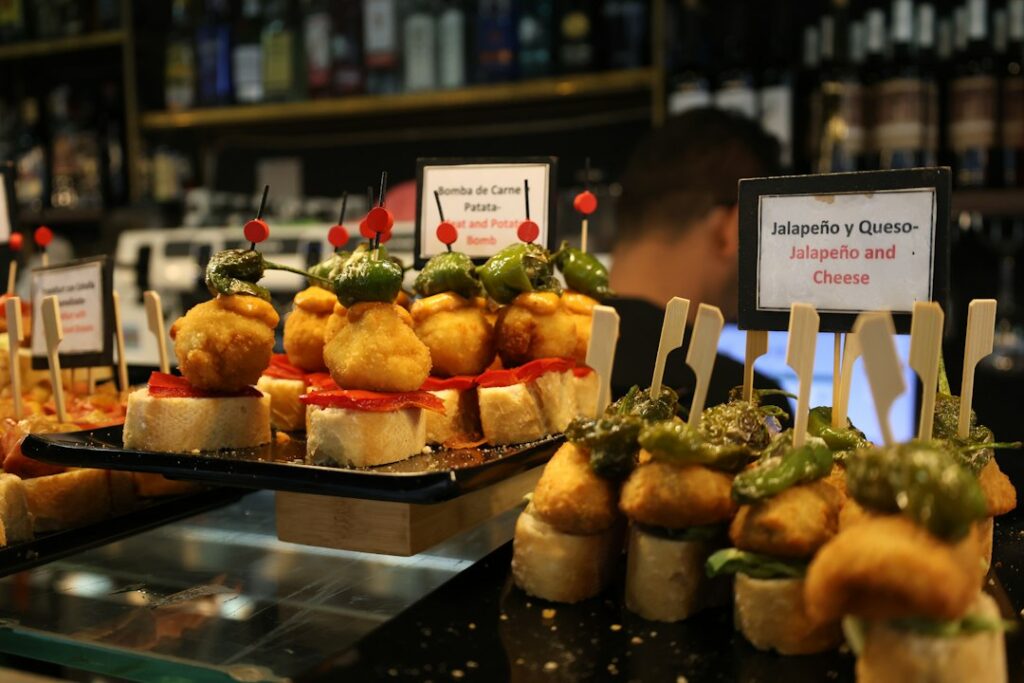
Barcelona’s tapas culture doesn’t announce itself the way it does in Madrid or Seville. There are no sprawling bar crawls that feel like a civic institution, no single street where everyone goes. Instead, the city’s best tapas hide in neighborhood bars—tiny counters in Gràcia, century-old vermut spots in Poble Sec, and seafood temples in Barceloneta where locals queue on Sunday afternoons.
The key is knowing where to go. Barcelona’s tapas reflect the city itself: Catalan in spirit, Mediterranean in flavor, and shaped by waves of migration from Andalusia, Galicia, and the Basque Country. You’ll find patatas bravas everywhere, but also conservas from the Cantabrian coast, grilled sardines, and bombes—fried potato bombs stuffed with meat and aioli that were invented here.
This is your neighborhood-by-neighborhood guide to eating tapas in Barcelona, with the bars worth your time and the dishes to order when you get there.
El Born and the Gothic Quarter: History and Crowds
El Born is ground zero for tourists looking for tapas, which means it’s also where you’ll find the most mediocre options. But a few spots rise above the noise.
Head to El Xampanyet on Carrer de Montcada, a tiny bar that’s been pouring cava and serving anchovies since 1929. The walls are tiled, the counter is marble, and the house cava comes in small tumblers. Order the boquerones en vinagre (white anchovies) and the platillo de queso—cured cheese with nuts and honey.
In the Gothic Quarter, Bar del Pla on Carrer de Montcada offers small, creative plates—think octopus with romesco or duck confit croquetas—in a calm, candlelit setting. It’s more contemporary than traditional, but the execution is flawless.
Barceloneta: Seafood by the Sea
Barceloneta is where you go for seafood tapas. The neighborhood was built by fishermen in the 18th century, and the tradition holds.
Can Ros, near the Barceloneta market, has been family-run since 1911. It’s a sit-down spot, not a bar, but the seafood is impeccable: grilled gambas, calamares a la plancha, and arroz caldoso if you’re hungry. Lunch only, and it fills fast.
For a more casual vibe, try La Cova Fumada on Carrer del Baluard. This is where the bomba was invented—a fried potato ball stuffed with meat and topped with aioli and spicy tomato sauce. It’s cramped, loud, and packed with locals. Get there before 1 p.m. or after 3 p.m. to avoid the worst of the queue.
Poble Sec: Vermut and Small Plates
Poble Sec, tucked beneath Montjuïc, is where Barcelona’s old-school tapas culture thrives. The streets around Carrer de Blai are lined with bars pouring vermut on tap and serving conservas, croquetas, and grilled everything.
Quimet & Quimet is the neighborhood’s crown jewel—a standing-room-only bar where five generations of the Quim family have been stacking conservas into edible sculptures. Order the house montaditos: smoked salmon with honey, mussels with anchovy, sea urchin when it’s in season. Pair it with a glass of vermut negre.
Down the street, La Tasqueta de Blai offers pintxos Basque-style: small bites on toothpicks, displayed on the bar, priced by the stick. It’s simple, affordable, and always busy.
Gràcia: Neighborhood Bars and Catalan Flavors
Gràcia feels like a village within the city, and its tapas bars reflect that intimacy. These are places where regulars have their corner, and the bartender knows what you drink.
La Pepita on Carrer de Còrsega serves modern Catalan tapas in a warm, wood-paneled dining room. The menu changes seasonally, but the steak tartare and grilled octopus are constants. Reservations recommended.
For something more casual, Bar Bodega Quimet on Carrer de Vic is a century-old vermuteria with marble tables, hanging hams, and a menu of cold cuts, cheeses, and conservas. It’s perfect for a lazy afternoon with a bottle of cava and a plate of fuet.
Practical Tips for Tapas in Barcelona
Most tapas bars in Barcelona don’t open for lunch until 1 p.m., and dinner service starts around 8 p.m. If you show up at 6 p.m., you’ll find shuttered doors.
Vermut hour—late morning or early afternoon—is a Barcelona institution. Many bars serve a free tapa with your first glass of vermouth. It’s a civilized way to start the day.
Don’t expect free tapas with every drink the way you might in Granada or León. In Barcelona, you order and you pay. But the quality is worth it.
If you’re exploring multiple neighborhoods, the metro is your friend. Most of these bars are within a few stops of each other, and the L3 line connects Poble Sec, the Gothic Quarter, and Gràcia in under 20 minutes.
Want more Barcelona stories and insider tips delivered to your inbox? Subscribe to the Love Spain newsletter—one short story a day, straight from the streets, kitchens, and back roads of Spain.
Tours & experiences in Spain


Powered by Viator. Some links are affiliate links — we may earn a small commission at no extra cost to you.