
Spain doesn’t do festivals halfway. While other countries have parades and fireworks, Spain sets entire sculptures ablaze, pelts strangers with overripe tomatoes, and runs alongside half-ton bulls through medieval streets. These aren’t performances for tourists—they’re living traditions where entire towns shut down, locals dress up, and the rules of ordinary life are temporarily suspended.
If you want to understand Spain’s capacity for joy, chaos, and communal celebration, you need to experience at least one of these legendary fiestas. Here’s what you need to know about three of the biggest.
San Fermín: Running with the Bulls in Pamplona
Every July 6th through 14th, the northern city of Pamplona transforms into one giant street party. San Fermín—immortalized by Hemingway in The Sun Also Rises—is famous for the encierro, the daily running of the bulls, but the festival itself is eight days of nonstop celebration.
The bull runs happen every morning at 8 a.m. sharp. Six fighting bulls and several steers charge through an 875-meter course from the corrals to the Plaza de Toros bullring, with hundreds of runners (mostly men in traditional white shirts and red bandanas) sprinting ahead. The entire run lasts just three or four minutes, but it’s heart-pounding and genuinely dangerous—injuries happen every year.
If you’re not running, the best viewing spots are along Calle Estafeta or near the curve at Mercaderes, but you’ll need to claim your spot by 6:30 a.m. Many locals watch from rented balconies overlooking the route.
Beyond the bulls, San Fermín is a massive party. The chupinazo—the rocket launch from the town hall balcony—kicks off the festival at noon on July 6th. From that moment, Plaza del Castillo becomes the heart of the action, with brass bands, sangría flowing from portable botas, and crowds singing the festival’s unofficial anthem, “Pobre de Mí.”
Book accommodations months in advance—hotels fill up a year ahead. Expect to pay triple the usual rates. Many visitors skip hotels entirely and party through the night, catching sleep on the train or in nearby San Sebastián, just an hour away.
Las Fallas: Valencia’s Week of Fire
Las Fallas, held March 15th through 19th in Valencia, is Spain’s most spectacular pyrotechnic festival. The city fills with hundreds of massive fallas—intricate sculptures made of wood, papier-mâché, and Styrofoam, often satirical and always jaw-dropping. Some tower five stories high and cost upwards of €100,000 to build.
For five days, Valencians admire these masterpieces. Then, on the final night—La Cremà, March 19th—they burn every single one to the ground.
The cremà starts around 10 p.m. in neighborhoods across Valencia, with each falla torched in turn. Firefighters hose down surrounding buildings as flames leap into the night sky. The final burn, reserved for the winning falla in Plaza del Ayuntamiento, doesn’t start until well after midnight. Crowds pack the square, and the heat is intense even from a distance.
During the day, explore the fallas scattered throughout the city center—especially in Ruzafa, Calle Sueca, and around the Plaza de la Reina. The Museo Fallero preserves one ninot (figure) from each year, voted by the public to be saved from the flames.
Don’t miss the mascletàs, daily 2 p.m. firecracker displays in Plaza del Ayuntamiento that are less about visuals and more about pure concussive sound. Wear earplugs. Seriously.
La Tomatina: The World’s Biggest Food Fight
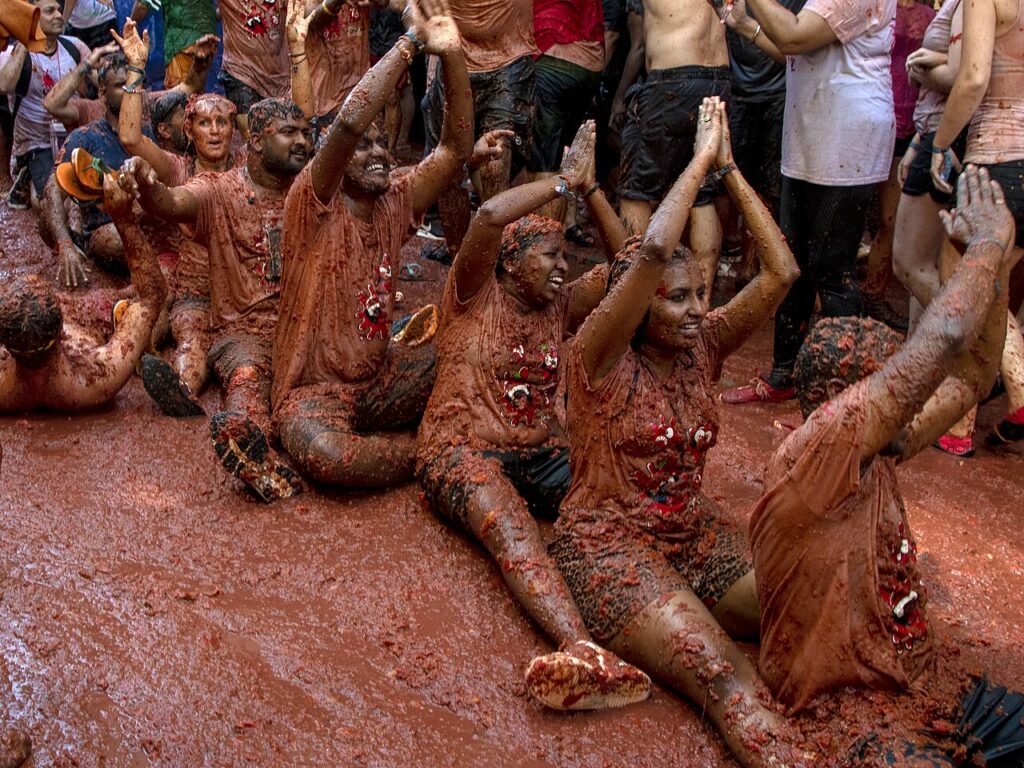
On the last Wednesday of August, the small Valencian town of Buñol (population 9,000) hosts La Tomatina, where roughly 20,000 people hurl 150 tons of overripe tomatoes at each other for exactly one hour.
It sounds ridiculous because it is—and that’s precisely the point. There’s no deep historical significance, no religious roots. La Tomatina started in 1945, possibly from a street fight during a parade, and locals liked it enough to make it an annual tradition.
The fight begins at 11 a.m. when someone manages to climb a greased pole and grab the ham at the top (the palo jabón). Trucks roll down Calle del Cid loaded with tomatoes, and chaos erupts. By noon, a cannon fires to signal the end, and the town fire trucks hose down the streets and participants.
Rules are simple: squish tomatoes before throwing (to avoid injuries), don’t bring bottles or hard objects, and stop immediately when the second cannon sounds. Wear clothes you can throw away and consider goggles—tomato juice stings.
Buñol is 38 kilometers west of Valencia, easily reached by train or bus. Renfe runs special early-morning trains from Valencia’s Estación del Norte. Buy tickets well in advance through the official La Tomatina website—entry is capped and sells out. Arrive early; the town gets packed.
Practical Tips for Spain’s Big Festivals
These fiestas draw massive crowds, so plan accordingly. Book transportation and lodging months ahead—hotels, trains, and buses fill up fast. Pamplona and Buñol especially see prices spike during festival dates.
Pack layers. March in Valencia can be cool at night, even as bonfires rage. July in Pamplona is warm, but mornings start chilly. For La Tomatina, bring a complete change of clothes in a waterproof bag.
Stay aware. Pickpockets work festival crowds, and the chaos of these events makes it easy to lose track of belongings. Keep valuables minimal and secure.
Most importantly, embrace the madness. These festivals aren’t polite or orderly—they’re loud, messy, and utterly unforgettable.
Want more insider tips on Spain’s festivals, hidden corners, and local secrets? Subscribe to the Love Spain newsletter and get one short story a day, straight to your inbox.
Tours & experiences in Spain


Powered by Viator. Some links are affiliate links — we may earn a small commission at no extra cost to you.