
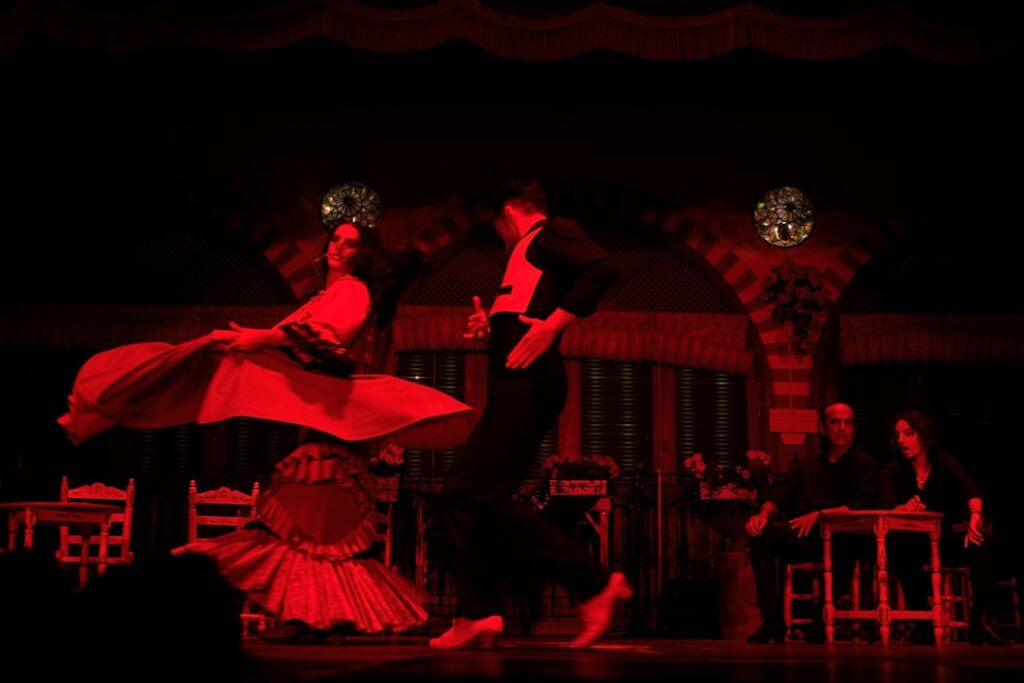
Flamenco isn’t a tourist show—it’s the beating heart of Andalusia, a raw expression of joy, sorrow, and duende that’s been passed down through generations. While you’ll find flamenco performances across Spain, Andalusia is where it was born, and where you’ll still find the most authentic, spine-tingling shows. Here’s where to go to experience the real thing.
Seville: The Flamenco Capital
Seville claims flamenco as its own, and for good reason. The Triana neighborhood, across the Guadalquivir River, is the traditional home of flamenco families and still the best place to see it performed with genuine passion.
La Casa del Flamenco, housed in a 15th-century palace near Plaza de Santa Cruz, offers nightly performances in an intimate setting where you’re close enough to see the sweat on the dancers’ faces and feel the floor vibrate with each zapateado (footwork). The acoustics are remarkable, and there’s no amplification needed.
For a more local experience, head to Casa de la Memoria in the Santa Cruz quarter. The small courtyard venue hosts shows that feel more like a private gathering than a performance. Arrive early—seating is limited and there are no bad seats.
Avoid the flashy tablaos along Avenida de la Constitución that pair flamenco with three-course dinners. You’ll pay twice as much for half the authenticity.
Granada: Flamenco in the Caves
The Sacromonte neighborhood of Granada offers something you won’t find anywhere else: flamenco performed in centuries-old cave dwellings carved into the hillside. The Roma families who’ve lived here for generations created a unique style of flamenco, and their descendants still perform it.
Cueva de la Rocío and Zambra María la Canastera are both family-run venues where the performers are often related to each other, creating an atmosphere of genuine emotion rather than rehearsed routine. The cave acoustics add a haunting quality to the singing that’s impossible to replicate elsewhere.
The walk up to Sacromonte after dark can be tricky—the cobblestone paths are steep and poorly lit. Take a taxi to the venue and arrange for them to pick you up afterward, or book a show that includes transportation.
Jerez de la Frontera: The Purist’s Choice
If Seville is flamenco’s capital, Jerez is its conservatory. This is where the art form is studied, preserved, and performed with almost academic precision—but that doesn’t mean it lacks emotion.
The Centro Cultural Flamenco Don Antonio Chacón offers free entry to its museum and frequently hosts performances by students and masters from the city’s flamenco schools. Peña Flamenca Tío José de Paula, one of several peñas (flamenco clubs) in the city, welcomes visitors to weekend performances where locals come to hear their favorite singers and dancers.
Time your visit for late February or early March to catch the Festival de Jerez, a two-week celebration that brings the best flamenco artists from across Spain to perform in theaters, plazas, and bodegas throughout the city.
What to Know Before You Go
Real flamenco happens late. Shows rarely start before 9 p.m., and the best performances often don’t begin until 10:30 or 11. In smaller venues and peñas, the real magic happens after midnight when the formal show ends and spontaneous performances break out.
Don’t applaud between songs—wait for the entire set to finish. Do call out encouragement during the performance: “¡Olé!” when a dancer nails a difficult sequence, “¡Eso es!” when a singer hits a powerful note, or “¡Agua!” (water!) to acknowledge something particularly moving.
Most venues don’t require advance reservations except during peak tourist season (April through October), but smaller spots like Casa de la Memoria fill up quickly. Book a day or two ahead to be safe.
Skip the dinner-and-flamenco packages marketed to cruise ship passengers. The best venues focus on the performance, not the paella. Eat dinner beforehand at a neighborhood tapas bar—you’ll have a better meal and pay less.
Ready to plan your Andalusian adventure? Subscribe to the Love Spain newsletter and get one short story a day, delivered to your inbox, about the Spain that goes beyond the guidebooks.
Tours & experiences in Spain


Powered by Viator. Some links are affiliate links — we may earn a small commission at no extra cost to you.