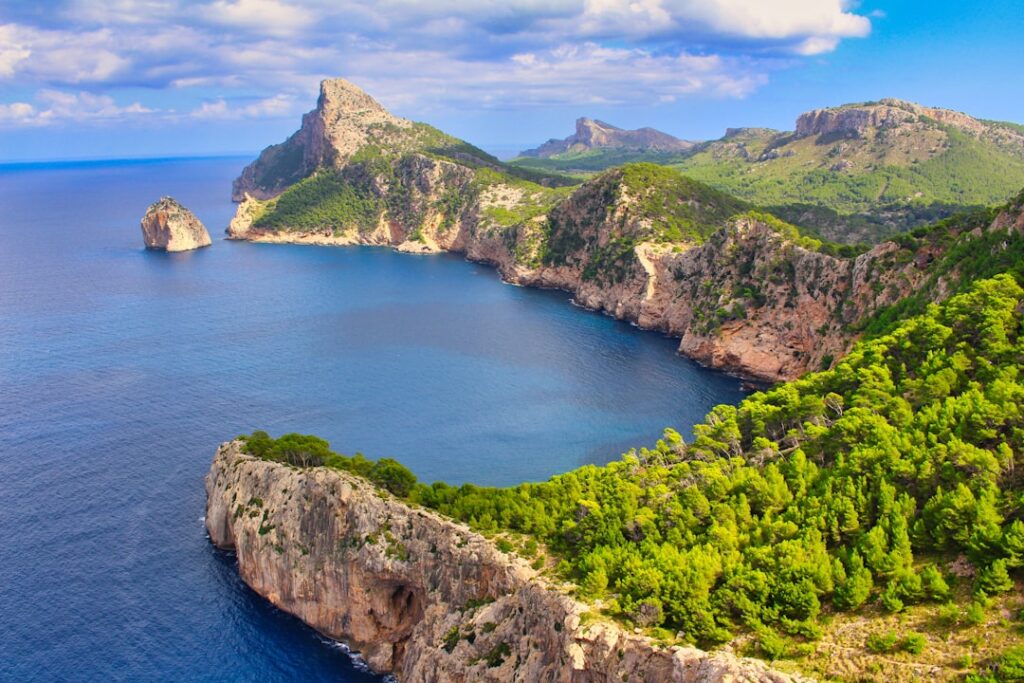
Most visitors land in Mallorca for the beaches and never leave the coast. That’s their loss. The largest of the Balearic Islands hides a completely different world inland—one of jagged limestone peaks, honey-stone villages clinging to hillsides, and winding roads that cut through ancient olive groves and almond orchards.
If you rent a car and venture beyond Palma and the resort strips, you’ll find the Mallorca that locals actually live in. Here’s where to go.
The Tramuntana Mountains: Spain’s Most Dramatic Island Range
The Serra de Tramuntana runs the length of Mallorca’s northwest coast, a UNESCO World Heritage landscape of sheer cliffs, terraced farms, and villages so picturesque they barely seem real. The drive along the Ma-10 from Andratx to Pollença is one of Europe’s great coastal roads—think hairpin turns, vertigo-inducing views, and pullouts where you’ll want to stop every few minutes.
Start in Valldemossa, the postcard village where Chopin spent a miserable winter in 1838. The Real Cartuja de Valldemossa monastery is worth the entrance fee, but the real draw is wandering the cobbled lanes lined with shuttered stone houses and pots of geraniums. Arrive early or late to dodge the tour groups.
Ten minutes north, Deià has been an artists’ colony since Robert Graves settled here in the 1930s. It’s tiny, expensive, and impossibly charming. Have lunch at Ca’s Patro March, a seafront restaurant in the rocky cove of Cala Deià—get there by noon or you won’t get a table.
Further along, Sóller sits in a lush valley of orange groves. The town itself is lovely, but the real attraction is the vintage wooden tram that rattles down to Port de Sóller, a horseshoe bay with waterfront seafood restaurants and a laid-back vibe that feels a world away from the package-tour coast.
Hilltop Villages of the Interior
East of the mountains, the interior flattens into rolling farmland dotted with windmills and medieval towns. Pollença is the cultural heart of the north—a market town with a central square shaded by plane trees, good restaurants, and the 365-step Calvari staircase leading to a hilltop chapel with sweeping views.
Sunday mornings, the market takes over Plaça Major. You’ll find everything from produce to pottery, but go for the people-watching and the atmosphere, not souvenirs.
In the center of the island, Sineu hosts Mallorca’s oldest agricultural market every Wednesday. It’s the real deal—farmers selling livestock, locals buying vegetables, and barely a tourist in sight. The Gothic church of Santa Maria dominates the skyline, and the surrounding streets are perfect for an aimless wander.
South of Sineu, the walled town of Petra is the birthplace of Junípero Serra, the Franciscan friar who founded missions across California. The town is quiet, authentic, and feels untouched by the coastal tourism machine. Have lunch at Sa Plaça, where the menú del día is simple, seasonal, and exactly what you want after a morning of exploring.
The East Coast: Caves and Coves
The east coast offers a gentler alternative to the Tramuntana, with hidden coves, fishing villages, and some of Europe’s most impressive sea caves. The Coves del Drach near Porto Cristo are the most famous—vast underground chambers with a subterranean lake where classical musicians perform from boats. It’s touristy, but genuinely spectacular.
The nearby town of Artà is worth a stop for its hilltop fortress, the Santuari de Sant Salvador, with ramparts and views that stretch to the sea. The climb up the cypress-lined staircase is steep but short, and you’ll likely have the place to yourself outside of peak summer.
For a quiet beach escape, continue north to Cala Mesquida, a wide, dune-backed bay that’s protected as a natural area. Even in August, it feels uncrowded.
Practical Tips for Exploring Inland Mallorca
You’ll need a car. Public buses connect major towns, but they’re slow and infrequent. Book a rental in Palma and set out early—mountain roads get crowded by midday in summer, and parking in villages like Valldemossa fills fast.
Spring (April to May) and fall (September to October) are ideal. The almond blossoms in February are legendary, but temperatures can be cool. Summer is hot and busy, though the higher elevations stay pleasant.
Pack hiking boots if you’re serious about the mountains. The GR 221, also called the Ruta de Pedra en Sec, is a long-distance trail that crosses the Tramuntana. Even a short section, like the walk from Deià to Sóller, rewards with olive-shaded paths and mountain views.
Don’t skip the local food. Inland Mallorca means sobrassada (soft, spiced sausage), tumbet (a layered vegetable dish), and ensaïmada pastries for breakfast. Many villages have family-run cellers—traditional restaurants in former wine cellars—serving hearty, honest Mallorcan cooking.
Want more insider tips on Spain’s islands, cities, and hidden corners? Subscribe to the Love Spain newsletter—one short story a day, straight to your inbox.
Tours & experiences in Spain


Powered by Viator. Some links are affiliate links — we may earn a small commission at no extra cost to you.