
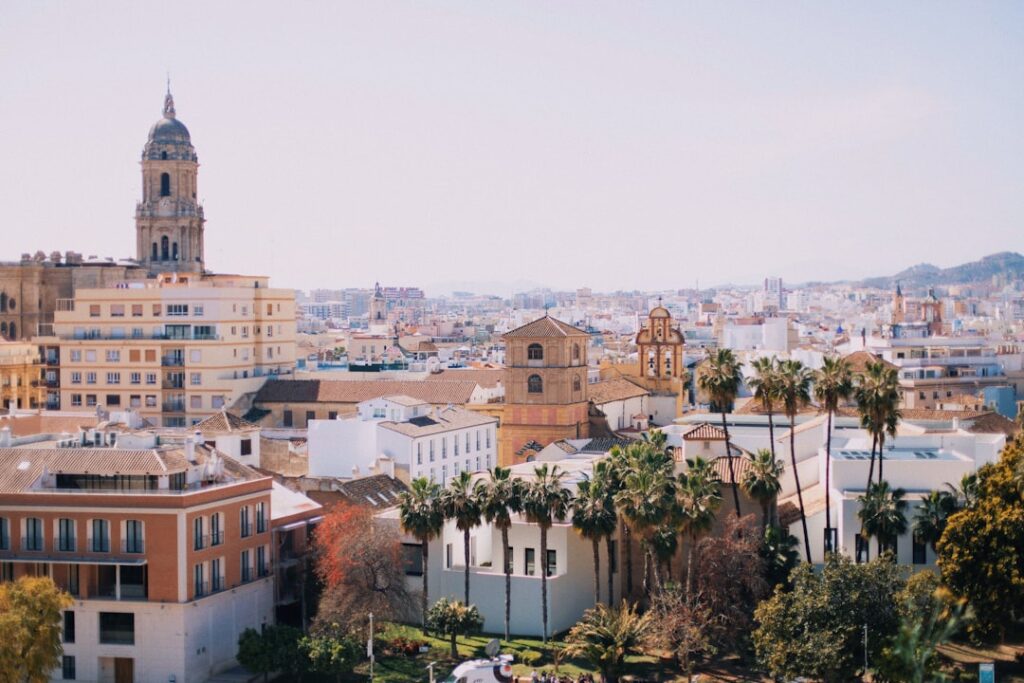
Most travelers zip through Málaga on their way to Marbella or Nerja, and that’s their loss. This Andalusian port city—birthplace of Picasso and gateway to the Costa del Sol—deserves at least two full days of your time. You’ll find Roman ruins beneath glass sidewalks, a Moorish fortress with sweeping Mediterranean views, one of Spain’s best art museum collections, and seafood so fresh it was swimming that morning.
Málaga has shaken off its workaday reputation over the past decade. The historic center now hums with wine bars, boutique hotels, and enough museums to rival cities twice its size, all while keeping the authentic Andalusian character that package-tour towns have long since traded away.
The Alcazaba and Gibralfaro
Start at the Alcazaba, an 11th-century Moorish palace-fortress that rises in tiers above the city center. The climb through horseshoe arches and jasmine-scented courtyards takes about an hour, and the views over the port and bullring are worth every step. Entry is €3.50, but save your ticket—it includes admission to the Roman Theatre at the base of the hill.
From the Alcazaba, a winding path leads up to Castillo de Gibralfaro, the 14th-century castle that once guarded the palace below. The ramparts here offer 360-degree views: the Mediterranean to the south, the city sprawling west, and on clear days, the Rif Mountains of Morocco across the strait. Come an hour before sunset. The walk takes 20 minutes from the Alcazaba, or you can catch bus 35 from Avenida de Cervantes if the heat’s gotten to you.
Picasso, Thyssen, and the Museum Mile
Calle Marqués de Larios, Málaga’s pedestrian shopping avenue, runs straight from the port to Plaza de la Constitución, but veer left onto Calle San Agustín and you’re in museum territory. The Museo Picasso Málaga sits in a restored 16th-century palace and holds over 230 works by the city’s most famous son, from early sketches to late ceramics. It’s rarely crowded, even in high summer.
Two blocks away, the Carmen Thyssen Museum focuses on 19th-century Andalusian painting—landscapes, costumbrista scenes, and romanticized visions of Spanish life that nonetheless capture something true about the light and color of the south. Between the two, duck into Plaza de la Merced, where Picasso’s childhood home has been converted into the Fundación Picasso Museo Casa Natal.
The Centre Pompidou Málaga, in a glass cube at the port, brings contemporary art to the waterfront. It’s the French museum’s only permanent satellite, and the rotating exhibitions are consistently strong.
Markets, Tapas, and Fried Fish
Mercado Central de Atarazanas is where Málaga shops for dinner. The 19th-century iron-and-glass market hall—built on the site of old Moorish shipyards—overflows with glistening fish, Iberian ham, olives, and produce from the surrounding valleys. A handful of counters serve quick lunches: grilled sardines, fried anchovies, or a plate of jamón with bread rubbed with tomato.
For tapas, head to El Pimpi, the sprawling bodega on Calle Granada that’s been pouring sweet Málaga wine since 1971. Yes, it’s touristy, but locals pack the barrel-lined rooms too, especially for the boquerones en vinagre (marinated anchovies) and the house wine served in clay cups. For something quieter, try La Tranca on Calle Carretería or Uvedoble Taberna on Calle Cisneros, both known for generous pours and inventive small plates.
Málaga’s signature dish is pescaíto frito—lightly battered, deep-fried small fish served in a paper cone. Get it at any of the chiringuitos (beach bars) along Pedregalejo, the old fishing neighborhood east of the center. Take bus 11 from Plaza de la Marina, get off at the beach, and follow your nose to El Cabra or El Cachalote.
Getting There and When to Visit
Málaga-Costa del Sol Airport is Spain’s fourth busiest, with direct flights from across Europe and frequent connections to Madrid and Barcelona. The train station, María Zambrano, is a 15-minute walk from the old town and sits on the AVE high-speed line linking Seville, Córdoba, and Madrid. Trains to Seville take 2 hours; Madrid is under 3.
Spring and fall are ideal—warm enough for the beach, cool enough for sightseeing. Semana Santa (Holy Week) brings processions through the streets, solemn and spectacular, but hotels fill fast. August is scorching and crowded. January and February are quiet and mild, with almond blossoms in the hills and hardly a tourist in sight.
Most museums close Mondays. The Alcazaba and Gibralfaro open daily, but check the hours before you climb—they shift with the seasons.
Where Málaga Fits Your Itinerary
Málaga makes an excellent base for exploring the Costa del Sol and inland Andalusia. Nerja and Frigiliana are 45 minutes east by bus. Ronda, with its dramatic gorge and historic bullring, is 90 minutes by train. Granada and the Alhambra are two and a half hours away—book your palace tickets weeks in advance, but the train ride is straightforward.
If you’re staying longer, rent a car and head into the hills. The white villages of the Axarquía—Comares, Cómpeta, Sayalonga—cling to ridges above terraced vineyards and offer a glimpse of rural Andalusia largely untouched by coastal development.
Want more insider tips, hidden gems, and weekly stories from across Spain? Subscribe to the Love Spain newsletter—one short story a day, straight to your inbox.
Tours & experiences in Spain


Powered by Viator. Some links are affiliate links — we may earn a small commission at no extra cost to you.