
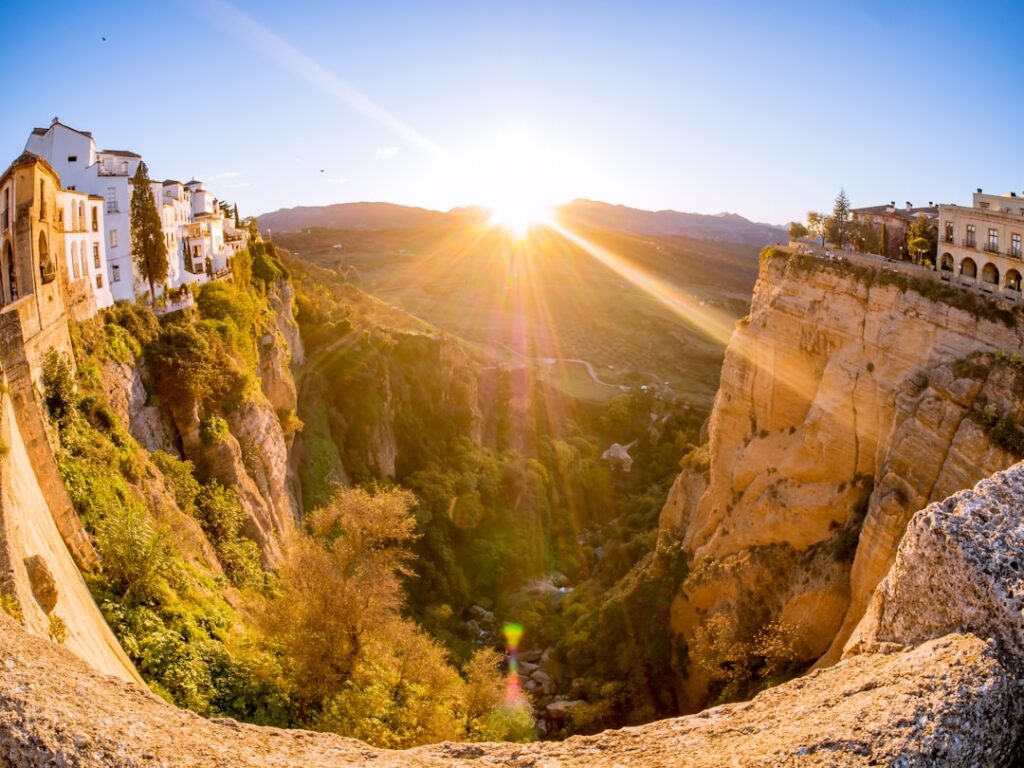
Ronda sits split in two by a 120-meter-deep gorge, the Tajo de Ronda, with the New Bridge—Puente Nuevo—spanning the chasm in one of Spain’s most photographed scenes. This Andalusian mountain town, 90 minutes inland from the Costa del Sol, combines dramatic natural beauty with authentic white-village charm, historic landmarks, and some of the region’s best views.
Whether you’re based in Málaga, Marbella, or Seville, Ronda makes an essential day trip into Andalusia‘s heartland.
The Puente Nuevo and El Tajo Gorge
Start at the Puente Nuevo, completed in 1793 after 42 years of construction. The bridge connects Ronda’s old Moorish quarter, La Ciudad, with the newer El Mercadillo district. Walk to the viewing platforms on either side—Mirador de Aldehuela offers the classic shot looking back at the bridge, while the path down into the gorge from Plaza de María Auxiliadora gives you a perspective from below.
The gorge itself, carved by the Guadalevín River, is home to peregrine falcons and choughs. Early morning or late afternoon light makes the limestone cliffs glow.
Inside the bridge, a small interpretive center tells the story of its construction. The chamber was once used as a prison—not the romantic detail the postcards mention.
Plaza de Toros: Spain’s Oldest Bullring
Ronda’s Plaza de Toros, built in 1785, is the oldest operational bullring in Spain and home to the Royal Cavalry of Ronda. Even if you have no interest in bullfighting, the neoclassical sandstone ring is architecturally stunning, and the museum inside chronicles the history of the spectacle and the Romero dynasty, who established modern bullfighting rules here.
The September Feria Goyesca, when fighters dress in 18th-century costume, is Ronda’s most important annual event. The ring is on Calle Virgen de la Paz, just a few minutes’ walk from the bridge.
Tickets are €8 and include museum access. Go early to avoid tour-bus crowds.
La Ciudad: Ronda’s Moorish Quarter
Cross the Puente Nuevo into La Ciudad, the atmospheric old town with narrow cobbled lanes, whitewashed houses, and wrought-iron balconies overflowing with geraniums. This was the heart of Moorish Ronda before the Reconquista in 1485.
Visit the Palacio de Mondragón, a 14th-century Moorish palace with beautiful gardens and panoramic views. The Arab Baths, dating from the 13th century, are among the best-preserved in Spain—located on Calle San Miguel, down a steep path near the old bridge, Puente Viejo.
The Mirador de Ronda, just off Plaza Duquesa de Parcent, offers sweeping views over the Serranía de Ronda mountains and valley below. Stop for coffee at one of the small cafés along Calle Armiñán.
Where to Eat in Ronda
Ronda’s dining scene balances rustic mountain cooking with modern Andalusian cuisine. For traditional fare, head to Bodega San Francisco on Calle Ruedo Alameda—order the rabo de toro (oxtail stew) or slow-cooked lamb with local wine from the Serranía.
Tropicana, on Plaza del Socorro, serves excellent tapas at local prices away from the main tourist strip. Try the salmorejo (Cordoban cold tomato soup) and grilled pork secreto.
For a splurge with a view, Restaurante Bardal holds a Michelin star and offers tasting menus that reinvent Andalusian ingredients—reserve ahead.
Pair your meal with wines from nearby Ronda DO—the high-altitude vineyards produce crisp whites and elegant reds worth seeking out.
Getting to Ronda
From Málaga, direct trains run several times daily (around 2 hours, €11–15). The scenic route winds through olive groves and mountain passes. From Seville, it’s about 2.5 hours by train or bus.
If you’re driving, the A-374 from the coast climbs through stunning Sierra de las Nieves terrain—allow extra time for photo stops. Parking is available near the bullring and at the edge of La Ciudad.
Day tours from Málaga and Marbella often combine Ronda with nearby white villages like Grazalema or Zahara de la Sierra. Check Viator for guided options if you prefer not to drive Andalusia’s mountain roads.
When to Visit
Spring (April–May) and fall (September–October) offer perfect weather and fewer crowds. Summers get hot—Ronda sits at 750 meters, so it’s cooler than the coast but still reaches the mid-30s°C in July and August. Winter can be chilly and rainy, but the gorge shrouded in mist has its own drama.
Arrive early or stay late to avoid the midday tour groups. Ronda at sunset, when the light turns the cliffs amber and the crowds thin out, is unforgettable.
Want more insider guides to Spain’s most compelling destinations? Subscribe to the Love Spain newsletter and get one short story a day—the Spain beyond the guidebooks, delivered to your inbox.
Heads up — some links in this article are affiliate links. If you sign up through them, we may earn a small commission at no extra cost to you. We only recommend tools we use ourselves.
Tours & experiences in Spain


Powered by Viator. Some links are affiliate links — we may earn a small commission at no extra cost to you.