
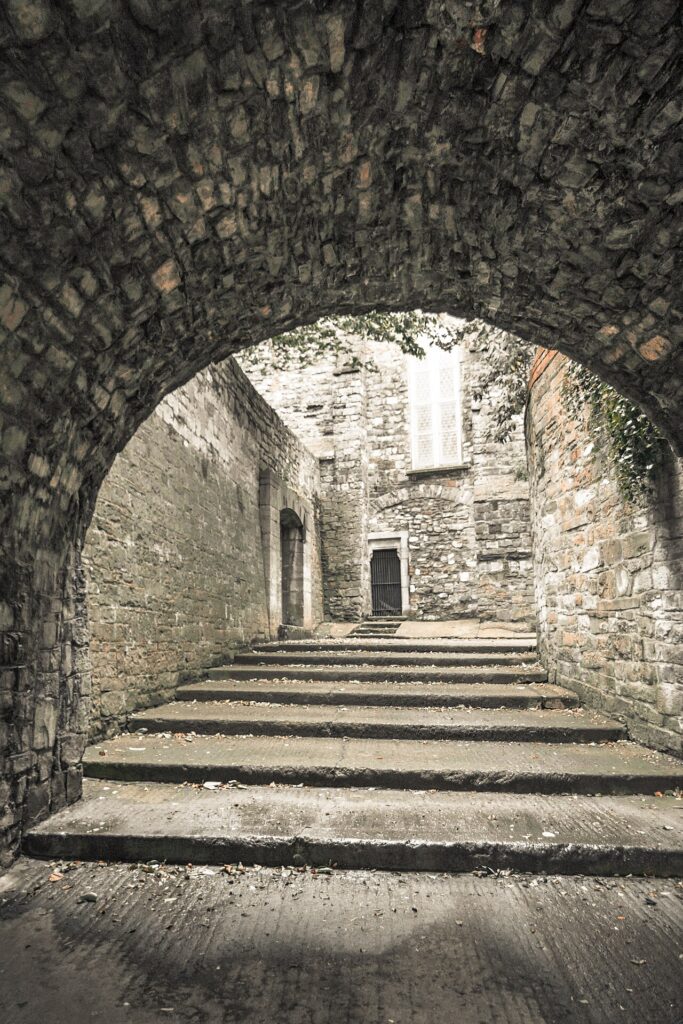
Ávila sits on a rocky outcrop in the Castilian plateau, encircled by the most complete medieval walls in Europe. This compact city, just 90 minutes from Madrid by car or train, feels like stepping into another century—its 12th-century ramparts rising above golden stone streets where Saint Teresa of Ávila walked, prayed, and sparked a religious revolution.
The city works perfectly as a day trip, though its combination of history, architecture, and high-altitude light makes it worth a slower pace if you have time.
The Walls: Walking Above the City
Ávila’s walls stretch nearly two and a half kilometers around the old town, punctuated by 88 towers and nine gates. Built between 1090 and 1099, they’re the star attraction and remarkably intact—you can walk along the top of two sections for views across the city and out to the Sierra de Gredos mountains.
The main entrance is at Puerta del Alcázar, near the cathedral. Buy your ticket at the visitors center just inside the gate. The walkway is narrow in places, with uneven stone steps and no guardrails in some sections, so it’s not ideal if you have mobility issues or fear of heights. But the perspective from up here—red-tiled roofs, stork nests atop church towers, the patchwork countryside beyond—is worth the climb.
The second accessible section runs along the north wall from Puerta de los Leales. It’s quieter and offers different views, including the Cuatro Postes viewpoint across the valley.
Saint Teresa and the Convent Trail
Teresa de Cepeda y Ahumada was born in Ávila in 1515. She became a Carmelite nun, reformed her order, wrote mystical poetry and theology, and was canonized 40 years after her death. Her presence saturates the city.
Start at the Convento de Santa Teresa, built on the site of her childhood home. The baroque church feels almost overwhelmingly ornate—gilded altars, a marble statue of the saint, and a chapel marking the exact spot where she was born. The attached museum holds relics, including her ring and one of her fingers (Spanish Catholicism does not shy away from body parts).
The Monasterio de la Encarnación, a short walk north of the walls, is where Teresa lived for nearly 30 years. The convent is still active, but you can visit her small cell, the locutory where she met with Saint John of the Cross, and the museum of her personal belongings. It’s quieter than Santa Teresa and feels more intimate.
If you’re interested in her reform work, visit the Convento de San José, the first convent she founded under the Discalced Carmelite rule. It’s tiny, austere, and still home to cloistered nuns who sell homemade sweets through a wooden turnstile.
Cathedral, Plazas, and Lunch
Ávila’s cathedral is half-church, half-fortress—its apse is actually built into the city walls. The interior is Gothic, solemn, and filled with carved choir stalls and a retablo by Pedro Berruguete. The attached museum holds a silver monstrance by Juan de Arfe and paintings by El Greco.
Wander through Plaza del Mercado Chico, the main square, and Plaza de Santa Teresa for a coffee. For lunch, head to Restaurante El Almacén on Calle Crucero Bajada, where they serve Castilian classics—judiones de la granja (white beans with chorizo), chuletón (massive rib steak), and yemas de Santa Teresa, the sweet egg-yolk candies named after the saint.
Mesón del Rastro, near Puerta del Rastro, has a stone-walled dining room and does excellent cochinillo (roast suckling pig) and patatas revolconas, a local dish of mashed potatoes with pimentón and pork.
Getting There and Practical Tips
Trains leave Madrid’s Chamartín station for Ávila several times a day; the ride takes about 90 minutes. The train station is a 15-minute walk southeast of the old town, or you can take a taxi to the walls. If you’re driving, park outside the walls near Puerta de San Vicente—the old town is largely pedestrian.
Ávila sits at 1,130 meters above sea level, so it’s cooler than Madrid year-round. Bring a jacket even in summer, and in winter expect snow and biting wind. Early morning and late afternoon light are beautiful on the honey-colored stone.
If you want to pair Ávila with Segovia (home to the Roman aqueduct and more roast suckling pig), several tours from Madrid cover both cities in one day, including the Madrid to Avila & Segovia: Full-Day Highlights Tour.
The city is compact—you can see the main sights in four to five hours, but it’s nicer without rushing. Stay for sunset if you can; the walls glow pink and gold as the light fades over Castile.
Want more stories like this? Subscribe to the Love Spain newsletter—one short story a day, straight to your inbox.
Tours & experiences in Spain


Powered by Viator. Some links are affiliate links — we may earn a small commission at no extra cost to you.