
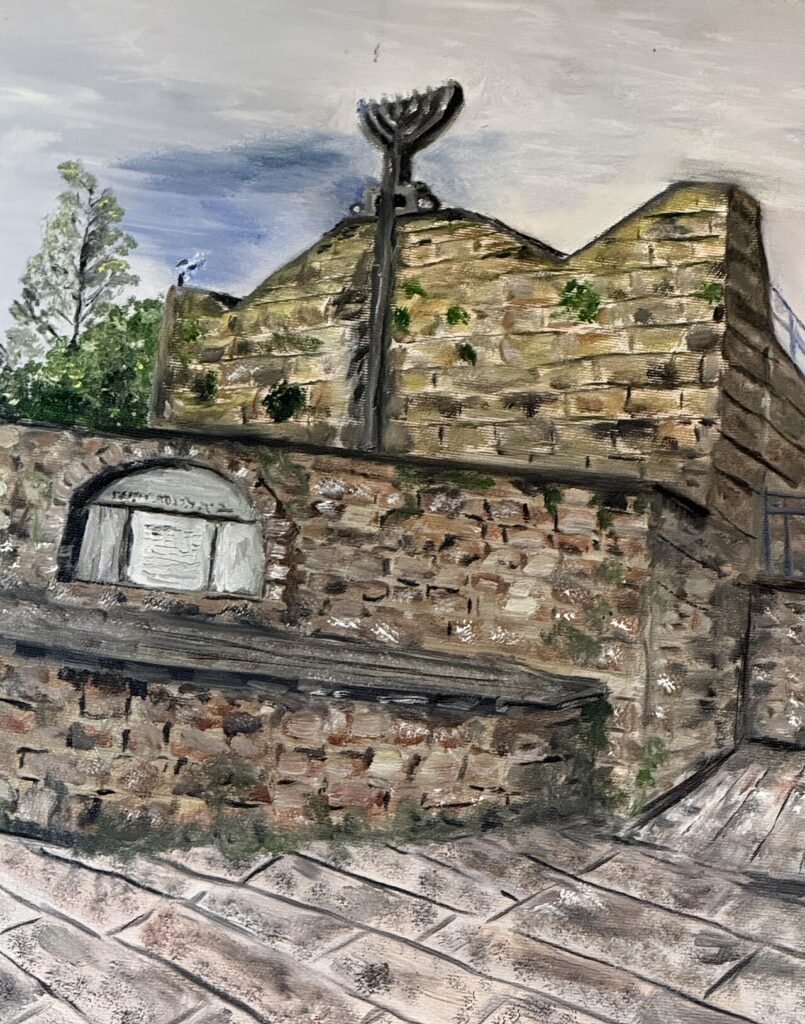
Tucked behind the Mezquita in Córdoba’s old town, La Judería—the medieval Jewish quarter—is a labyrinth of narrow whitewashed alleys, wrought-iron balconies, and geranium-filled courtyards that once sheltered one of Europe’s most vibrant Sephardic communities. Between the 10th and 15th centuries, Córdoba’s Jewish population flourished here, producing philosophers, physicians, poets, and scholars who shaped the cultural and intellectual life of medieval Spain.
Today, the quarter remains one of Andalusia’s most atmospheric historic neighborhoods, where you can walk the same cobblestones as Maimonides, visit the only surviving medieval synagogue in southern Spain, and trace the story of Sephardic Spain before the expulsion of 1492.
The Streets of La Judería
The heart of the Jewish quarter lies west of the Mezquita, bounded roughly by Calle Judíos, Calle Tomás Conde, and Calle Averroes. The streets here are deliberately narrow—designed to provide shade in Córdoba’s punishing summers—and the whitewashed walls amplify every bit of available light.
Start your walk on Calle Judíos, the quarter’s main artery. At number 20, you’ll find the Sinagoga de Córdoba, built in 1315 and one of only three medieval synagogues still standing in Spain. It’s small—just one room with a women’s gallery above—but the Mudéjar stucco work on the walls is exquisite, with Hebrew inscriptions from the Psalms framing geometric arabesques. Entry is free for EU citizens, €0.30 for others, and it’s open Tuesday through Sunday.
A few steps away, on Plaza de Maimónides, a bronze statue of the great Jewish philosopher and physician Moses Maimonides sits in contemplation. Born in Córdoba in 1135, Maimonides became one of the most important figures in Jewish intellectual history, authoring the Guide for the Perplexed and codifying Jewish law. His birthplace, marked by a plaque, is nearby on Calle Judíos.
Casa de Sefarad: Inside Sephardic Culture
For a deeper dive into Sephardic history, visit the Casa de Sefarad on Calle Judíos. This small museum occupies a traditional Córdoban house and traces the story of Spain’s Jewish communities from their arrival in Roman times through the Golden Age of Convivencia—the era of relative coexistence among Muslims, Christians, and Jews—to the trauma of the 1492 expulsion.
The exhibits include domestic artifacts, musical instruments, and explanations of Jewish festivals and customs. There’s also a room dedicated to Sephardic music, and on some evenings the museum hosts live concerts. Entry is €4, and English-language tours are available if you book ahead.
Zoco and Calleja de las Flores
Just north of the synagogue, the Zoco Municipal is a pleasant courtyard complex of artisan workshops where you can watch silversmiths, leatherworkers, and ceramicists practice their crafts. It’s touristy but atmospheric, and the quality is generally high.
From here, duck into Calleja de las Flores, a tiny alley that frames a postcard-perfect view of the Mezquita’s bell tower through an archway of potted geraniums. It’s Córdoba’s most photographed spot, and for good reason—arrive early in the morning to beat the crowds.
Where the Quarter Ends
The northern edge of La Judería blends into the older Alcázar Viejo neighborhood and eventually reaches the Roman Bridge and the Torre de la Calahorra. Walk along the ancient city walls here at sunset, when the light turns the stone golden and the Guadalquivir River reflects the sky.
For lunch or dinner, stay in the quarter and try Taberna Salinas on Calle Tundidores (just outside the Jewish quarter proper but worth the short walk). It’s been serving traditional Córdoban cuisine since 1879—order the salmorejo, rabo de toro (oxtail stew), and anything with eggplant.
Visiting Practicalities
The Jewish quarter is best explored on foot. It’s compact enough to see in a couple of hours, but plan for half a day if you want to visit the museums and linger in the patios. Córdoba is brutally hot from June through August—visit in spring or fall if you can, and always explore in the early morning or late afternoon.
The synagogue and Casa de Sefarad are both closed on Mondays. The narrow streets can be disorienting, but getting lost is part of the charm—just keep the Mezquita’s tower in sight and you’ll always find your way back.
If you’re traveling from Madrid or Seville, Córdoba is an easy day trip by high-speed AVE train (45 minutes from Seville, 90 minutes from Madrid). The train station is a 20-minute walk or short taxi ride from the old town.
Want more stories like this delivered to your inbox? Subscribe to the Love Spain newsletter—one short story a day about the Spain you won’t find in the guidebooks.
Tours & experiences in Spain


Powered by Viator. Some links are affiliate links — we may earn a small commission at no extra cost to you.