
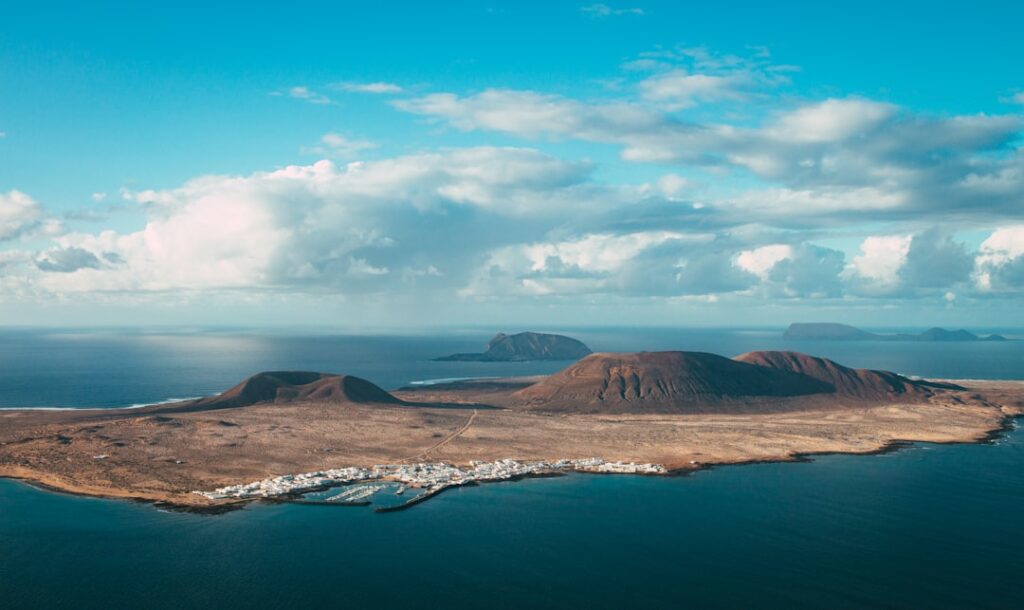
The Canary Islands sit closer to Morocco than mainland Spain, but they’re unmistakably Spanish—with a volcanic twist. Seven main islands, each with its own character, and the eternal question: which one first?
The answer depends on what you’re after. Beach lounging? Hiking? Weird lunar landscapes? Year-round sunshine is guaranteed across all of them, but the experiences are wildly different.
Tenerife: The All-Rounder
Tenerife is the largest and most visited, and for good reason. It’s got beaches on the south coast, the dramatic Mount Teide volcano in the center, colonial architecture in La Laguna, and excellent wine country around Tacoronte.
The south—Playa de las Américas, Los Cristianos, Costa Adeje—is purpose-built for sun seekers. The beaches are golden (imported sand), the resorts are polished, and the vibe is international resort standard. If you want reliable sunshine and easy logistics, this is it.
But the north is where Tenerife gets interesting. Puerto de la Cruz has black-sand beaches, lush valleys, and a more Spanish feel. The Anaga Mountains in the northeast are covered in ancient laurel forests—hiking trails wind through mist and greenery that feels nothing like the desert south.
Teide National Park, a UNESCO World Heritage site, is the big draw. Spain’s highest peak at 3,718 meters, surrounded by otherworldly lava fields and rock formations. You can drive up, take the cable car partway, or hike. Go at sunrise if you can manage the early start.
Tenerife has the best infrastructure: direct flights from across Europe, rental cars everywhere, and accommodation for every budget. It’s the safe first choice.
Lanzarote: Volcanic Drama
Lanzarote looks like Mars with better wine. The entire island is a study in black lava, white villages, and the artistic vision of César Manrique, the island’s favorite son who designed much of what you’ll see.
Timanfaya National Park is the headline act—a vast volcanic landscape where geothermal heat still radiates from below. You can’t hike it freely (it’s too fragile), but the bus tour through the Fire Mountains is genuinely spectacular. At the El Diablo restaurant, they cook meat over volcanic heat.
Manrique’s creations are everywhere: Jameos del Agua, a concert hall and restaurant built into a lava tube with an underground lagoon; Mirador del Río, a viewpoint carved into a clifftop; and his former home, now a museum, built into volcanic bubbles.
The beaches are excellent—Papagayo in the south has golden sand and turquoise water, while Famara on the northwest coast is a long, windswept stretch popular with surfers. Puerto del Carmen is the main resort town, but it’s low-key compared to Tenerife’s south coast.
Wine country around La Geria is unlike anywhere else: vines planted in individual volcanic pits, protected by semicircular stone walls. The Malvasía wines are crisp and distinctive. Stop at Bodegas El Grifo or La Geria for tastings.
Lanzarote is small enough to explore in four or five days. Rent a car—you’ll want the freedom to chase down Manrique’s work and find the quieter beaches.
Gran Canaria: The Mini-Continent
Gran Canaria calls itself a “continent in miniature,” and it’s not entirely marketing spin. The island has remarkable geographical diversity: desert dunes in Maspalomas, pine forests in the interior, dramatic cliffs on the west coast, and lush valleys in the north.
The south coast is resort central—Playa del Inglés and Maspalomas draw the crowds. The dunes at Maspalomas are genuinely impressive, a stretch of Sahara-like sand behind the beach. It’s touristy, yes, but the dunes themselves are worth seeing.
Las Palmas, the capital in the north, is a real working city with one of the best urban beaches in Spain—Playa de las Canteras, a long golden arc with a natural reef that creates calm swimming conditions. The Vegueta neighborhood is the historic heart: cobbled streets, the Casa de Colón (Columbus museum), and excellent tapas bars.
The interior is mountainous and green. Roque Nublo, a volcanic rock formation, is the island’s natural icon—an hour’s hike from the parking area. The villages around Teror and Arucas have a slower, more traditional feel.
Gran Canaria works if you want variety without changing islands. It’s got the full package: beaches, hiking, culture, and nightlife.
La Palma: For Hikers and Star Gazers
La Palma is the greenest, least developed, and most dramatic of the main islands. It’s nicknamed “La Isla Bonita” (the beautiful island) and it earns it—this is where you come to hike volcanic craters, walk through cloud forests, and stare at some of the clearest night skies in Europe.
The Caldera de Taburiente National Park is a massive volcanic crater filled with pine forests and waterfalls. The hiking is outstanding—trails range from easy walks to challenging ridge routes. The Ruta de los Volcanes along the Cumbre Vieja ridge is one of Spain’s great hikes.
La Palma has some of Europe’s strictest light pollution laws, making it one of the best places on the continent for stargazing. The Roque de los Muchachos Observatory sits at the island’s highest point—you can visit during the day, and several companies offer nighttime astronomy tours.
The island was affected by a volcanic eruption in 2021, and while the landscape has changed, it’s still accessible and dramatic. The new lava fields are a powerful reminder that these islands are very much geologically alive.
La Palma doesn’t have the beaches or resort infrastructure of the bigger islands. It’s quieter, more about nature than nightlife. If you’re an active traveler who wants to hike and disconnect, this is your island.
Getting There and Moving Around
Tenerife and Gran Canaria have the most direct international flights. Lanzarote is well-connected too. La Palma usually requires a connection through Madrid or Tenerife, though some European budget carriers fly direct in summer.
Inter-island flights are frequent and cheap—Binter Canarias connects all the islands multiple times daily. Ferries also run between islands if you’re not in a rush.
Rent a car on any island except if you’re staying put in a resort. The islands are small enough that nothing is far, but buses are infrequent outside the main towns. Driving is easy, roads are good, and you’ll want the flexibility.
You can visit year-round—the Canaries genuinely have spring-like weather in winter. Summer is hot but not unbearable, and autumn is perfect. Book accommodation ahead in winter when northern Europeans escape the cold.
Start with Tenerife if you want the full experience. Choose Lanzarote for stark beauty and art. Pick Gran Canaria for variety. Head to La Palma if you’re here to hike and unplug.
Want more insider guides to Spain’s islands, cities, and hidden corners? Subscribe to the Love Spain newsletter—one short story a day, straight to your inbox.
Tours & experiences in Spain


Powered by Viator. Some links are affiliate links — we may earn a small commission at no extra cost to you.