
Barcelona is a sprawling city spread between the Collserola hills and the Mediterranean, and while many neighborhoods are walkable, you’ll want to master the public transport system to cover ground efficiently. The good news: Barcelona’s metro, buses, and trains are clean, affordable, and easy to navigate once you understand the basics.
Here’s how to move around the city without wasting time or money.
The Metro: Your Best Friend in Barcelona
The TMB metro system is the backbone of Barcelona’s public transport. Eight color-coded lines crisscross the city, and trains run frequently from 5 a.m. until midnight on weekdays, with extended hours until 2 a.m. on Fridays and all night on Saturdays.
The most useful lines for visitors are the L3 (green line), which connects Plaça de Catalunya, the Gothic Quarter, and Gràcia, and the L4 (yellow line), which runs from Barceloneta beach through the city center up to Park Güell. The L1 (red line) gets you to Plaça d’Espanya and Montjuïc.
Single tickets cost €2.55, but if you’re staying more than a day or two, skip them. Instead, buy a T-Casual card for €11.35, good for 10 rides on metro, bus, tram, and suburban trains within Zone 1 (which covers all the main sights). The card is shareable, so traveling with a partner or family makes it even better value.
For longer stays, consider the Hola Barcelona card — unlimited travel for 2, 3, 4, or 5 days starting at around €17. You can pick it up at any TMB station or buy it online in advance.
Buses: Slower, but Scenic
Barcelona’s bus network is extensive, with over 100 routes covering areas the metro doesn’t reach. Buses are slower than the metro but offer a better view of the city, especially on routes like the V15, which runs along Via Laietana through the old city, or the D20, which climbs to Montjuïc.
The same T-Casual card works on buses. Board through the front door, validate your ticket in the machine, and watch the digital display or use Google Maps to track your stop — driver announcements can be hard to hear.
At night, the Nitbus network takes over after the metro closes. Most routes radiate from Plaça de Catalunya, marked with an “N” prefix. They run every 20 to 30 minutes, and the same travel card applies.
Trains, Trams, and Cable Cars
The FGC trains (Ferrocarrils de la Generalitat) are essential for reaching neighborhoods like Sarrià, Tibidabo, and the Montserrat monastery outside the city. The main FGC station is at Plaça de Catalunya, below the regular metro. Your T-Casual card covers FGC rides within Zone 1.
Barcelona also has a small tram network that serves outer districts like Diagonal Mar and Poble Nou. Trams are modern, air-conditioned, and run on the same ticket system.
For a scenic shortcut, take the Montjuïc cable car (Telefèric de Montjuïc) from Parc de Montjuïc to the castle at the top. It’s not covered by the T-Casual card, but the views over the port and city are worth the separate €9.50 ticket. There’s also the Port Cable Car (Transbordador Aeri), which crosses the harbor from Barceloneta to Montjuïc — a stunning ride, but pricey at around €12 one-way.
Getting to and from the Airport
Barcelona-El Prat Airport sits 12 kilometers southwest of the city center. The cheapest option is the Aerobús, a dedicated airport shuttle that runs every 5 to 10 minutes to Plaça de Catalunya. It costs €5.90 one-way, takes about 35 minutes, and drops you right in the heart of the city.
Alternatively, take the L9 Sud metro line, which connects both terminals to the city. A special airport ticket costs €5.15 and gets you to Zona Universitària, where you can transfer to other lines. It’s slower than the Aerobús but integrates with the metro network.
Taxis to the city center run about €30 to €35 with a flat rate, and ride-shares are similar. If you’re staying near Sants station, the R2 Nord suburban train is another budget option at around €4.60.
Walking and Biking
Barcelona is a walkable city, especially in the compact Ciutat Vella (old city). You can stroll from the Gothic Quarter to El Born to Barceloneta in under an hour, taking in the architecture and street life along the way.
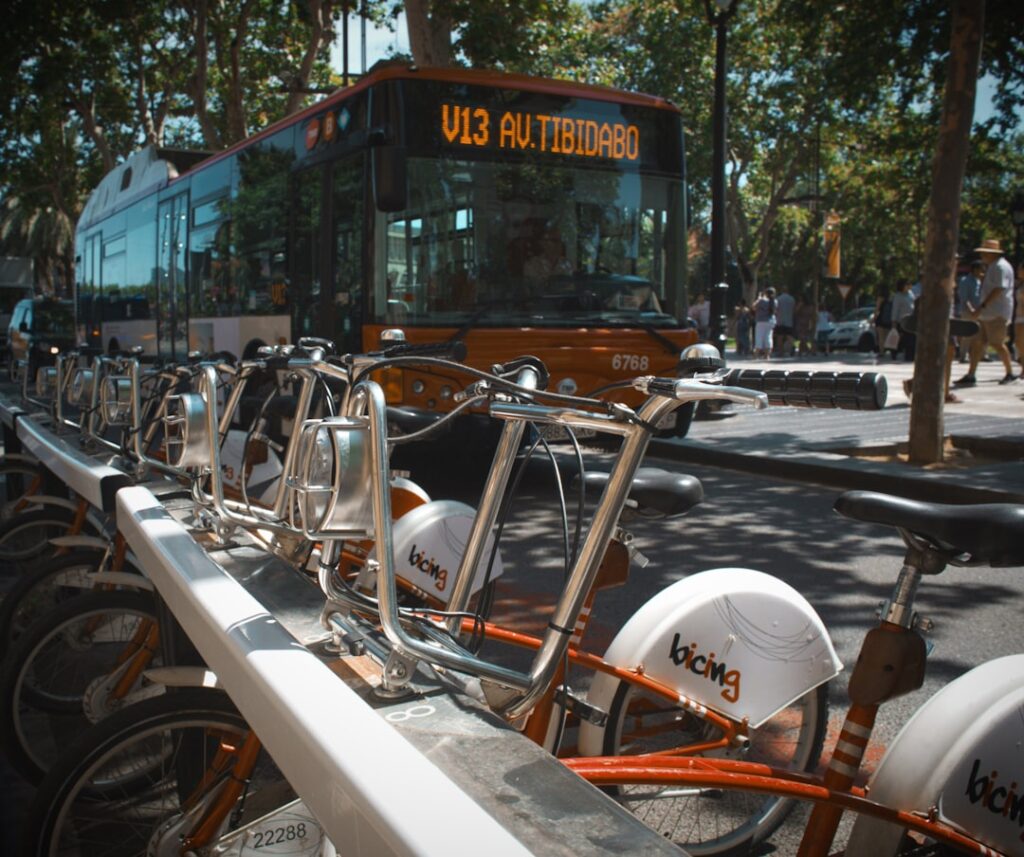
For longer distances, the city’s Bicing bike-share program is popular with locals but requires a local address to register. Visitors are better off renting from shops near the beach or in Gràcia — expect to pay around €10 to €15 per day. The bike lanes along the waterfront and through Parc de la Ciutadella are excellent.
What to Avoid
Skip the tourist bus tours unless you have very limited time. The metro and regular buses will get you everywhere faster and cheaper. Also, watch your belongings on crowded metro lines, especially L3 and the airport line — pickpockets target distracted travelers.
And a final insider tip: validate your ticket every time you board, even if you have a multiride card. Inspectors are frequent, and fines start at €100.
Want more insider tips on Barcelona and the rest of Spain? Subscribe to the Love Spain newsletter — one short story a day, straight to your inbox.
Tours & experiences in Spain


Powered by Viator. Some links are affiliate links — we may earn a small commission at no extra cost to you.