
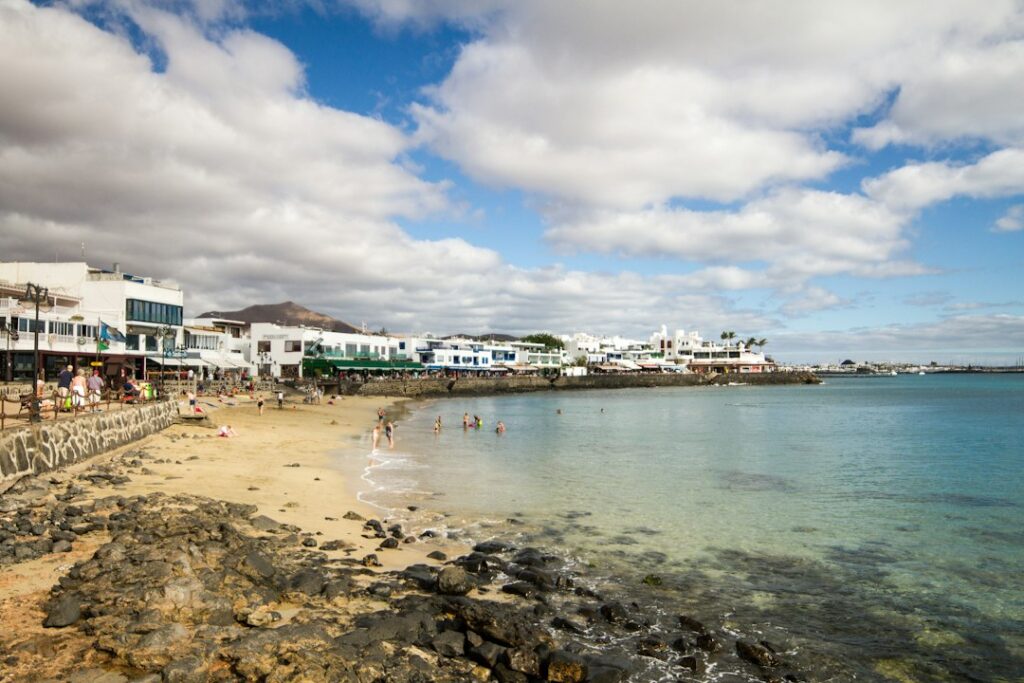
The Canary Islands sit closer to Morocco than Madrid, but their beaches are unmistakably Spanish—wild Atlantic surf on the north coasts, sheltered coves in the south, and volcanic landscapes that make every swim feel like a discovery. Each island has its own character, and the best beaches match that personality.
Here’s where to swim across the archipelago, island by island.
Lanzarote: Volcanic Drama and Golden Sand
Lanzarote’s coastline is all black rock and turquoise water, but its best beaches surprise with soft sand. Playa Papagayo, near the southern tip, is the island’s postcard: a series of protected coves with golden sand, clear water, and red cliffs. Park at the top (small fee) and walk down to whichever cove looks emptiest. Bring snacks—there’s only one beach bar.
On the north coast, Famara Beach stretches for miles beneath dramatic cliffs. The surf is strong, the wind constant, and the vibe belongs to surfers and sunsets. Don’t swim unless you’re confident in big water, but do walk the sand at low tide.
For families, head to Playa Blanca in the south—shallow, calm, and lined with cafés.
Fuerteventura: Endless Dunes and World-Class Surf
Fuerteventura has more coastline than any other Canary Island, and most of it is beach. The star is Cofete Beach on the wild western shore—seven miles of empty sand backed by mountains. The drive in is rough (4WD recommended), and the Atlantic currents are dangerous, but the scale and solitude are unmatched in Spain.
For actual swimming, the eastern beaches deliver. Playa de Sotavento near Costa Calma has shallow lagoons at low tide, perfect for wading and windsurfing. Corralejo, in the north, offers white sand dunes that look stolen from the Sahara, plus calm water and easy access to town.
Surfers go to El Cotillo on the northwest coast, where reef breaks meet fishing-village charm.
Gran Canaria: City Beaches and Hidden Coves
Gran Canaria packs variety into a small radius. Playa de las Canteras in Las Palmas is one of Europe’s best city beaches—a mile-long curve of golden sand with a natural reef that keeps the water calm. Walk the promenade at sunset, then eat fresh fish at La Marinera.
In the south, the famous Maspalomas Dunes roll into a wide, sandy beach that’s part nature reserve, part resort zone. The dunes themselves are worth the visit even if you never touch the water. For quiet, drive west to Playa de Gui Gui, accessible only by boat or a two-hour hike—your reward is total isolation.
Puerto de Mogán, a small harbor town in the southwest, has a tiny beach and canals lined with bougainvillea. It’s touristy but genuinely pretty.
Tenerife: Black Sand and Blue Flags
Tenerife’s beaches divide by coast. The north is dramatic and volcanic; the south is sunny and resort-friendly. Playa Jardín in Puerto de la Cruz, designed by César Manrique, has black sand, tropical gardens, and views of Mount Teide. The water’s cooler here, the vibe more local.
In the south, Playa de las Teresitas near Santa Cruz is the island’s only golden-sand beach (imported from the Sahara decades ago). It’s sheltered by a breakwater, making it ideal for families.
For something wilder, hike down to Playa de Benijo on the northern Anaga coast—black pebbles, crashing waves, and the jagged Roque de Benijo rising from the sea. Don’t swim, just stare.
La Palma and El Hierro: For the Explorers
These smaller islands don’t have classic beach resorts, but they reward adventurous swimmers. Playa de Nogales on La Palma is a black-sand beach reached by a short hike through banana plantations. The waves can be rough, but the setting—cliffs, jungle, solitude—is worth it.
El Hierro is all volcanic pools and natural harbors. Charco Azul and La Maceta are lava-rock pools filled by the tide, perfect for a sheltered dip after hiking the island’s trails.
When to Go and What to Bring
The Canaries are warm year-round, but water temperature peaks from July through October. Winter sees more wind and surf, which is perfect if you’re here to ride waves but less fun for lazy swimming.
Most beaches have little shade—bring an umbrella or find a cave. Currents can be strong, especially on west-facing coasts, so respect the flags and locals’ advice. And if a beach requires a hike to reach, pack out everything you bring in.
Want more stories like this? Subscribe to the Love Spain newsletter—one short story about Spain, delivered daily.
Tours & experiences in Spain


Powered by Viator. Some links are affiliate links — we may earn a small commission at no extra cost to you.