
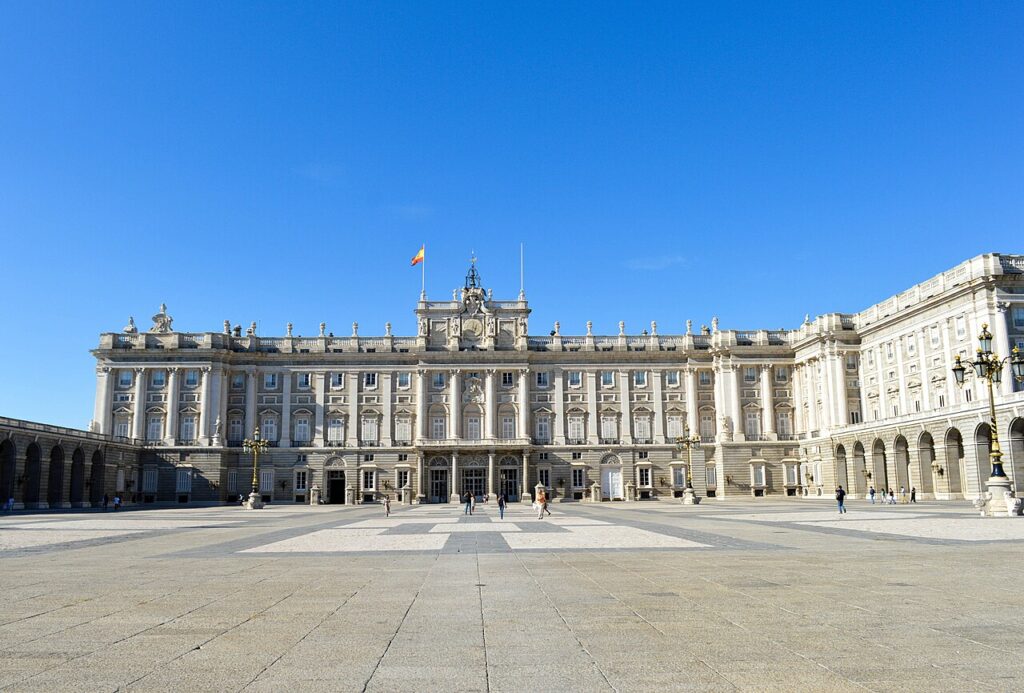
The Palacio Real sits on the western edge of Madrid’s historic center, a colossal Baroque palace with 3,418 rooms spread across 135,000 square meters. It’s Europe’s largest royal palace, and though Spain’s royal family lives elsewhere, this is still the official residence—used for state ceremonies and open to visitors most days of the year.
You’ll walk through gilded throne rooms, a porcelain chamber, and apartments decorated with Tiepolo frescoes and Stradivarius violins. The palace rewards those who arrive early, book ahead, and know which rooms matter most.
When to Visit and How to Get In
The palace opens at 10 a.m. daily from April through September, and from 10 a.m. on weekdays and weekends October through March. It closes on state occasions—check the website before you go. The ticket office closes one hour before the palace does.
Buy tickets online to skip the ticket line, though you’ll still queue for security. The first hour after opening is quietest. Avoid midday and weekends if you can. Guided tours in English run several times daily and take you through rooms not included in the general route—worth it if you want depth.
Entrance is free Monday through Thursday during the final two hours before closing, but expect crowds. If you’re planning to visit multiple royal sites, the combined ticket for the palace and the Monastery of the Descalzas Reales saves a few euros.
What to See Inside
The official route takes you up the grand staircase—a single piece of marble designed by Sabatini—and through the state apartments. Start with the Throne Room, all red velvet and Tiepolo ceiling frescoes depicting the Spanish monarchy. The thrones themselves date from Charles III in the 18th century.
Don’t rush the Gasparini Room, a Rococo explosion of embroidered silk walls and stucco work that took five years to complete. The Porcelain Room is entirely covered in porcelain plaques made at the Buen Retiro factory—over a thousand pieces fitted like a jigsaw puzzle.
The Royal Armory is in a separate building across the courtyard. It holds the personal armor of Charles V and Philip II, including full suits for horses. This is one of the finest collections of medieval armor in Europe, and it’s included in your ticket. Most visitors skip it—don’t.
The Royal Pharmacy, near the armory, displays jars, stills, and prescription books dating back to the 1700s. It’s small but oddly fascinating, especially the collection of mortars and the original recipe ledgers.
The Sabatini Gardens and Campo del Moro
The palace has two gardens worth visiting, both free and open to the public. The Sabatini Gardens sit on the north side, between the palace and Calle de Bailén. They’re formal, geometric, and offer the best views of the palace façade. Good for photos and a rest after the tour.
The Campo del Moro Gardens are larger, greener, and more peaceful. The entrance is down Paseo de la Virgen del Puerto, west of the palace. These are English-style gardens with shaded paths, fountains, and peacocks. They close at sunset and on state occasions, so check before you walk down.
Where to Eat Nearby
After the palace, walk east toward the Plaza de Oriente. The plaza is touristy, but Café de Oriente has a terrace with palace views and solid coffee. For lunch, head south into La Latina. Taberna Los Huevos de Lucio on Calle Cava Baja serves the famous broken eggs (huevos rotos) the neighborhood is known for.
If you want something closer, Taberna del Alabardero on Calle Felipe V has a set lunch menu and Basque-influenced dishes. It’s a half-block from the palace gate and frequented by palace staff.
Getting There
The palace sits between the Ópera and Príncipe Pío metro stops, both on Line 2. Ópera is closer. From Sol, it’s a ten-minute walk west along Calle Arenal.
If you’re combining the palace with other royal sites, the Monastery of the Descalzas Reales is a five-minute walk east, and the Almudena Cathedral sits directly across the plaza from the palace’s south façade.
For a deeper dive into the palace and Madrid’s royal history, Viator offers guided tours that include skip-the-line access and expert commentary on the art and architecture.
Want more stories like this? Subscribe to the Love Spain newsletter—one short story a day about Spain’s cities, food, culture, and hidden corners you won’t find in the guidebooks.
Heads up — some links in this article are affiliate links. If you sign up through them, we may earn a small commission at no extra cost to you. We only recommend tools we use ourselves.
Tours & experiences in Spain


Powered by Viator. Some links are affiliate links — we may earn a small commission at no extra cost to you.