
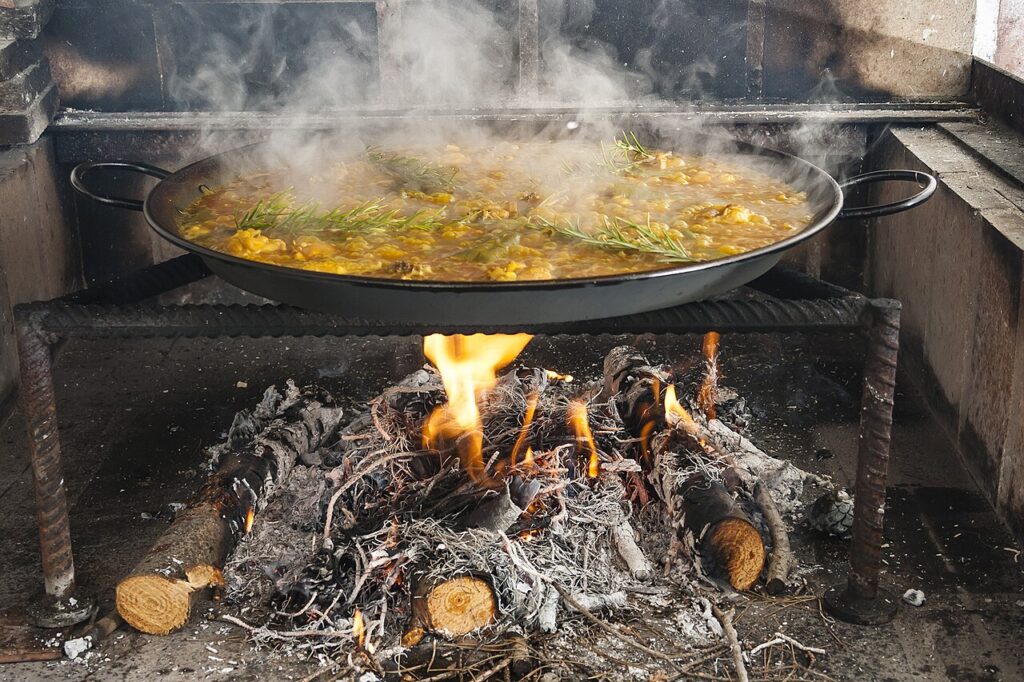
Paella is a Valencian dish, not a Madrileño one. But Madrid, being the capital, has drawn chefs and ingredients from every corner of Spain for centuries. The result: you can eat world-class paella here — if you know where to go.
The key is avoiding tourist traps serving gummy, pre-made rice from warming trays. Real paella is cooked to order in a wide, shallow pan over an open flame. It takes at least 20 minutes, often closer to 40. If it arrives in five, walk out.
What to Order
In Madrid, you’ll find three main types. Paella valenciana is the original: chicken, rabbit, green beans, white beans, and saffron. No seafood. Paella de marisco is all seafood — shrimp, mussels, clams, sometimes squid. Paella mixta combines meat and seafood, a hybrid that purists scoff at but that’s wildly popular in Madrid.
If you see arroz negro (black rice with squid ink) or arroz a banda (cooked in fish stock, served with alioli), order it. Both are Valencian rice dishes that deserve as much attention as paella itself.
One crucial rule: paella is a lunch dish. Spaniards rarely eat it for dinner. The best kitchens serve it from around 1:30 p.m. to 4 p.m., and many require you to order it for at least two people.
Where to Go in Central Madrid
La Barraca, near Retiro Park on Calle de la Reina, has been serving paella since 1935. The space feels old-school — white tablecloths, bentwood chairs, waiters in vests. The paella valenciana is textbook: crispy socarrat on the bottom, tender rice on top, rabbit cooked until it falls apart. They also do an excellent arroz a banda. Reservations essential on weekends.
Arrocería Gala in Chueca (Calle de la Libertad) is smaller and more modern, but equally serious about rice. Chef Gala González sources bomba rice from Valencia and cooks everything to order in traditional paelleras. The paella de marisco is loaded with prawns and razor clams. Try the arroz meloso (creamy rice with lobster) if you want something richer.
Near Plaza Mayor, Casa Valencia on Calle del Maestro Victoria does steady business with locals who know better than to eat in the plaza itself. The dining room is plain, the paella is not. Order the mixta if you can’t decide, or go for the arroz negro if it’s on the board.
Chamberí and Beyond
North of the center, Arrocería Hispania in Chamberí is a neighborhood favorite. It’s on Calle de Viriato, a quiet street lined with produce shops and bakeries. The dining room is bright and informal, and the paella is pristine. They cook everything over wood, which gives the rice a subtle smokiness. The paella de verduras (vegetable paella) is one of the best in the city.
La Maruca in the barrio of Salamanca (Calle de Velázquez) leans toward seafood. Their arroz caldoso (soupy rice with lobster) is a showstopper, rich and briny and meant to be eaten with a spoon. If you prefer classic paella, the de marisco here is generous and perfectly seasoned.
Practical Tips
Always call ahead. Paella kitchens often limit the number of orders per service to ensure quality, and they’ll turn you away if they’re at capacity. Expect to wait — 30 to 40 minutes is normal. Order a bottle of Albariño or Verdejo and some aceitunas (olives) or boquerones (marinated anchovies) while you do.
Paella is meant to be shared, eaten directly from the pan with a wooden spoon. Some restaurants will give you individual plates; others won’t. Follow the lead of the table next to you.
Avoid any place advertising paella on a sidewalk chalkboard near Sol, Gran Vía, or Plaza Mayor. The good spots don’t need to advertise — they’re full of Madrileños who’ve been going for years.
If you want to go deeper into Spanish rice culture, a small-group food tour can connect you with chefs and local markets where the ingredients come from. It’s one thing to eat paella; it’s another to understand why the rice, the saffron, and the timing all matter so much.
Want more Spain in your inbox? Subscribe to the Love Spain newsletter — one short story a day, straight from the streets, kitchens, and back roads we love most.
Tours & experiences in Spain


Powered by Viator. Some links are affiliate links — we may earn a small commission at no extra cost to you.