
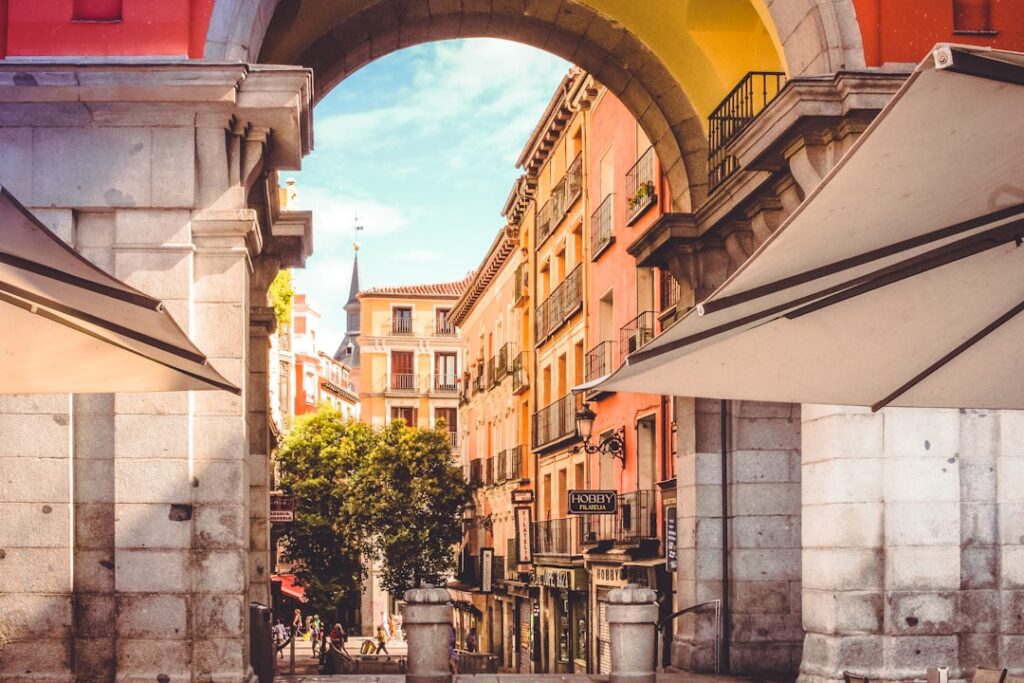
Chinchón doesn’t appear on many tourist itineraries, and that’s exactly why you should go. This medieval town, 45 kilometers southeast of Madrid, centers on one of Spain’s most beautiful plazas—a circular, galleried Plaza Mayor that looks like a stage set but has been the heart of town life since the 15th century.
The drive takes less than an hour from Madrid, but Chinchón feels like you’ve stepped back several centuries. Wooden balconies ring the entire plaza, painted shutters frame every window, and the cobblestones have been worn smooth by five hundred years of footsteps. Come for lunch, stay for the afternoon, and you’ll understand why Madrileños have been making this trip for generations.
The Plaza Mayor: Spain’s Most Theatrical Square
Chinchón’s Plaza Mayor is unlike any other in Spain. Instead of the typical rectangular layout, it’s an irregular oval surrounded by three-story buildings with 234 wooden balconies. The plaza has served as a bullring since 1502, and during the town’s August fiesta, they still set up temporary barriers and run bulls here.
The rest of the year, it’s lined with restaurants whose outdoor tables fill the center. Arrive before 2 p.m. to claim a table at Mesón Cuevas del Vino on the plaza’s east side—their roast lamb and suckling pig come from the wood-fired ovens in the 15th-century wine caves below the restaurant. Order the cordero asado and a bottle of local Chinchón wine, produced in the surrounding countryside.
After lunch, walk the perimeter. The balconies were built by the building owners, which explains why no two are exactly alike. During fiestas, people rent these balconies for bullfight viewing—some have been in the same families for generations.
The Anís Trail: Chinchón’s Spirit
Chinchón has been producing anise liqueur since the 16th century, and the town still supplies much of Spain’s anís. The drink comes in two styles: anís seco (dry) and anís dulce (sweet). Locals drink it as a digestif after big meals or mixed with cold water on hot afternoons.
Stop by Alcoholera de Chinchón on Calle Virgen del Rosario, where they’ve been distilling since 1777. The small shop sells their anís along with local wines and olive oils. If you’re visiting on a weekend, you can sometimes arrange a quick distillery tour—call ahead.
For a proper tasting, head to Bar La Bodeguilla on Calle Grande. The owner stocks more than 40 types of anís and will walk you through the differences. The dry styles work beautifully in cocktails; the sweet varieties are better sipped straight, very cold.
Beyond the Plaza: Churches and Convents
Walk up Calle del Convento to the Convento de las Clarisas, founded in 1534. The cloistered nuns still live here, and they sell homemade cookies and pastries through a wooden turnstile—ring the bell, place your order, put your money in the rotating compartment, and your bag of galletas appears. It’s wonderfully medieval and the almond cookies are excellent.
The 16th-century Iglesia de Nuestra Señora de la Asunción sits on a small rise above the plaza. Goya painted the church’s main altarpiece, The Assumption of the Virgin, in 1812. The church is usually open from 11 a.m. to 1 p.m. and 5 p.m. to 7 p.m., but hours can be irregular—if it’s closed, ask at the tourist office in the plaza.
Getting There and Practical Tips
Buses run from Madrid’s Conde de Casal station to Chinchón several times daily. The journey takes about an hour and drops you a short walk from the plaza. If you’re driving, take the A-3 toward Valencia, then the M-404 to Chinchón—parking is available near the plaza.
Chinchón works beautifully as part of a longer day trip. It’s close to Aranjuez, known for its royal palace and strawberry fields, and you can easily visit both in one day. If you’re considering a guided tour that combines multiple destinations around Madrid, Viator offers several options that include stops in medieval Castilian towns.
The best time to visit is spring or fall, when the weather is mild and the plaza isn’t crowded. Avoid the first weekend in August if you’re not interested in bullfighting—the entire town transforms for the fiesta, and it’s standing room only.
Come midweek if you can. Tuesday and Wednesday afternoons, the plaza fills with local families rather than tour groups. You’ll sit at your table long after lunch is finished, watching the light change on those wooden balconies, and understand exactly why this town has stayed so quietly perfect.
Want more stories like this? Subscribe to the Love Spain newsletter and get one short story about Spain delivered to your inbox every day—the places, dishes, and details that make this country unforgettable.
Heads up — some links in this article are affiliate links. If you sign up through them, we may earn a small commission at no extra cost to you. We only recommend tools we use ourselves.
Tours & experiences in Spain


Powered by Viator. Some links are affiliate links — we may earn a small commission at no extra cost to you.