
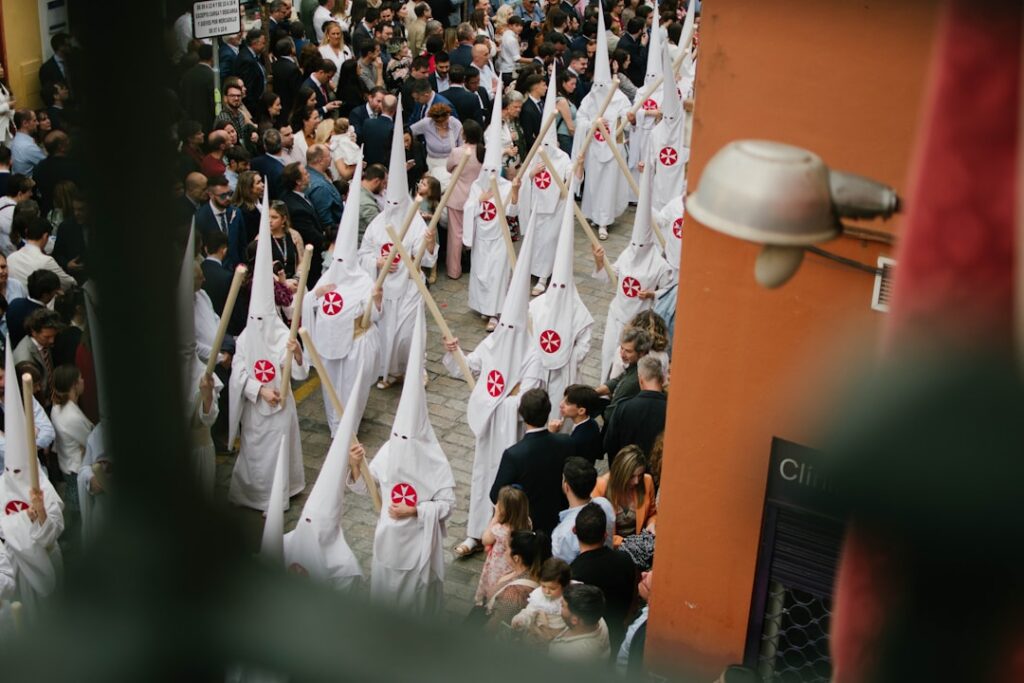
Semana Santa in Seville is the reason to visit Andalusia in spring. For one week each year, the city becomes a theater of faith and tradition as 60 brotherhoods carry elaborate floats—some weighing more than two tons—through the streets from their home churches to the cathedral and back again.
This isn’t a tourist show. It’s a living tradition that dates back centuries, and locals take it seriously. The processions move slowly, often lasting 12 hours or more, accompanied by hooded penitents, brass bands, and crowds that fall silent when a saeta—a spontaneous flamenco prayer—rings out from a balcony.
If you’re planning to visit during Holy Week, here’s what you need to know to experience it right.
When Semana Santa Happens and How Long to Stay
Semana Santa runs from Palm Sunday through Easter Sunday. The dates change each year based on the lunar calendar, but it typically falls in late March or early April. The most intense days are Maundy Thursday and Good Friday, when processions run almost continuously from afternoon into the early morning hours.
Plan to stay at least three nights if you want to see multiple processions and get a feel for the rhythm of the week. The city is packed—hotels book up months in advance, and prices triple—but the atmosphere is worth it.
Where to Watch the Processions
Every procession follows a different route, but they all pass through the carrera oficial—the official route along Calle Campana, Plaza de San Francisco, Avenida de la Constitución, and Plaza Virgen de los Reyes. These streets are lined with grandstand seats that require tickets, often reserved by the same families year after year.
For visitors, the best strategy is to skip the grandstands and find a spot along the side streets where processions begin or end. The Barrio de Santa Cruz, the Alameda de Hércules, and the Triana neighborhood are all excellent places to watch without the crowds. Arrive early—at least an hour before the scheduled start time—and claim a spot near a corner where you can see the float turn.
If you want to see a procession up close in its home church, visit the night before it departs. Many brotherhoods open their doors so visitors can see the floats lit and decorated before they’re carried into the streets.
The Processions You Shouldn’t Miss
Each brotherhood has its own character and following. La Macarena, which departs from the Basilica de la Macarena in the early hours of Good Friday, is the most famous. The crowd erupts when the Virgin—dressed in white and green, her face streaked with tears—emerges from the church around 1:00 a.m.
El Gran Poder, which leaves from the Basilica de Jesús del Gran Poder on Maundy Thursday afternoon, draws enormous crowds to witness one of Seville’s most revered Christ figures. And La Esperanza de Triana, crossing the Triana Bridge on Good Friday morning, is the procession that defines the neighborhood’s identity.
What to Wear and Bring
Dress respectfully—this is a religious event. Locals wear dark colors and avoid beachwear or overly casual clothing. Comfortable shoes are essential; you’ll be standing for hours, often on cobblestones.
Bring water, snacks, and patience. Processions move at a crawl, and there are long pauses when the bearers (costaleros) rest under the floats. Bathrooms are hard to find, and restaurants along the procession routes close or get overwhelmed.
If you’re shooting photos, be discreet and avoid using flash when a saeta is sung. Silence during these moments is a sign of respect.
Where to Eat During Semana Santa
Restaurants are packed during Holy Week, and many close on Thursday and Friday. Make reservations well in advance, or plan to eat early or late to avoid the crush.
Traditional Semana Santa foods include torrijas (Spanish-style French toast soaked in milk and honey), potaje de vigilia (a Lenten chickpea and spinach stew), and pestiños (fried pastries drizzled with honey). Look for them at neighborhood bakeries like Confitería La Campana on Calle Sierpes or Horno San Buenaventura near the cathedral.
For sit-down meals, head away from the center. Eslava in the Alameda neighborhood serves creative tapas and doesn’t close during the week, and Casa Cuesta on Calle Castilla offers solid Andalusian cooking without the tourist markup.
Practical Tips for Navigating the Week
Public transport runs on altered schedules, and streets close without warning when processions pass. Download a Semana Santa app—several are available for free—that tracks processions in real time and shows street closures.
Book accommodation outside the historic center if you want quieter nights and easier access. Neighborhoods like Los Remedios, Nervión, or across the river in Triana offer better value and shorter walks to the action.
If you’re traveling with children, the early evening processions on Palm Sunday or Easter Sunday are shorter and less intense than the late-night marathons of Thursday and Friday.
Finally, expect to be moved. Even if you’re not religious, the combination of music, incense, flickering candles, and the collective emotion of thousands of people watching their neighborhood’s Virgin pass by is unlike anything else in Spain.
Want more insider stories and travel tips from Spain? Subscribe to the Love Spain newsletter—one short story a day, straight to your inbox.
Tours & experiences in Spain


Powered by Viator. Some links are affiliate links — we may earn a small commission at no extra cost to you.