
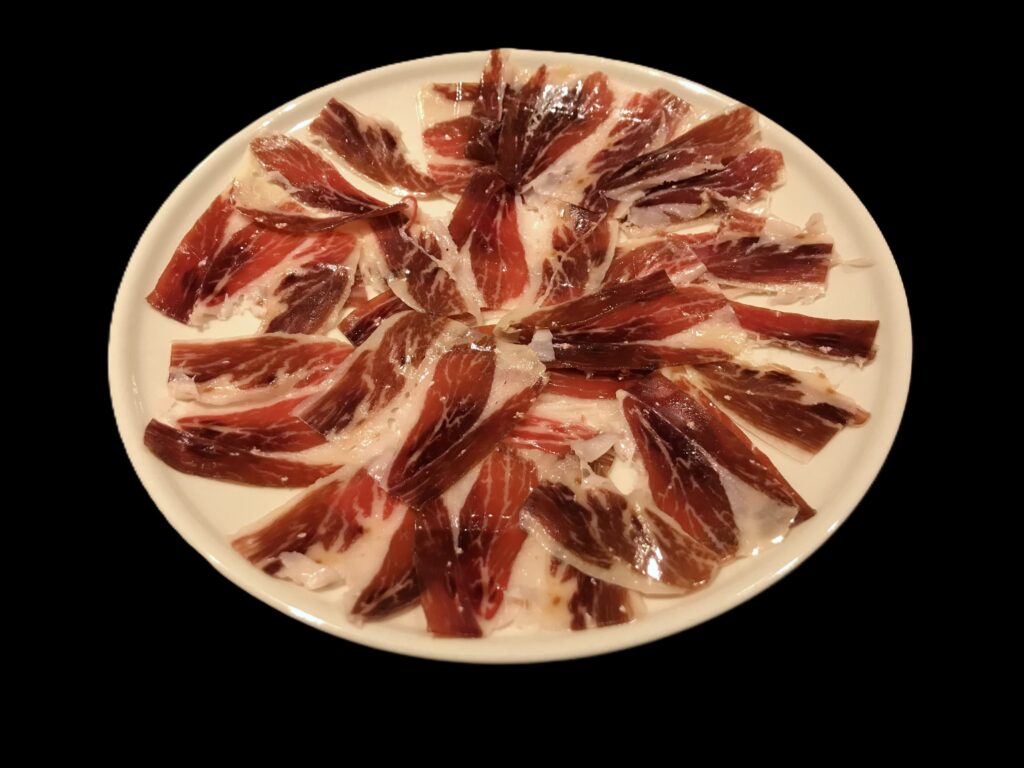
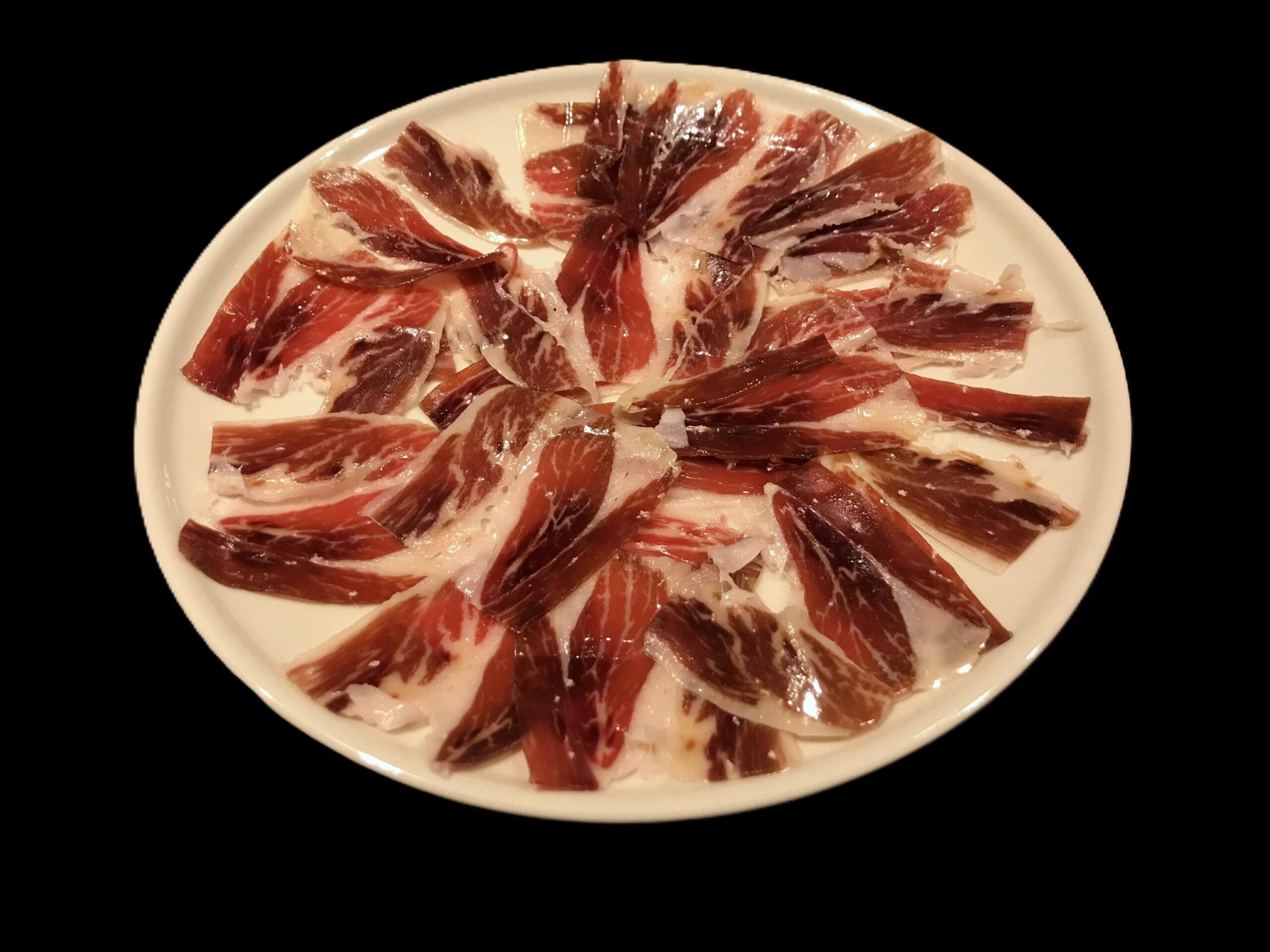
A single leg of jamón ibérico de bellota can take three to four years from the moment the pig is born to the day it is sliced, and much of that pig’s life is spent roaming oak pastures eating acorns. Those acorns are the reason the fat marbles the way it does and why a good slice turns almost translucent at room temperature. Here we cut through the labels, the price tags, and the folklore to explain what you are actually eating. This is Guide № 001 in The Love Spain Guide series.
Get the Full Collectible Guide (Free PDF)
Jamón Ibérico — in a beautifully designed, printable booklet. The Love Spain Guide № 001.
What Jamón Ibérico Actually Is
Jamón ibérico is cured ham made from the Iberian pig (cerdo ibérico), a dark-skinned, dark-hoofed breed native to the Iberian Peninsula and distinct from the white pigs used for jamón serrano. The “ibérico” designation refers to the breed and its genetics, not simply to where the ham is made. To be sold as ibérico under current Spanish regulations, the pig must be at least 50% Iberian breed, and the label is required to state the exact percentage.
The famous black hoof gave rise to the nickname pata negra, but that term is now discouraged on labels precisely because a black hoof alone guarantees nothing about breed purity or diet. What matters far more is the colour-coded seal and the wording on the tag, which we break down below.
The Acorns and the Montanera
The top grade, jamón ibérico de bellota, comes from pigs finished during the montanera — the autumn-to-winter season when acorns fall in the dehesa, the open oak woodland-pasture of western and southwestern Spain. During this period the pigs range freely and fatten largely on acorns (bellotas) from holm oak and cork oak. The acorns are high in oleic acid, the same monounsaturated fat found in olive oil, which is why bellota ham has its particular soft, oily texture and flavour.
A pig destined for bellota can put on a large share of its final weight during a single montanera, and each animal needs a considerable stretch of dehesa to find enough acorns. Because the dehesa is a limited, protected landscape, genuine bellota ham is produced in relatively small quantities compared with grain-fed grades.
How to Read the Label
Since a 2014 quality standard, Spain has used a four-colour plastic seal on each leg. Black marks bellota 100% ibérico: acorn-finished and full-blood Iberian. Red is bellota ibérico: acorn-finished but from cross-bred pigs (typically 50% or 75% Iberian). Green is cebo de campo: free-range pigs fed on grass and grain as well as some foraging. White is cebo: pigs raised on farms with a grain-based feed.
Two protected regions worth knowing are Jamón de Guijuelo (Salamanca province) and Jamón de Huelva, whose acorn-fed hams from the Jabugo area carry a Denominación de Origen Protegida. These designations regulate where and how the ham is produced and cured.
Curing and How to Serve It
After slaughter the legs are covered in sea salt for roughly one to two weeks, then rinsed and hung to dry and age in cellars where temperature and humidity shift with the seasons. A bellota ham is commonly cured for anywhere from about two to four years; the longer curing concentrates the flavour and firms the lean meat. Traditionally the process relied entirely on the natural mountain climate of towns like Guijuelo, which is one reason production clustered in cool, dry, upland areas.
Jamón ibérico is meant to be eaten at room temperature, hand-carved into thin, small slices so the fat begins to soften and release its aroma. It is served on its own or with bread; pairing it with a bland accompaniment lets the ham lead. We would steer clear of cooking good bellota ham — heat wastes the fat that you paid for.
Myths Worth Retiring
Myth: “Pata negra” means the best ham. A black hoof is common to Iberian-type pigs but does not certify breed purity or an acorn diet, and it can be misleading. The colour of the official seal and the printed percentage tell you far more than the hoof does.
Myth: Jamón ibérico and jamón serrano are the same thing. They are different products. Serrano is made from white-breed pigs and is generally cured for less time, while ibérico comes from the Iberian breed and, at the bellota grade, from acorn-fed animals.
Myth: The white flecks in the meat are a flaw. Those small white crystals are usually tyrosine, an amino acid that forms during long curing. They are generally considered a sign of proper ageing rather than a defect.
Frequently Asked Questions
Is it safe to eat the fat?
Yes, and it is much of the point. The fat of acorn-fed ibérico is rich in oleic acid, a monounsaturated fat, and it carries a large share of the flavour. Letting the ham reach room temperature so the fat softens is part of serving it well.
Why is bellota ham so expensive?
The cost reflects years of production: pigs raised free-range on a limited amount of protected dehesa, a seasonal acorn diet, and curing that often runs two to four years. Each leg also yields a modest amount of usable meat relative to its weight, and hand-carving takes skill.
Can I bring jamón ibérico home with me?
Rules vary by destination. Many countries permit vacuum-sealed, commercially packaged ibérico, while others restrict pork products entirely — the United States, for example, only allows imports from approved establishments. We recommend checking your own country’s customs rules before you buy a whole leg to travel with.
More The Love Spain Guides
The Love Spain Guide is a numbered series — one tightly focused subject at a time, each with its own downloadable collectible edition. This is Guide № 001. More editions are on the way.
🇪🇸 Join Love Spain
Every week, get hidden stories, local secrets, and travel inspiration from people who live and love it.
Tours & experiences in Spain


Powered by Viator. Some links are affiliate links — we may earn a small commission at no extra cost to you.