
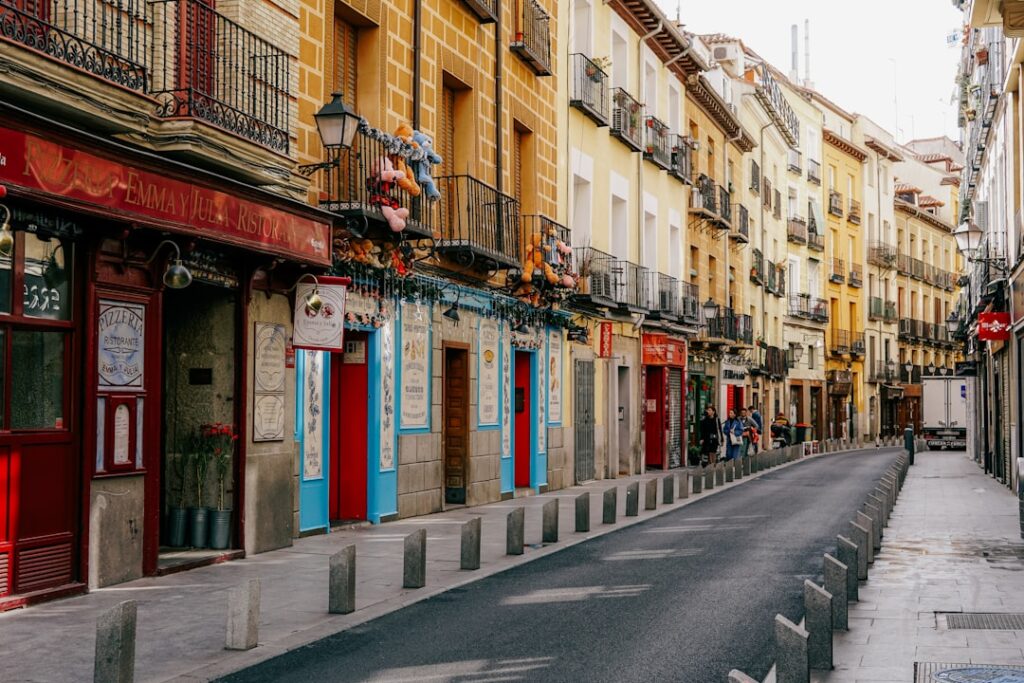
Madrid doesn’t just serve tapas — it lives them. While Barcelona has pintxos and Seville has its own tapeo culture, the capital’s tapas scene is a nightly ritual that stretches from sunset until well past midnight. Forget the tourist traps around Plaza Mayor. The real action happens in neighborhood bars where locals stand elbow-to-elbow, a caña in one hand and a toothpick-speared tapa in the other.
Here’s where to join them, neighborhood by neighborhood.
La Latina: Old Madrid’s Tapas Heartland
La Latina is Madrid’s tapas ground zero, especially on Sundays when the Rastro flea market empties into the bars along Cava Baja and Calle de la Cava Alta. This is the neighborhood for traditional taverns with tiled walls, jamón legs hanging from the ceiling, and recipes that haven’t changed in decades.
Start at Juana La Loca on Plaza de la Puerta de Moros for their tortilla de patatas — thick, runny in the center, and served warm. Move down Cava Baja to Txirimiri for Basque-style pintxos, then hit El Almendro 13 for croquetas de jamón that crack when you bite them. The crowd here spills onto the street, glass in hand, no matter the season.
Arrive by 2 p.m. on Sunday for the post-Rastro rush, or come Thursday through Saturday after 9 p.m. when the entire neighborhood becomes one long, moving tapas crawl. Metro: La Latina (Line 5).
Malasaña: Creative Tapas and Vermouth Bars
Cross Gran Vía into Malasaña and the tapas scene gets younger, louder, and more inventive. This is where chefs trained in Michelin kitchens open casual bars serving things like steak tartare on crispy wonton or octopus with smoked paprika foam.
Bodega de la Ardosa on Calle de Colón is the neighborhood’s anchor — a century-old vermouth bar with tortilla, salmorejo, and the best tigres (stuffed mussels) in the city. A few blocks away, La Tape on Calle de San Vicente Ferrer does modern Spanish small plates with natural wines by the glass.
For a more traditional experience, duck into Bar Palentino on Calle Pez. It’s tiny, crowded, and serves only five or six tapas, but the croquetas and pimientos de padrón are perfect. Pair everything with a caña (small draft beer) or a vermouth on tap. Metro: Tribunal (Lines 1, 10) or Noviciado (Line 2).
Chueca: Market Tapas and Wine Bars
Chueca blends old-school tapas bars with sleek wine spots and the sprawling Mercado de San Antón, a three-story market hall with everything from oyster bars to rooftop terraces.
Hit the ground floor of Mercado de San Antón for jamón from the carving station, then grab wine and cheese upstairs on the terrace. Outside the market, Celso y Manolo on Calle de Libertad is a neighborhood fixture for grilled sardines, razor clams, and wines from small Spanish producers.
Don’t miss Stop Madrid on Calle de Hortaleza for their rabo de toro (oxtail stew) and patatas bravas with aioli so garlicky it clears your sinuses. It’s cash-only and always packed. Metro: Chueca (Line 5).
Barrio de las Letras: Literary Quarter, Serious Tapas
The streets between the Prado and Plaza de Santa Ana are dense with history and even denser with tapas bars. This is where Hemingway drank, Cervantes lived, and locals still come for anchovies, vermouth, and conversations that stretch into the early hours.
Casa Alberto on Calle de las Huertas has been serving since 1827. Try their rabo de toro or the house vermouth with a tapa of boquerones en vinagre (marinated anchovies). Around the corner, La Venencia on Calle de Echegaray is a sherry shrine — no photos, no cocktails, just manzanilla poured from the barrel and mojama (cured tuna) on the side.
For a more guided deep dive into the neighborhood’s food culture, a small-group food tour can connect the dots between tapas bars, markets, and wine cellars you’d never find on your own.
Practical Tips for Eating Tapas in Madrid
Tapas bars in Madrid don’t open for dinner until 8 p.m. at the earliest, and the real crowds don’t arrive until 9:30 or 10 p.m. Lunch is served from 1:30 to 4 p.m. — arrive early or expect to wait.
A caña (small beer) costs €2 to €3, and most tapas run €3 to €6 each. Some bars still offer a free tapa with every drink, though it’s becoming rarer in central neighborhoods. Always ask for the tapa del día — the daily special is often the best thing on offer.
Stand at the bar. Sitting at a table often means higher prices and slower service. The bar is where the action is, where you can watch the kitchen, chat with the bartender, and move on when you’re ready for the next spot.
Finally, don’t fill up at one place. The whole point of tapas is variety — three or four bars in one night is normal, five or six is ambitious but doable.
Want one great Madrid story in your inbox every day? Subscribe to the Love Spain newsletter and we’ll send you the bars, the back streets, and the insider tips that make this city unforgettable.
Tours & experiences in Spain


Powered by Viator. Some links are affiliate links — we may earn a small commission at no extra cost to you.