
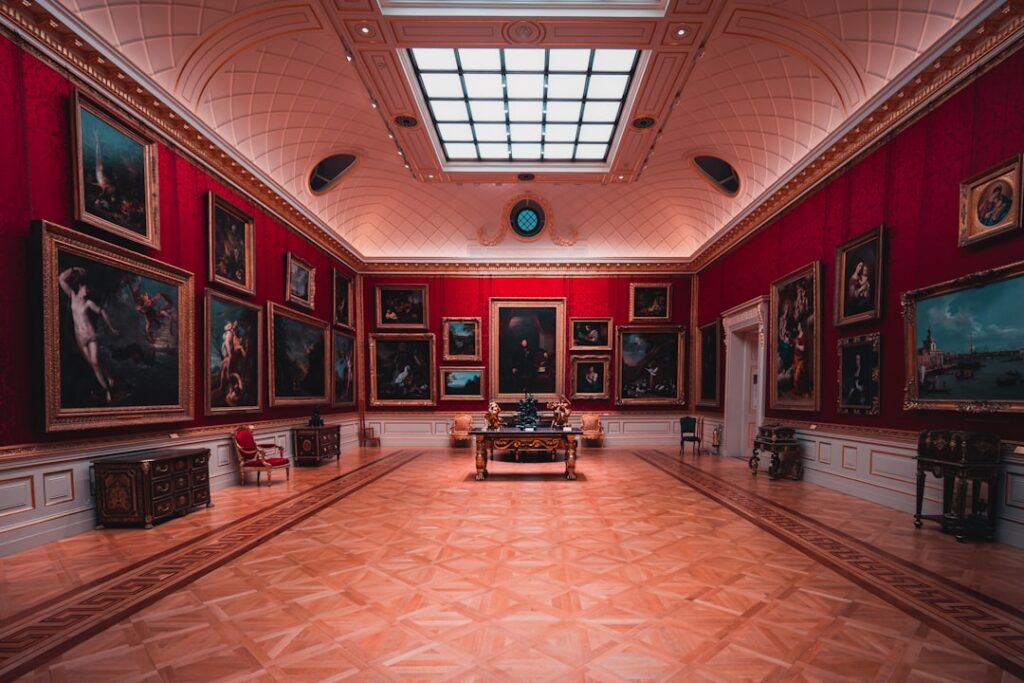
The Prado Museum in Madrid is one of the world’s great art collections, home to masterpieces that defined Spanish painting and shaped European art. With more than 8,000 works in its collection and hundreds on display at any given time, it can feel overwhelming. But if you know what to look for and how to plan your visit, the Prado becomes manageable, even magical.
This is where you’ll find Velázquez’s Las Meninas, Goya’s darkest visions, and Bosch’s hallucinatory triptychs. It’s a museum that rewards focus over completeness.
The Must-See Masterpieces
Start with Velázquez. Room 12 holds Las Meninas, his 1656 portrait of the Spanish royal family that art historians consider one of the most important paintings ever made. The composition is a puzzle: Who is the subject? Who is watching whom? Stand in the center of the room and let the painting work on you.
Nearby, don’t miss Velázquez’s The Surrender of Breda, a massive canvas depicting a moment of grace in war, and his portraits of court jesters and dwarfs, painted with unsettling dignity.
Goya occupies the ground and first floors. His early tapestry cartoons are charming, but the real power is in the later work: the Black Paintings, especially Saturn Devouring His Son, painted directly onto the walls of his country house and later transferred to canvas. They’re disturbing, primal, and unforgettable. Also seek out The Third of May 1808, Goya’s searing depiction of war’s brutality.
For something completely different, head to the ground floor for Hieronymus Bosch’s The Garden of Earthly Delights. This sprawling triptych is a fever dream of medieval symbolism, bizarre creatures, and moral commentary. You could spend an hour examining the details.
Planning Your Visit
The Prado is open Monday through Saturday from 10 a.m. to 8 p.m., and Sundays and holidays from 10 a.m. to 7 p.m. The last two hours of each day offer free admission, but expect crowds. If you want space to breathe, arrive right when it opens or buy a timed ticket in advance online.
The museum sits on the Paseo del Prado, easily reached via the Banco de España or Atocha metro stations. The main entrance is the Velázquez door on the north side, though the Goya entrance to the south is less congested.
Allow at least two to three hours for a focused visit. Trying to see everything will leave you exhausted. Pick a handful of artists or periods and explore them deeply. The museum’s layout groups works by school and era, so Spanish painters are mostly on the first floor, with Flemish and Italian masters below.
Beyond the Big Names
While Velázquez and Goya are the stars, the Prado holds treasures beyond the household names. El Greco’s elongated, mystical figures are mesmerizing, especially The Nobleman with His Hand on His Chest. Titian’s portraits and mythological scenes occupy several rooms, and Rubens fills entire galleries with dynamic Baroque energy.
The Flemish collection is exceptional. Look for Rogier van der Weyden’s The Descent from the Cross, a heartbreaking altarpiece, and the eerie precision of Pieter Bruegel the Elder’s landscapes.
If you have time, the Prado’s sculpture collection on the ground floor is worth a detour, and the 19th-century Spanish galleries offer a quieter, less-traveled corner of the museum.
Practical Tips
Photography is not allowed inside the galleries, so come prepared to simply look. The museum has a café and restaurant, but the neighborhood around the Paseo del Prado has better options. Walk five minutes west into the Barrio de las Letras for tapas bars and lunch spots.
Audioguides are available and worthwhile, offering context for the major works. If you want deeper insight, consider booking a guided tour. Viator offers expert-led tours that cover the Prado’s highlights and help you understand the history behind the paintings.
Combine your visit with the nearby Reina Sofía, home to Picasso’s Guernica, and the Thyssen-Bornemisza Museum to complete Madrid’s “Golden Triangle of Art,” all within a 15-minute walk of each other.
The Prado isn’t just a museum. It’s a chronicle of Spanish history, identity, and creativity, told through the eyes of its greatest painters. Come with a plan, take your time, and let the art surprise you.
Want more insider tips on Spain’s landmarks, hidden neighborhoods, and where to eat like a local? Subscribe to the Love Spain newsletter and get one short story a day, straight to your inbox.
Heads up — some links in this article are affiliate links. If you sign up through them, we may earn a small commission at no extra cost to you. We only recommend tools we use ourselves.
Tours & experiences in Spain


Powered by Viator. Some links are affiliate links — we may earn a small commission at no extra cost to you.