
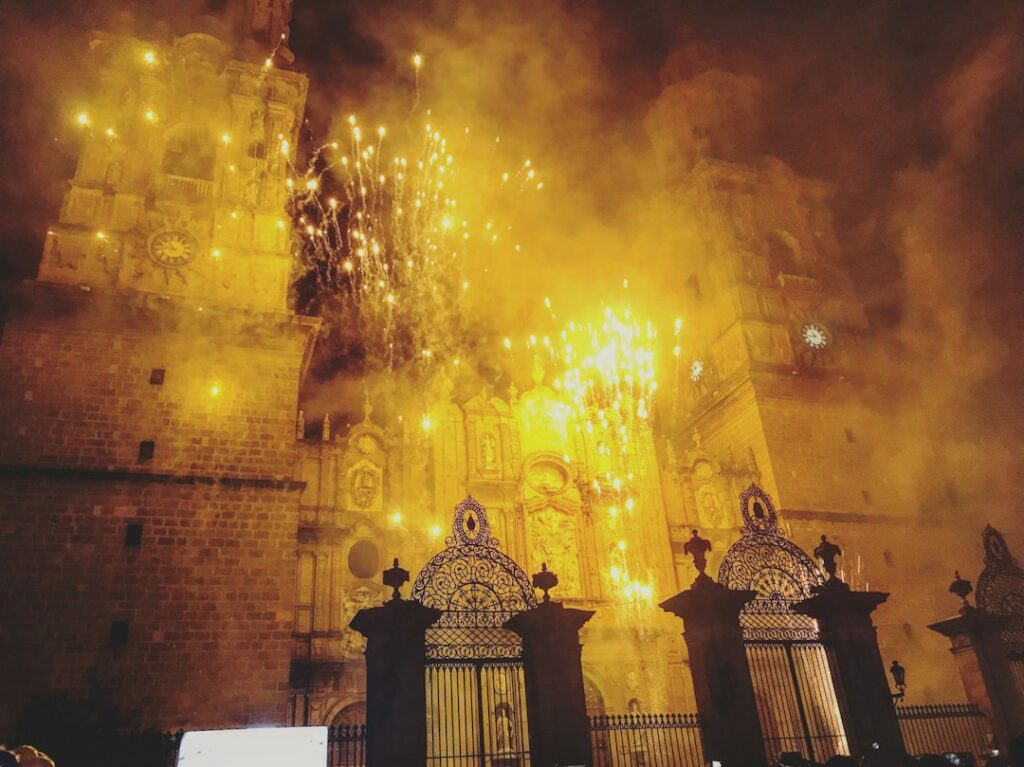
Las Fallas transforms Valencia into a city-wide art gallery, street party, and bonfire all at once. For five days every March, neighborhoods across the city compete to build the most elaborate ninots—satirical sculptures that can reach five stories tall—only to set them ablaze on the festival’s final night. It’s part Burning Man, part carnival, and entirely Valencian.
The festival peaks on March 19, the Feast of Saint Joseph, but the real action starts days earlier. If you’re planning to go, book accommodation months in advance and prepare for very little sleep.
What Happens During Las Fallas
Each neighborhood association (called a casal faller) spends the entire year designing and building their falla—a massive sculptural installation made of wood, papier-mâché, and foam. The subjects are usually political or cultural satire: cartoon versions of celebrities, local officials, or current events. Some are beautiful, some are crude, all are temporary.
The sculptures go up on March 15. For four days, you can walk the city and see hundreds of them—from small neighborhood pieces to the massive ones in Plaza del Ayuntamiento and Plaza de la Virgen. Each falla is lit at night, and crowds gather to take photos and debate which one deserves the top prize.
At 2 p.m. every day, the mascletà happens in Plaza del Ayuntamiento—a deafening, ground-shaking fireworks display that’s more about noise than visuals. Locals pack the square, and if you want a spot with a view, arrive by 1 p.m. Bring earplugs. The sound echoes off the surrounding buildings and rattles your chest.
Every night at midnight, fireworks explode over the Turia Gardens. Unlike the mascletà, these are designed to be beautiful—long, choreographed displays that draw enormous crowds along the old riverbed.
La Cremà: The Night Everything Burns
On the night of March 19, starting around 10 p.m., the city sets fire to nearly every falla. The smaller neighborhood pieces burn first, then the major ones go up in sequence. The largest and most elaborate falla, in Plaza del Ayuntamiento, is the last to burn—usually around 1 a.m.
Firefighters stand by with hoses to protect nearby buildings, but the heat is intense. If you want to get close, position yourself upwind and expect to feel the flames from a block away. The crowd is dense, loud, and euphoric. It’s not a quiet, reflective moment—it’s chaos, and that’s the point.
One sculpture is spared each year: the ninot indultat, chosen by popular vote and preserved in the Fallas Museum. It’s a small mercy in a festival devoted to destruction.
Where to Stay and How to Navigate the Crowds
Hotels in the Ciutat Vella (Old City) and around Plaza del Ayuntamiento book out early and charge peak prices. If you’re on a budget, look in Ruzafa or Benimaclet—both neighborhoods are a short metro ride from the center and have their own excellent fallas.
The city is walkable, but during Las Fallas, expect street closures and detours. The metro runs late, and it’s your best bet for getting around quickly. Line 3 and Line 5 connect the main festival zones.
Restaurants and bars stay open late, but reservations are essential. If you want to eat well, skip the tourist traps near Plaza de la Reina and head to Ruzafa or the Mercado de Colón area, where locals go for vermouth and small plates.
What to Eat and Drink
Las Fallas coincides with the feast of Saint Joseph, patron saint of carpenters, so the traditional dish is buñuelos de calabaza—pumpkin fritters dusted with sugar. You’ll find them at street stalls and bakeries throughout the festival.
For something more substantial, order paella or fideuà at a neighborhood caseta (temporary bar set up by the fallas associations). These are often open to the public and serve home-cooked food at reasonable prices. It’s also a good way to meet locals who are happy to explain what the hell is going on.
Horchata, the sweet tiger nut drink Valencia is famous for, is everywhere. Horchatería Santa Catalina, just off Plaza de la Reina, is the best place to try it, served ice-cold with fartons (long, soft pastries for dunking).
Practical Tips
Bring earplugs for the mascletà and fireworks. Seriously.
Wear comfortable shoes. You’ll walk miles each day, much of it on cobblestones.
Keep your belongings close. Pickpockets work the crowds, especially around Plaza del Ayuntamiento and during the cremà.
If you’re traveling with kids, the daytime events—like the Ofrenda de Flores, a massive flower parade on March 17 and 18—are more manageable than the late-night fires.
Learn a little Spanish or Valencian. English is not widely spoken outside the main tourist zones, and locals appreciate the effort.
Las Fallas is loud, crowded, and smoky. It’s also one of the most thrilling festivals in Europe. If you want to see Valencia at its most unhinged and creative, this is it.
Want more insider stories from Spain? Subscribe to the Love Spain newsletter—one short story a day, straight to your inbox.
Tours & experiences in Spain


Powered by Viator. Some links are affiliate links — we may earn a small commission at no extra cost to you.