
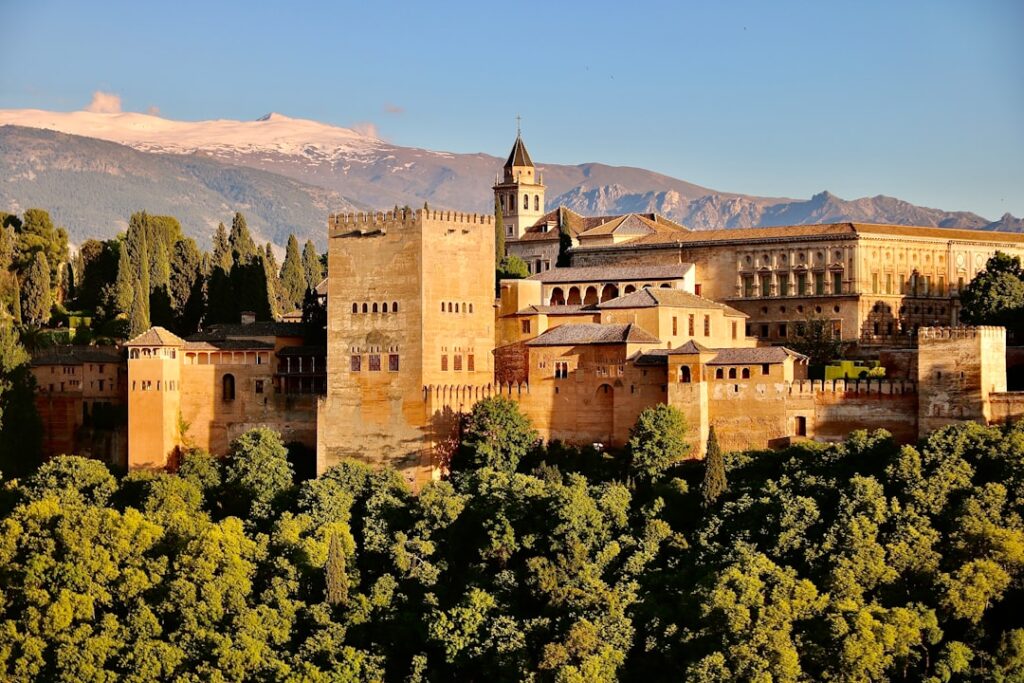
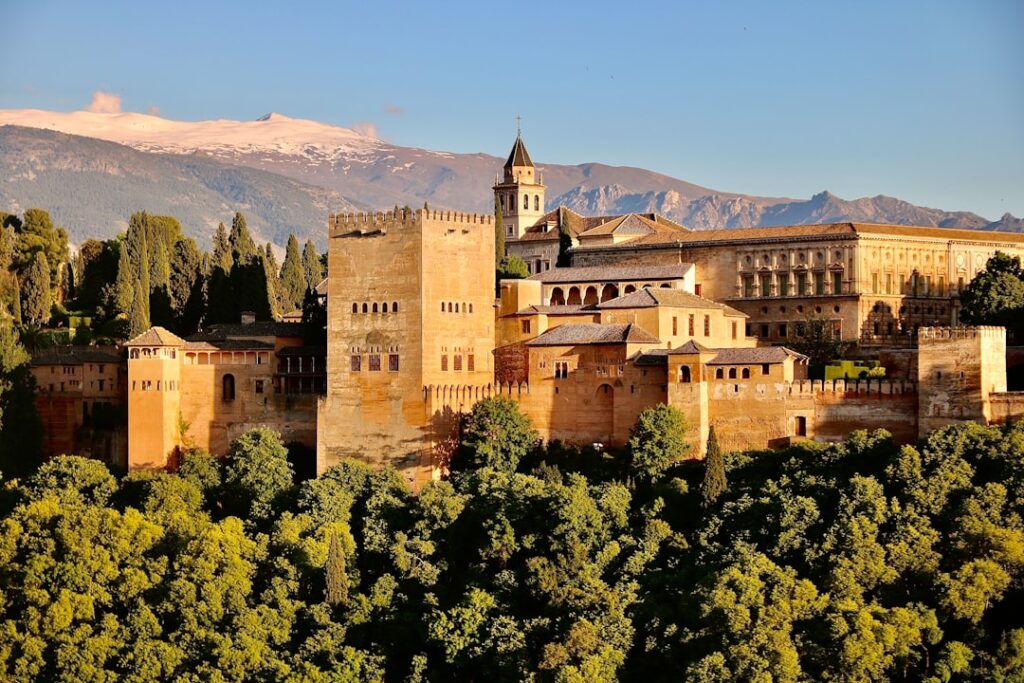
The Alhambra isn’t just Granada‘s most famous landmark—it’s one of the most extraordinary examples of Islamic architecture in the world. This sprawling hilltop complex of palaces, gardens, and fortifications tells the story of the Nasrid dynasty that ruled Granada until 1492, and visiting requires more planning than almost any other site in Spain.
Here’s how to make the most of your visit to this UNESCO World Heritage masterpiece.
Book Your Tickets Well in Advance
The Alhambra limits daily visitors to around 6,000, and tickets sell out weeks or even months ahead during peak season. Book online at the official Patronato de la Alhambra website at least two to three months before your visit, especially if you’re traveling between April and October.
You’ll need to choose a specific entry time for the Nasrid Palaces—the most spectacular part of the complex. Miss your 30-minute window and you won’t get in. The rest of the grounds (the Alcazaba, Generalife, and Palace of Charles V) can be explored anytime during your visit.
Early morning slots (8:30 or 9:00 a.m.) are ideal. You’ll beat the crowds and the summer heat, and the morning light through the palace windows creates magical patterns on the walls.
Understanding the Layout
The Alhambra sprawls across four main areas, and you’ll walk several miles during a full visit. Wear comfortable shoes.
Start at the Alcazaba, the oldest section and military fortress. Climb the Torre de la Vela for panoramic views over Granada, the Albaicín neighborhood, and the Sierra Nevada mountains beyond. This 13th-century stronghold gives you context for everything that follows.
The Nasrid Palaces are the heart of your visit. You’ll pass through three connected palaces: the Mexuar (administrative chambers), the Comares Palace (official residence), and the Palace of the Lions. The Court of the Lions, with its famous marble fountain supported by twelve lion sculptures, represents the pinnacle of Nasrid art. Look up constantly—the muqarnas (honeycomb vaulting) and carved stucco work are breathtaking.
The Generalife served as the summer palace and retreat. Its terraced gardens, fountains, and cypress-lined paths offer a peaceful contrast to the intricate palace interiors. The Patio de la Acequia, with its long reflecting pool, is particularly photogenic.
Don’t skip the Palace of Charles V, a Renaissance addition that houses the Alhambra Museum. The contrast between its circular courtyard and the delicate Islamic architecture around it tells the story of Granada’s transition after the Catholic Monarchs’ conquest.
Getting There and Practical Tips
The Alhambra sits on Sabika hill, about a 20-minute uphill walk from Plaza Nueva in central Granada. You can also take bus C3 from the cathedral area directly to the main entrance—it runs every 10 minutes and costs around €1.40.
Plan for three to four hours minimum. Bring water, sunscreen, and a hat in summer—shade is limited in parts of the complex. There’s a small café near the entrance, but outside food is allowed in most areas.
Audio guides (available at the entrance for about €6) are worthwhile. The complexity of Islamic geometric patterns and symbolism becomes much richer with explanation.
Beyond Your Timed Entry
If you can’t get daytime tickets, consider the night visit option. The Alhambra offers separate evening tours of the Nasrid Palaces and Generalife gardens. While you miss the broader complex, seeing the Court of the Lions illuminated after dark is unforgettable.
After your visit, walk down through the Cuesta de Gomérez to Plaza Nueva, or better yet, wander through the Albaicín—Granada’s old Moorish quarter. The view of the Alhambra from the Mirador de San Nicolás at sunset, with the Sierra Nevada behind it, rivals anything you’ll see from inside the complex itself.
The nearby Carmen de los Mártires gardens offer another peaceful retreat with excellent views, and they’re free to enter.
Ready to discover more of Spain’s hidden corners and essential landmarks? Subscribe to the Love Spain newsletter—one short story a day that takes you beyond the guidebooks.
Tours & experiences in Spain


Powered by Viator. Some links are affiliate links — we may earn a small commission at no extra cost to you.