
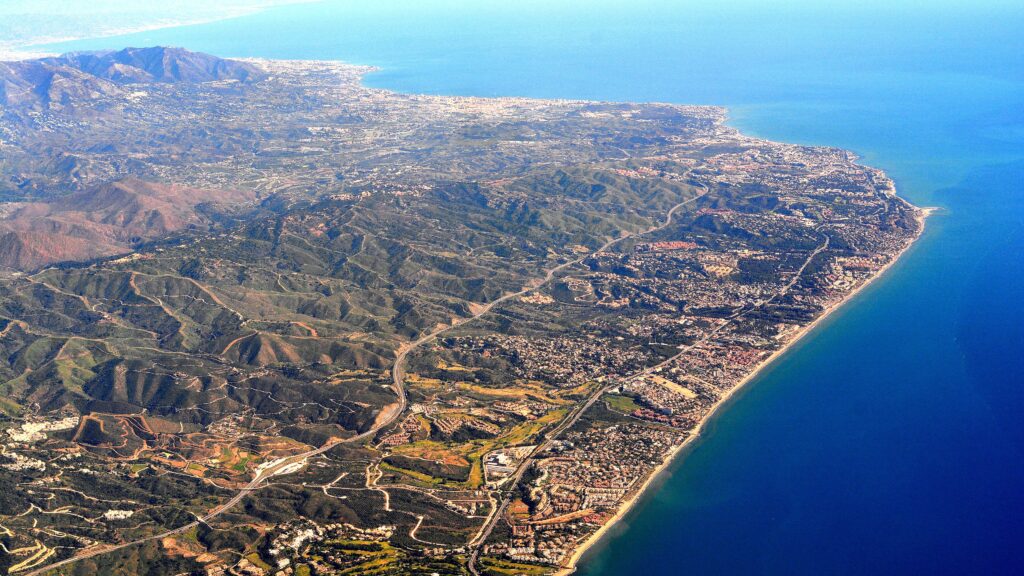
The Costa del Sol gets dismissed as overdeveloped beach resort territory, but look past the high-rises and you’ll find fishing villages, mountain pueblos blancos, and stretches of coastline that feel genuinely untouched. Málaga makes a fine base, but the real character of this coast reveals itself when you venture east and west along the N-340 and the winding roads that climb into the hills.
Here’s where to go when you want more than a beach chair and a sunburn.
Nerja and the Eastern Coves
About 50 kilometers east of Málaga, Nerja sits at the base of the Sierra de Almijara mountains where they meet the sea. The Balcón de Europa, a palm-lined promenade built on the ruins of a Moorish fortress, juts out over the Mediterranean and offers views in both directions. Below, small coves with clear water—Calahonda, Carabeo, Carabeillo—are reachable by steep staircases cut into the rock.
The real draw is the Cuevas de Nerja, vast caverns a few kilometers outside town. The stalactites here are among Europe’s largest, and one chamber hosts summer concerts where the acoustics are near-perfect. Go early in the day before the tour buses arrive.
For lunch, skip the beachfront tourist traps and head to Ayo on Playa de Burriana. They’ve been serving paella cooked over wood fires since 1966, and locals still eat here. The mixed seafood version, cooked in massive pans right on the beach, is the move.
The White Villages: Frigiliana and Mijas
Inland from the coast, Andalusia’s pueblos blancos cling to hillsides like whitewashed clusters of sugar cubes. Frigiliana, just above Nerja, is the prettiest of the lot. Its steep Moorish quarter—the Barribarto—is a maze of cobbled alleys, geranium-filled balconies, and ceramic tile plaques telling the history of the Moriscos who lived here until their expulsion in 1570.
Park at the bottom and walk up. There’s only one real street for cars, and half the charm is getting lost in the pedestrian-only alleys. Stop at El Adarve for views over the coast and solid Andalusian cooking—the goat stew is excellent.
Mijas, closer to Marbella, draws more day-trippers but remains worth a visit for the views alone. The mirador next to Plaza Virgen de la Peña looks straight down the coast to Fuengirola. Wander the old town early in the morning before the tour groups arrive, then leave by noon.
Estepona: The Coast’s Best-Kept Town
West of Marbella, Estepona has managed to keep its fishing village roots despite the development all around it. The old town—centered on Plaza de las Flores—feels genuinely Spanish, with narrow streets, tiled benches, and locals who actually live here year-round. The town has turned its walls into canvases: more than 50 murals cover buildings throughout the historic center.
The beach promenade stretches for miles, lined with chiringuitos serving espetos de sardinas—sardines grilled on sticks over driftwood fires, a Costa del Sol tradition that dates back centuries. La Escollera, near the port, does them right. Order a dozen, a beer, and watch the fishing boats come in.
Sunday mornings, the market on the port sells produce, cheese, and olives from the surrounding hills. It’s where locals shop, which means better quality and lower prices than the tourist markets inland.
Getting Around and When to Go
The coastal train line connects Málaga to Fuengirola, with stops at Torremolinos and Benalmádena—useful for beach towns, less so for the villages. For Nerja, Frigiliana, and Estepona, you’ll want a car or be prepared to use the Avanza bus service, which is reliable but slow.
September and October are ideal: the water’s still warm, the summer crowds have thinned, and temperatures hover in the mid-20s Celsius. July and August bring heat and European vacation crowds. Winter is mild but the sea’s cold, and some beach restaurants close until spring.
Skip Torremolinos and Benalmádena unless you’re specifically seeking the package holiday experience. Marbella has its charms—the old town around Plaza de los Naranjos is lovely—but it’s expensive and crowded. Puerto Banús, just west, is a monument to bad taste and overpriced everything.
The Costa del Sol works best when you treat Málaga as your cultural anchor, pick a quiet base like Nerja or Estepona, and spend your days moving between mountain villages and empty coves. The coast you’ll find looks nothing like the postcards, and that’s exactly the point.
Want more stories like this delivered to your inbox? Subscribe to the Love Spain newsletter—one short story a day about the Spain you came here to find.
Tours & experiences in Spain


Powered by Viator. Some links are affiliate links — we may earn a small commission at no extra cost to you.