
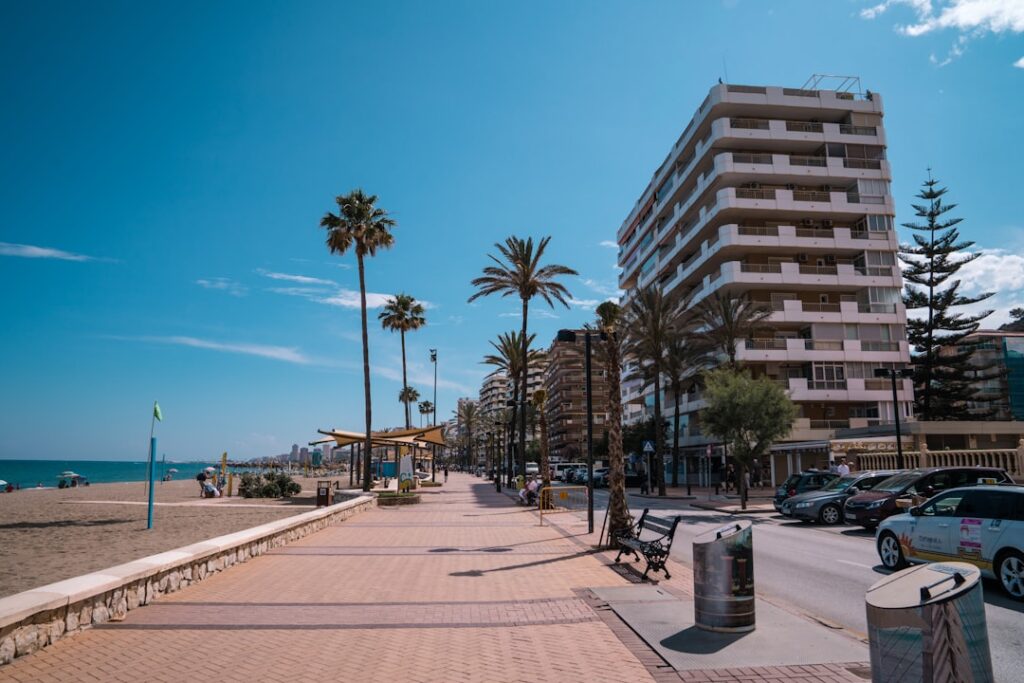

The Costa del Sol stretches for 150 kilometers along Andalusia‘s southern edge, from Nerja in the east to Tarifa in the west. Yes, it’s famous for sunshine and beach resorts, but beyond the high-rises and golf courses lies a coastline dotted with fishing villages, hilltop pueblos blancos, and some of the best seafood restaurants in Spain.
If you’re planning a visit, come prepared to explore beyond the beach umbrella. The real Costa del Sol reveals itself in the back streets of Marbella’s old town, the coves near Nerja, and the mountain villages just a half-hour drive inland.
The Best Beaches on the Costa del Sol
Málaga’s beaches—La Malagueta and Pedregalejo—are city beaches, wide and sandy, backed by chiringuitos serving grilled sardines on skewers. They’re busy but convenient, especially if you’re staying in the capital.
Head east to Nerja for cleaner water and dramatic cliffs. Playa de Burriana is the biggest and most developed, with sunbeds and beach bars. For something quieter, walk down to Playa de Maro, a small cove framed by rocky outcrops and pine trees. The water here is crystalline, and snorkeling is excellent.
West of Málaga, Marbella’s beaches are manicured and trendy. Nikki Beach and other beach clubs dominate the stretch near Puerto Banús, but if you walk east toward the old town, you’ll find public stretches like Playa de la Fontanilla that are less scene-y and more family-friendly.
Tarifa, at the very southern tip, is Spain’s kite-surfing capital. The beaches here—Playa de Los Lances and Playa de Valdevaqueros—are wide, windswept, and spectacular, with views across the strait to Morocco on clear days.
Beyond the Beach: Ronda and the White Villages
The Costa del Sol’s greatest asset isn’t its coastline—it’s how close the mountains are. Thirty minutes inland from Marbella, the landscape turns green and vertical. Ronda sits on a cliff split by the 120-meter-deep El Tajo gorge, spanned by the Puente Nuevo bridge, an 18th-century engineering marvel that’s become the town’s icon.
Wander the old Moorish quarter, La Ciudad, with its winding alleys and iron balconies. Visit the Plaza de Toros, one of Spain’s oldest bullrings, or simply sit in Plaza Duquesa de Parcent with a glass of local wine and take in the views.
From Ronda, the Ruta de los Pueblos Blancos snakes through the Serranía de Ronda, connecting villages like Grazalema, Zahara de la Sierra, and Setenil de las Bodegas, where houses are built into rock overhangs. These villages are Andalusia at its most picturesque: whitewashed walls, geranium-filled window boxes, and cobbled streets that climb steeply to hilltop churches.
Where to Eat: Chiringuitos and Village Taverns
Chiringuitos—simple beachside shacks—are the soul of Costa del Sol dining. El Tintero in El Palo, just east of Málaga, is legendary. There’s no menu. Waiters walk around with trays of whatever just came out of the kitchen—fried fish, grilled prawns, clams—and you flag them down if you want it. It’s chaotic, fun, and delicious.
In Marbella, skip the glitzy port restaurants and head to the old town. El Estrecho on Calle San Lázaro serves classic Andalusian tapas: pringá (slow-cooked pork), salmorejo, and fried aubergines with molasses. It’s a local favorite, tiny and always packed.
Up in Ronda, Tragata on Calle Nueva offers modern takes on Andalusian classics—roasted kid, oxtail croquettes, bull’s tail stew—in a sleek, contemporary space. For something more traditional, head to Bodega San Francisco, a century-old tavern where jamón ibérico hangs from the ceiling and the house wine comes from barrels behind the bar.
Practical Tips for Visiting the Costa del Sol
Málaga’s airport is the gateway to the coast, with excellent connections to the rest of Europe. Trains run frequently between Málaga, Torremolinos, and Fuengirola. For Marbella, Nerja, or destinations further west, buses are your best option—ALSA runs regular services along the coastal highway.
Summer (July and August) is peak season: hot, crowded, and expensive. May, June, and September offer the same sunshine with half the crowds. Winter is mild—15°C to 20°C—and perfect if you’re more interested in hiking and village-hopping than beach time.
Rent a car if you plan to explore inland. The drive from the coast to Ronda takes about an hour, and having your own wheels opens up the white villages and mountain roads that public transport doesn’t reach.
The Costa del Sol rewards those who look beyond the postcards. Get out early, explore the hills, eat where the locals eat, and you’ll discover an Andalusia that’s still very much itself.
Want more insider guides to Spain’s best regions, villages, and hidden corners? Subscribe to the Love Spain newsletter and get one short story a day, straight to your inbox.
Tours & experiences in Spain


Powered by Viator. Some links are affiliate links — we may earn a small commission at no extra cost to you.