
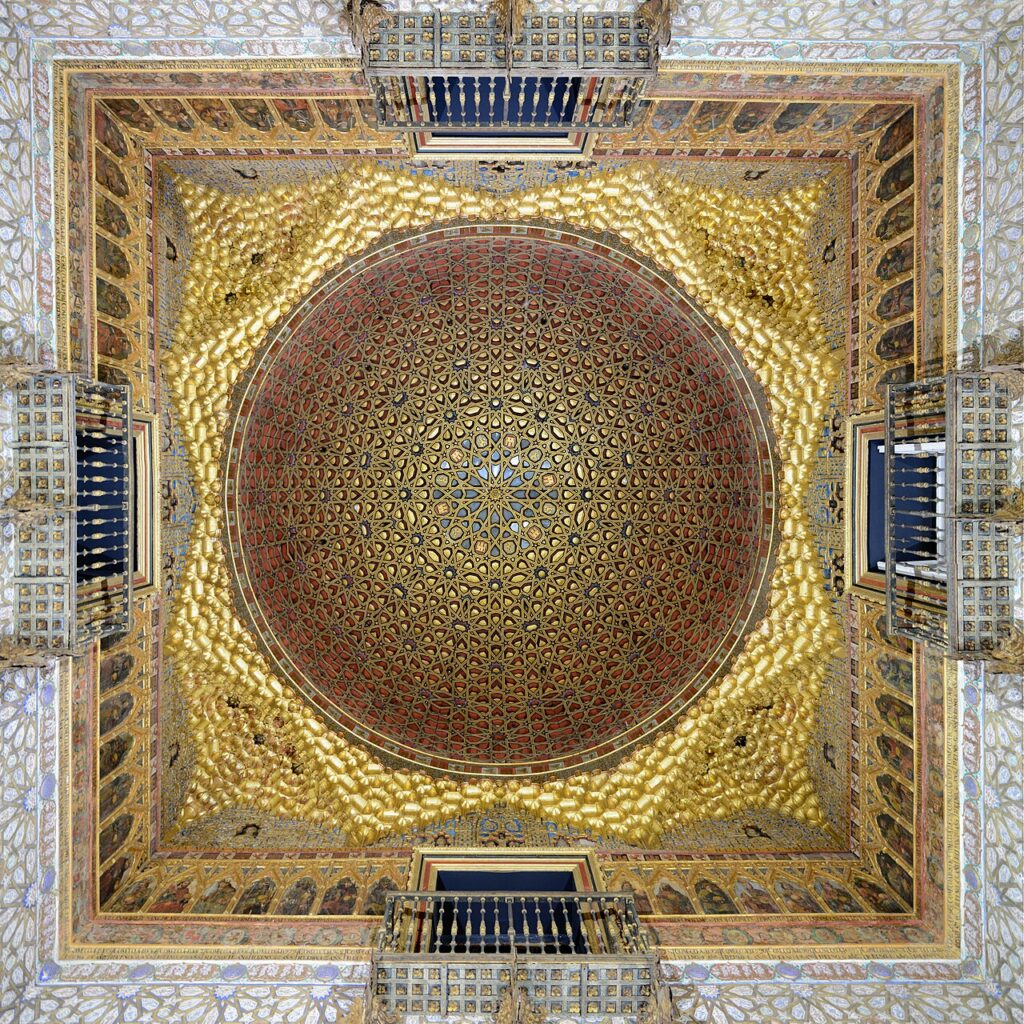
The Alcázar of Seville is a working royal palace. Spanish royalty still use its upper floors when they visit the city, which makes it the oldest royal residence in continuous use in Europe. But what sets it apart from every other palace in Spain is its architecture: layer upon layer of Christian and Islamic styles, blended into something entirely Sevillian.
Unlike the Alhambra in Granada, which feels frozen in Moorish time, the Alcázar is a living collage. Moorish craftsmen built rooms for Christian kings. Renaissance nobles added Italian gardens. Every century left its mark, and the result is one of the most beautiful buildings in Spain.
What You’re Actually Looking At
The Alcázar began as a Moorish fort in the 10th century, but most of what you see today was built after the Christian conquest. In 1364, King Pedro I — known as Pedro the Cruel — hired Muslim artisans from Granada and Toledo to build him a palace in the Mudéjar style: Islamic decoration for a Christian king.
The Patio de las Doncellas is the heart of Pedro’s palace. Its sunken courtyard is surrounded by stucco arches so intricate they look like lace. The tilework is original 14th-century azulejo. The reflecting pool was added in the 16th century when they excavated the floor and discovered the original Renaissance design underneath.
Next door, the Salón de Embajadores — the Hall of Ambassadors — has a golden dome that took Mudéjar craftsmen five years to complete. Look up: every inch is carved cedarwood covered in gold leaf. Pedro received foreign dignitaries here. Charles V was married here in 1526.
The Patio de las Muñecas, the smallest and most intimate courtyard, was the private heart of the palace. Its columns are delicate, almost fragile. The name means “Courtyard of the Dolls” — legend says tiny faces are carved into the arches, though you’ll need sharp eyes to find them.
The Gardens
The gardens stretch behind the palace in a series of terraced rooms, each with its own character. They’re enormous — larger than the palace itself — and easy to get lost in, which is exactly the point.
Start at the Jardín de la Danza, just beyond the main palace. Follow the hedge maze to the Galería de Grutesco, a long pavilion covered in Renaissance frescoes and dripping with wisteria in spring. Cross through the Jardín de las Damas to reach the Pabellón de Carlos V, a two-story pavilion where the emperor would escape the summer heat.
The far corner holds the Baños de Doña María de Padilla — underground vaulted chambers that were once part of the original Almohad palace. They’re named after Pedro’s mistress, though they were built long before her time. The light that filters through the arches and reflects off the water makes them feel like a cathedral.
In summer, the gardens are full of orange trees and jasmine. In winter, they’re quieter and greener. There are peacocks, fountains, and hidden benches where you can sit and hear nothing but water.
How to Visit Without the Crowds
The Alcázar is the most-visited monument in Seville, and it shows. Summer mornings from May through September can mean hour-long security lines even if you have a ticket.
Book your ticket online at least a few days in advance through the official Alcázar website. Choose the earliest time slot available — 9:30 a.m. in summer, 9:00 a.m. in winter. You’ll have the Patio de las Doncellas nearly to yourself for the first 20 minutes, and that alone is worth setting an alarm.
Avoid midday visits. The palace is indoors, but the gardens have little shade, and by 1:00 p.m. in July it’s punishing. Late afternoon slots (after 4:00 p.m.) are better for light and cooler temperatures, though the gardens close at sunset.
If you want context, the guided tours are worth it — they’re included in some ticket types and cover rooms that are otherwise roped off. The night visits, offered April through October on certain evenings, are magical. The courtyards are lit with lanterns, and you see the stucco and tilework the way they were meant to be seen: by firelight.
What Else You Should Know
The Alcázar sits at the edge of the Barrio de Santa Cruz, Seville’s old Jewish quarter. After your visit, walk north through the narrow streets toward Plaza de Santa Cruz or grab lunch on Calle Mateos Gago, where nearly every bar serves cold beer and decent montaditos.
The Cathedral of Seville and the Giralda tower are a two-minute walk away. If you’re doing both in one day, start with the Alcázar in the morning and save the cathedral for after lunch.
Wear comfortable shoes. The palace floors are a mix of tile, marble, and stone, and you’ll be on your feet for at least 90 minutes, longer if you linger in the gardens.
Photography is allowed everywhere except in the upper royal apartments, which are occasionally open for special tours. The best light for photos is mid-morning in the courtyards and late afternoon in the gardens.
Want more stories like this? Subscribe to the Love Spain newsletter — one short story a day, straight to your inbox, about the Spain you came here to find.
Tours & experiences in Spain


Powered by Viator. Some links are affiliate links — we may earn a small commission at no extra cost to you.