
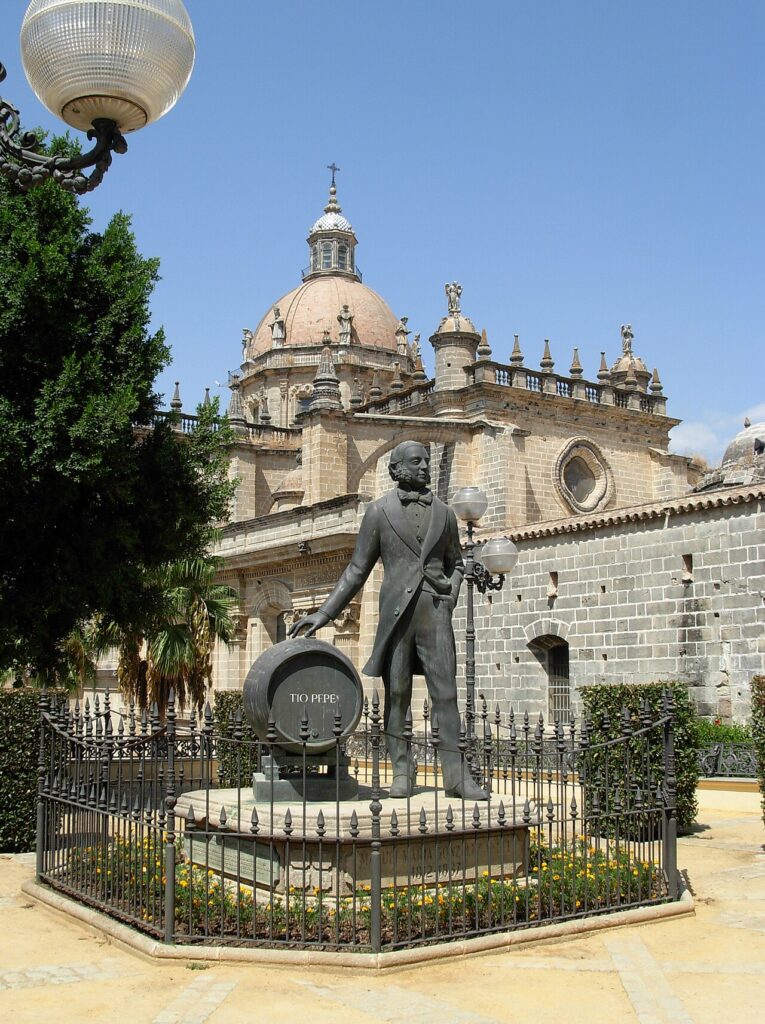
An hour inland from Cádiz, where the white soil glows under the Andalusian sun, Jerez de la Frontera produces one of the world’s most misunderstood wines. Sherry—crisp fino, nutty amontillado, rich oloroso—is having a moment again, and there’s no better place to understand it than the city where it’s been made for centuries.
But Jerez is more than its bodegas. This is also the heartland of purebred Andalusian horses and one of the cradles of flamenco. The city moves to a different rhythm than coastal Andalusia—slower, deeper, more traditional. And far fewer tourists.
The Sherry Triangle
Sherry can only be made in the triangle formed by Jerez, El Puerto de Santa María, and Sanlúcar de Barrameda. The chalky albariza soil, Atlantic breezes, and centuries-old solera aging system create wines you can’t replicate anywhere else.
Start at Bodegas Tío Pepe (González Byass), right in the city center on Calle Manuel María González. The cathedral-like aging rooms, some dating to 1835, hold thousands of oak barrels stacked in towering rows. Tours run multiple times daily in English and Spanish, ending with tastings that show the breadth of sherry styles—from bone-dry manzanilla to sweet Pedro Ximénez that tastes like liquid raisins.
For something smaller and more intimate, Bodegas Tradición on Plaza Cordobeses combines sherry production with an extraordinary private art collection—Goyas, Zurbaráns, and Velázquez paintings hanging in rooms where barrels age. Book ahead; tours are limited and require reservations.
Most bodegas close for siesta and in August, so morning visits work best. Wear comfortable shoes—the tours involve walking on uneven cobblestones between aging rooms.
The Royal Andalusian School of Equestrian Art
On Avenida Duque de Abrantes, the Real Escuela Andaluza del Arte Ecuestre is to horses what the Vienna Boys’ Choir is to music. The Thursday performances—”How the Andalusian Horses Dance”—showcase movements perfected over generations: horses performing classical dressage to Spanish music in 18th-century tack and costumes.
Tickets run €21 to €28 depending on seating. If you can’t catch a show, morning training sessions (Tuesday and Wednesday, 10 a.m.) let you watch riders and horses practice for much less. The stable tours are worth adding on—these animals are athletes, and seeing them up close is remarkable.
Flamenco at the Source
Jerez claims flamenco with the same pride it claims sherry. The city’s Centro Andaluz de Flamenco on Plaza de San Juan houses archives, exhibits, and a library dedicated to the art form, with free admission. But to see it live, head to the Barrio de Santiago, the historic gypsy quarter where flamenco took root.
Tabanco El Pasaje on Calle Santa María is a sherry bar that hosts impromptu flamenco most nights—the real thing, not a tourist show. Arrive after 10 p.m., order a glass of fino from the barrel, and see what happens. Some nights it’s quiet. Other nights, someone starts singing and the room transforms.
For more structured performances, Tablao Flamenco Puro Arte near Plaza del Arenal offers nightly shows in an intimate space where you’re close enough to see the intensity on the dancers’ faces.
Where to Eat and Drink
Jerez takes its food seriously. For traditional Andalusian cooking, La Carboná on Calle San Francisco de Paula serves oxtail stew, fried fish from the bay, and game in season—all paired with local sherries by the glass.
Bar Juanito on Pescadería Vieja has been serving the same menu since 1947: kidneys in sherry sauce, grilled prawns, riñones al Jerez that locals swear by. It’s loud, crowded, and perfect.
The tabancos—traditional sherry bars where wine is poured straight from the barrel—are Jerez’s great secret. Tabanco El Guitarrón de San Pedro on Calle Bizcocheros and Tabanco Las Banderillas on Calle Cabezas are both authentic, unchanged, and usually filled with locals at lunch.
Practical Details
Jerez is 90 minutes south of Seville by car or train, with frequent connections on the regional line (around €12). The city is compact and walkable, though summer heat can be brutal—visit between October and May if you can.
If you’re staying overnight, the Hotel Casa Grande on Plaza de las Angustias occupies a restored 1920s mansion in the old quarter, with a rooftop terrace perfect for evening sherry.
Most bodegas require advance booking, especially in spring and fall. The tourist office on Plaza del Arenal can help arrange visits if you’re planning last-minute.
Jerez rewards slow travel. This isn’t a city you check off in an afternoon between Seville and Cádiz. Give it two days, visit a few bodegas, catch a horse show, eat too many tapas, and let the place work on you. It’s Spain at its most quietly confident—no need to perform for visitors because it knows exactly what it is.
Want more insider guides to Spain’s hidden corners and essential experiences? Subscribe to the Love Spain newsletter and get one short story delivered daily—the Spain you came to find.
Tours & experiences in Spain


Powered by Viator. Some links are affiliate links — we may earn a small commission at no extra cost to you.