
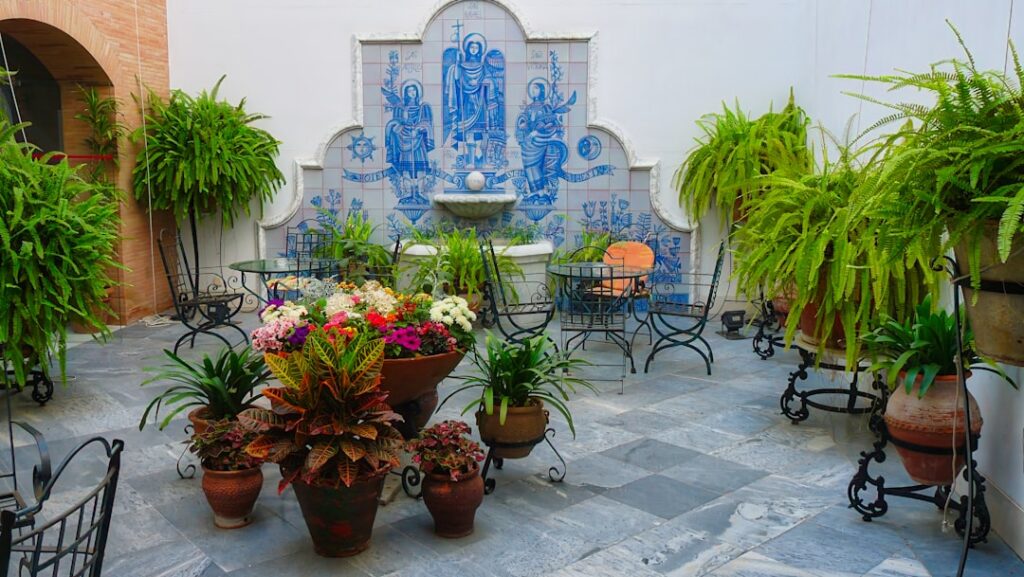
Córdoba in summer is hot—genuinely, unrelentingly hot. July and August regularly push past 104°F (40°C), and the ancient cobblestones radiate heat long after sunset. But this is also when the city reveals its genius: centuries-old strategies for staying cool that transform a visit into something unexpectedly refreshing. The white-washed patios, shaded courtyards, and architectural ingenuity that define Córdoba weren’t built for Instagram—they were built for survival, and they still work beautifully.
The Patios: Córdoba’s Secret Weapon Against the Heat
Córdoba’s patios are legendary, and summer is when you understand why. These interior courtyards—hidden behind unmarked doors throughout the Judería and San Basilio neighborhoods—are microclimates of their own. Potted geraniums cascade from wrought-iron balconies, fountains trickle in the center, and the temperature drops 10 degrees the moment you step inside.
The Palacio de Viana is the gold standard: twelve courtyards, each with a different design philosophy, from Renaissance symmetry to Moorish tile work. Go early (doors open at 10 a.m.) before the tour groups arrive, and you’ll have these spaces nearly to yourself. The scent of jasmine is overwhelming in the best way.
In the San Basilio neighborhood, just west of the Alcázar, residents open their private patios to visitors year-round (though May’s Patio Festival is the main event). Knock on doors along Calle San Basilio and Calle Postrera—many families welcome visitors for a euro or two. You’ll see everyday life: laundry drying, cats napping, elderly neighbors chatting. It’s intimate and real.
Timing Your Visit: Mornings, Evenings, and the Sacred Siesta
In Córdoba, you live by the sun. The Mezquita opens at 8:30 a.m., and that’s when you should be there—before the heat becomes punishing and before the crowds. The light filtering through the horseshoe arches at dawn is otherworldly, and the forest of columns feels genuinely mystical when it’s quiet.
By 2 p.m., the city shuts down. Shops close, streets empty, and even the pigeons retreat to the shade. This is your cue to follow local wisdom: find a cool, dark bar or head back to your accommodation. The Bodegas Campos on Calle Los Lineros stays open and serves cold salmorejo (Córdoba’s thicker, richer answer to gazpacho) and excellent Montilla-Moriles wine in a warren of tiled, air-conditioned rooms.
Córdoba comes alive again around 8 p.m. The Puente Romano (Roman Bridge) and the riverfront promenade fill with locals and visitors, and the temperature finally becomes bearable. The Torre de la Calahorra at the far end of the bridge offers sunset views back toward the Mezquita that are worth the climb.
Cool Refuges: Churches, Museums, and Hidden Spaces
Córdoba’s churches are free, plentiful, and refreshingly cool. The Iglesia de San Lorenzo, a 13th-century gem with a rose window that rivals any in Europe, sits in a quiet plaza northwest of the Mezquita. The Capilla de San Bartolomé, a tiny Mudéjar chapel near the Alcázar, is often empty and blissfully cold.
The Museo Arqueológico, housed in a Renaissance palace on Plaza Jerónimo Páez, combines excellent Roman mosaics with air conditioning and shaded courtyards. The permanent collection is manageable—an hour, maybe 90 minutes—and gives crucial context for everything you’re seeing outside.
For lunch, seek out the narrow streets of the Judería, where overhanging buildings create natural shade. Casa Pepe de la Judería on Calle Romero is a labyrinth of cool, tiled dining rooms serving flamenquín (breaded, fried pork roll) and rabo de toro (oxtail stew). Yes, heavy food in summer sounds counterintuitive, but locals swear that a substantial midday meal helps you weather the heat.
Evening Rituals: Terraces, Tapas, and the Cooling Night
By 10 p.m., Córdoba is finally comfortable. The rooftop terrace at the Hotel Hospes Palacio del Bailío opens to non-guests for drinks—reserve ahead—and offers stunning views of the illuminated Mezquita. Closer to ground level, the bars along Calle Blanco Belmonte and Plaza de las Tendillas overflow with locals nursing cold cañas (small beers) and plates of berenjenas con miel (fried eggplant with honey).
The Jardines de la Agricultura, just south of the train station, become an impromptu gathering spot on summer nights. Families spread out on the grass, street musicians set up, and the whole scene feels wonderfully unhurried. Bring a bottle of tinto de verano from a nearby shop and join in.
Córdoba in summer isn’t for everyone—if you’re heat-averse, spring or fall will suit you better. But if you’re willing to adapt to the rhythm, to slow down and move with intention, you’ll experience a side of Andalusia that feels both ancient and alive. The city has been managing these temperatures for a thousand years. Trust the architecture, trust the schedule, and you’ll be fine.
Want more insider stories from across Spain delivered to your inbox? Subscribe to the Love Spain newsletter—one short story a day, straight from the road.
Tours & experiences in Spain


Powered by Viator. Some links are affiliate links — we may earn a small commission at no extra cost to you.