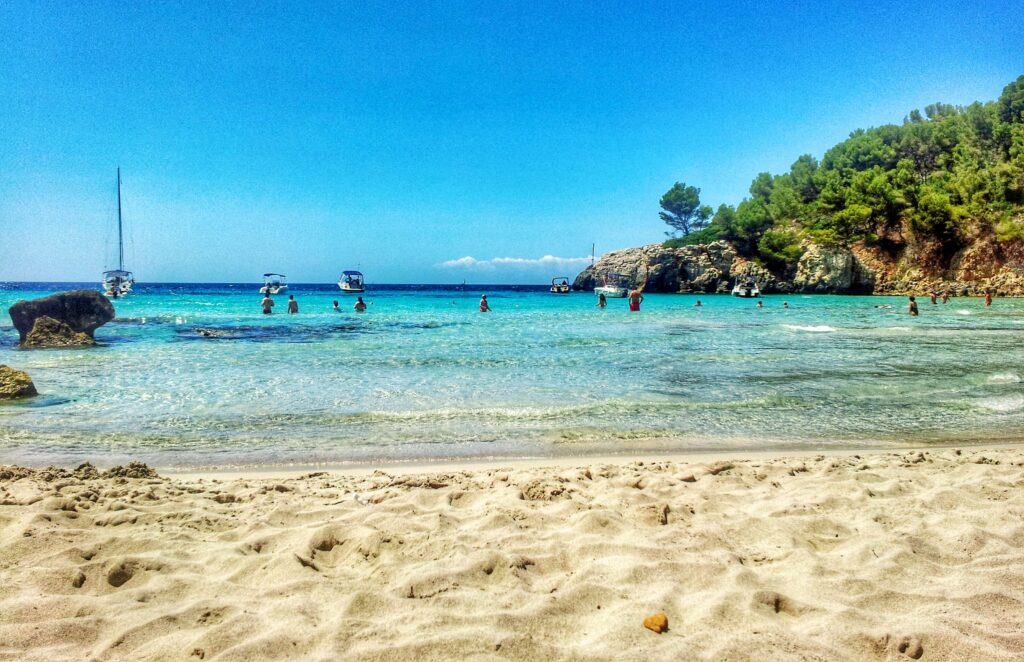
While Mallorca draws the yacht set and Ibiza pulses with electronic music, Menorca remains the Balearic island that Spain kept for itself. UNESCO declared the entire island a Biosphere Reserve in 1993, and the protection shows: over half the coastline is undeveloped, the interior is a patchwork of stone-walled pastures and pine forests, and even in summer you can find beaches where you’re nearly alone.
The island measures just 30 miles end to end, but it contains more beaches than Mallorca and Ibiza combined—around 120 at last count, many accessible only on foot or by boat. The water is that particular shade of turquoise that makes you understand why the Romans called the Mediterranean mare nostrum.
Mahón and Ciutadella: The Two Towns
Mahón (Maó in Catalan) sits at the eastern end of the island around one of the deepest natural harbors in the Mediterranean. The British occupied Menorca for most of the 18th century, and their influence lingers in the Georgian townhouses along Carrer Isabel II and in the sash windows overlooking the port. The morning market in Claustre del Carme runs Tuesday through Saturday—go early for local cheese, sobrassada sausage, and ensaimadas still warm from the oven.
Ciutadella, the former capital at the western end, feels more traditionally Spanish. The old town clusters around Plaça des Born, where cafés spill onto the cobblestones and the Cathedral de Menorca rises above the harbor. The narrow streets of the old quarter—Carrer Seminari, Carrer Sant Sebastià—hide aristocratic palazzi with Moorish-influenced courtyards. On summer evenings, locals gather at the harbor restaurants for caldereta de llagosta, the island’s famed lobster stew.
The Beaches You Came For
The island’s most famous beaches line the southern coast. Cala Macarella and its smaller neighbor Cala Macarelleta offer that postcard combination of white sand and pine-framed turquoise water. Park at the Macarella lot (arrives before 10 a.m. in July and August) and walk the ten minutes down, or hike the coastal path from Cala Galdana.
Cala Mitjana, just east of Macarella, requires a 20-minute walk from the parking area but rewards you with fewer crowds and better snorkeling. The north coast beaches—Cavalleria, Pregonda—face rougher water and stronger winds, but the red-gold sand and dramatic rock formations make them worth the journey on calm days.
For the quietest swimming, head to the coves between Mahón and Es Castell: Cala Mesquida, Cala Rafalet, Sa Torreta. You’ll share them mostly with local families.
Beyond the Beach: Prehistoric Menorca
Menorca contains more prehistoric monuments per square mile than anywhere else in Europe. The Talaiotic culture built stone towers, burial chambers, and ritual enclosures here between 1400 and 123 BC, and hundreds of sites remain scattered across the island.
The best-preserved settlement is Torre d’en Galmés, just south of Alaior. Walk among the circular houses, the taula sanctuary with its massive T-shaped stone, and the water-collection system that still functions after 3,000 years. Naveta des Tudons, near Ciutadella, is the oldest intact building in Spain—a Bronze Age burial chamber shaped like an upside-down boat.
Most sites are unfenced, free, and virtually empty. Bring water, wear a hat, and download the offline map before you go—cell service is spotty in the interior.
Practical Details
Ferries connect Menorca to Barcelona (4 hours), Valencia (7 hours), and Mallorca (1 hour). Flights from mainland Spain take 45 minutes. July and August bring crowds and high prices—visit in May, June, or September for warm water, open restaurants, and breathing room on the beaches.
Rent a car. The island bus network is minimal, and many of the best beaches require your own wheels. The roads are well-maintained and traffic is light except in Mahón and Ciutadella during rush hour.
Menorca doesn’t have Mallorca’s boutique hotels or Ibiza’s beach clubs. What it offers instead is the rare gift of a Mediterranean island that hasn’t been loved to death—yet. Go before that changes.
Want more Spain stories like this? Subscribe to the Love Spain newsletter—one short story a day about the Spain beyond the guidebooks.
Tours & experiences in Spain


Powered by Viator. Some links are affiliate links — we may earn a small commission at no extra cost to you.