
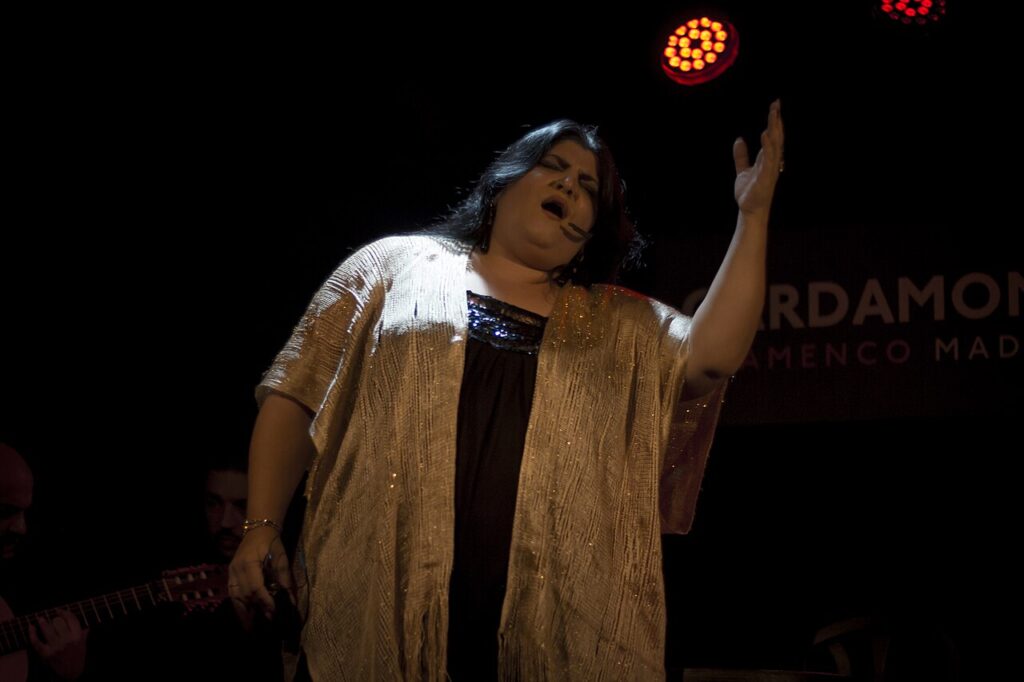
Madrid might not be flamenco’s birthplace, but the capital has become one of its most important stages. Andalusian migrants brought the art form north in the early twentieth century, and today Madrid hosts some of Spain’s finest tablaos, intimate peñas, and performance spaces where you can witness the raw emotion of cante jondo, the percussive power of zapateado footwork, and the dramatic interplay between guitar, voice, and dance.
Unlike the touristy shows that feel like dinner theater, Madrid’s best flamenco venues attract serious aficionados and working artists. Here’s where to find the real thing.
Corral de la Morería: The Grand Dame
Corral de la Morería, tucked into a quiet corner near the Palacio Real, has been Madrid’s most celebrated tablao since 1956. The intimate space seats just over a hundred, putting you close enough to see the sweat on the dancers’ brows and feel the vibration of heels striking the wooden stage.
The nightly shows feature top-tier performers—bailaores and cantaores who command respect across Spain. The venue recently earned a Michelin star for its kitchen, so you can pair your flamenco with serious Andalusian cuisine, though the show-only option gives you flexibility if you’ve already eaten.
Book ahead. Corral de la Morería fills up weeks in advance during high season. The venue sits at Calle de la Morería 17, a five-minute walk from the Opera metro station. Shows typically start at 8:00 PM and 10:30 PM.
Cardamomo: Raw and Unpretentious
If Corral de la Morería is flamenco’s formal salon, Cardamomo is its living room. This tablao on Calle Echegaray in the Huertas neighborhood draws a younger crowd and books artists who lean into improvisation and experimentation without losing traditional roots.
The space is small, dark, and unapologetically intense. Performers often sit among the audience before taking the stage, and the atmosphere encourages spontaneous olés and palmas (hand clapping). Shows run nightly at 10:00 PM, and you can opt for dinner or just drinks at the bar.
Cardamomo’s location puts you in the heart of Madrid’s bar district, making it easy to wander out after the show for more drinks on Plaza de Santa Ana or along Calle de las Huertas.
Casa Patas: Where the Pros Go
Casa Patas, on Calle Cañizares near Antón Martín metro, occupies a special place in Madrid’s flamenco ecosystem. It’s both a tablao and a gathering place for working artists—a venue where touring dancers and singers drop in to catch friends’ performances or sit in for impromptu collaborations.
The restaurant upstairs serves excellent tapas and raciones, with standout dishes like salmorejo, presa ibérica, and bacalao. Downstairs, the tablao hosts shows at 10:30 PM most nights, featuring performers who range from rising talents to established masters. The crowd includes as many Spanish flamenco lovers as international visitors, which tells you everything you need to know about the quality.
Casa Patas also runs a foundation that supports flamenco education and preservation, so your ticket helps sustain the art form beyond the performance itself.
Café de Chinitas: Flamenco with Flair
Café de Chinitas, near the Gran Vía on Calle Torija, leans into the theatrical side of flamenco without sacrificing authenticity. The venue books full cuadros (ensembles) that include multiple dancers, singers, and guitarists, creating elaborately choreographed shows that still leave room for the improvised moments that define flamenco.
The space itself is beautiful—red velvet, dark wood, and tiered seating that ensures good sightlines from every table. Dinner is optional but well-executed, with classic Spanish dishes and a solid wine list. Shows start at 9:00 PM, with an earlier option at 7:00 PM some nights.
Café de Chinitas works especially well if you’re introducing someone to flamenco for the first time. The production values help newcomers appreciate the artistry, while the performers deliver enough duende (soul) to satisfy purists.
When to Go and What to Expect
Flamenco shows in Madrid run year-round, but the best performers tend to concentrate in the capital during fall and winter, when touring slows down and artists return home between festival dates. Spring is also excellent, particularly around the San Isidro festival in May.
Most tablaos offer show-only tickets (usually €35-45) or dinner packages (€70-90). The food is generally good, but if you’d rather eat elsewhere, the show-only option gives you freedom to explore Madrid’s incredible restaurant scene before the performance. Arrive thirty minutes early if you want to choose your seat—most tablaos don’t assign specific tables.
Dress is smart casual. You’ll see everything from jeans to cocktail dresses, but running shoes and shorts feel out of place in these intimate, traditional spaces.
Want more insider tips on Spain’s culture, food, and hidden corners? Subscribe to the Love Spain newsletter—one short story a day, straight to your inbox.
Tours & experiences in Spain


Powered by Viator. Some links are affiliate links — we may earn a small commission at no extra cost to you.