
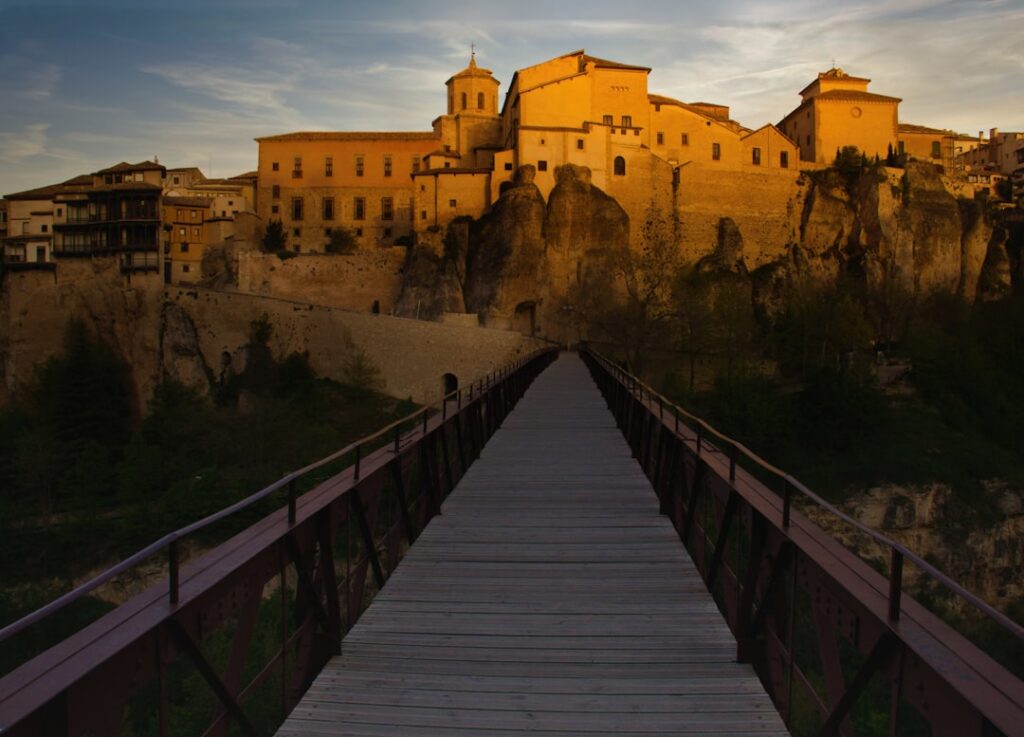
Perched on a rocky promontory where two river gorges meet, Cuenca is one of Spain‘s most visually arresting medieval towns. Its famous casas colgadas — hanging houses — seem to defy physics as they cling to limestone cliffs hundreds of feet above the Huécar River. The entire old town is a UNESCO World Heritage Site, a maze of cobbled streets, stone archways, and postcard views at every turn.
What makes Cuenca especially appealing is its accessibility. High-speed AVE trains from Madrid’s Atocha station reach Cuenca in under an hour, making it an easy day trip that feels worlds away from the capital. You’ll leave the modern city behind and step into a place where time slowed down centuries ago.
Getting There and Around
The AVE drops you at Cuenca-Fernando Zóbel station, about four kilometers from the old town. A local bus (Line 1) connects the station to the historic center every 20 to 30 minutes, or you can take a taxi for around €8. If you’re driving, park at the base of the old town near Calle Alfonso VIII — the climb is steep, and the narrow medieval streets aren’t built for cars.
Once you’re in the old town, everything is walkable. Wear comfortable shoes with good grip; the cobblestones can be slippery, and the streets are steeply inclined. The compact historic center means you can see the main sights in a few hours, but give yourself time to wander and absorb the atmosphere.
The Hanging Houses and What to See
The casas colgadas are Cuenca’s signature image, and the best view is from the San Pablo Bridge, a wrought-iron footbridge that spans the Huécar gorge. Walking across it — with the houses jutting out from the cliff face on one side and the valley plunging below — is thrilling and slightly dizzying. Early morning or late afternoon light is best for photos.
One of the hanging houses now holds the Museum of Spanish Abstract Art, a surprisingly world-class collection featuring works by Fernando Zóbel, Antonio Saura, and Gustavo Torner. The juxtaposition of avant-garde art in a 15th-century building is striking, and the museum’s balconies offer vertiginous views straight down into the gorge.
Don’t miss the Gothic Cathedral of Cuenca in Plaza Mayor, the town’s main square. Its facade was rebuilt in the early 20th century after the original collapsed, but the interior retains its medieval bones, including beautiful stained glass and a serene cloister. Admission is a few euros and well worth it for the atmosphere alone.
Wander down Calle Alfonso VIII, the old town’s main artery, lined with souvenir shops, cafés, and historic buildings painted in shades of ochre and cream. Duck into the smaller alleyways — Calle Obispo Valero and Calle San Pedro — for quieter corners and sudden, dramatic overlooks.
Where to Eat
Cuenca’s cuisine leans toward hearty Castilian fare. Try morteruelo, a rich game pâté spread on crusty bread, or zarajos, grilled lamb intestines wrapped around vine shoots (more delicious than they sound). Ajoarriero, a cod and garlic stew, is another local staple.
For lunch, head to Mesón Casas Colgadas on Calle Canónigos, right next to the famous hanging houses. The setting is unbeatable, and the menu features traditional dishes done well. Expect to pay around €20 to €30 per person. If you want something quicker, grab a bocadillo and a beer at one of the small bars around Plaza Mayor.
When to Visit and Practical Tips
Spring and fall are ideal — the weather is pleasant, and the old town isn’t overrun with tour groups. Summer can be hot, and winter brings occasional snow, which makes Cuenca even more atmospheric but also harder to navigate on foot.
Start early if you’re doing a day trip from Madrid. The first AVE leaves around 8 a.m., getting you to Cuenca by 9 a.m. with a full day ahead. The last train back usually departs around 9 p.m., giving you plenty of time to explore, eat, and linger.
Cuenca is quieter than Toledo or Segovia, which means fewer crowds but also shorter opening hours for some sights. The cathedral and museum close for siesta, typically from 2 p.m. to 4 p.m., so plan accordingly.
If you have time, walk down to the lower town along the river. The Hoz del Huécar trail offers stunning views back up at the hanging houses from below, and it’s a peaceful contrast to the bustling old town above.
Want more stories like this delivered to your inbox? Subscribe to the Love Spain newsletter — one short story a day, straight from the heart of Spain.
Tours & experiences in Spain


Powered by Viator. Some links are affiliate links — we may earn a small commission at no extra cost to you.