
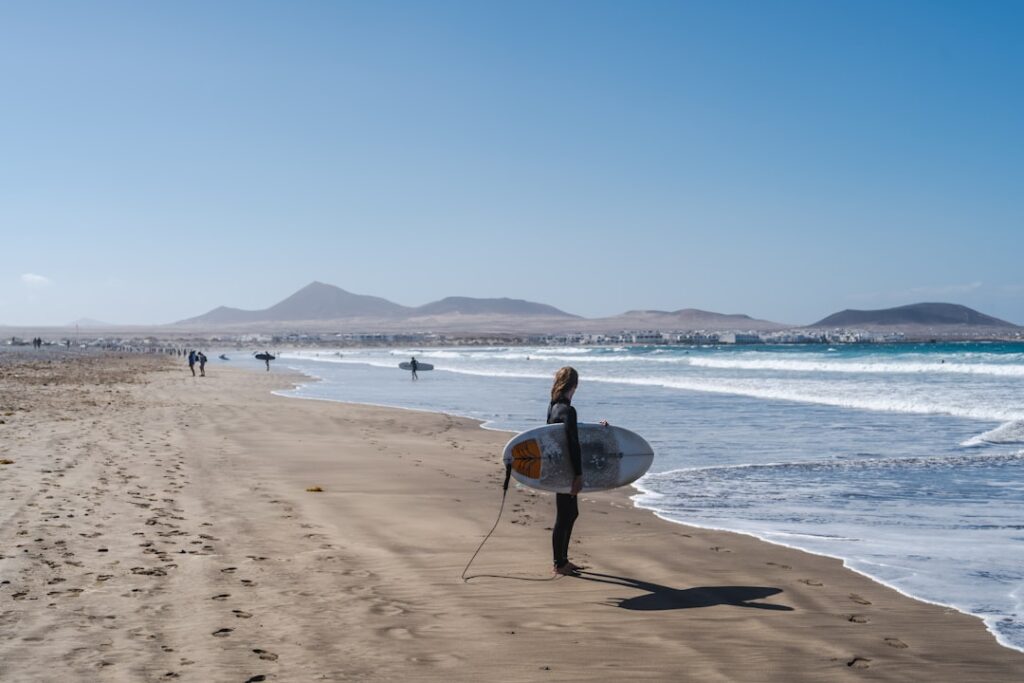
Spain isn’t the first place most surfers think of when planning a surf trip, but it should be. The country’s northern Atlantic coast catches consistent swells from autumn through spring, while the southern beaches offer gentle waves perfect for beginners year-round. Whether you’re chasing overhead barrels or learning to stand up for the first time, Spain’s coastline delivers.
Here’s where to find the best surf in Spain, from legendary point breaks to beginner-friendly beach breaks.
Mundaka: Europe’s Best Left
In the Basque Country, about 40 minutes northeast of Bilbao, Mundaka is Spain’s most famous wave. This river-mouth left-hander is one of Europe’s best, producing long, hollow barrels when autumn and winter swells combine with the right sandbar configuration. It’s fickle—the bar shifts, and conditions need to align—but when it’s on, it’s world-class.
The town itself is a small fishing village with a handful of surf shops and bars along the harbor. Mundaka is for experienced surfers only; the wave is powerful, crowds can be intense, and localism exists. Respect the lineup, and don’t paddle out unless you’re confident in heavy, fast waves.
Best time: September through November. Stay in Mundaka itself or nearby Gernika for easy access.
San Sebastián and Zarautz: Basque Surf Towns
San Sebastián’s Playa de la Zurriola is Spain’s most accessible city surf break. Right in the heart of the city, across the river from the Old Town, Zurriola offers consistent beach break peaks that work on most swells. It’s crowded—especially in summer—but the vibe is friendly, and there are several surf schools along the beach if you’re just starting out.
Twenty minutes west, Zarautz has one of the longest beaches in the Basque Country and hosts regular surf competitions. The wave is mellow and forgiving, ideal for intermediate surfers. The town has a strong surf culture, with shops, shapers, and a younger, more relaxed feel than San Sebastián.
Both beaches work year-round, but autumn and spring offer the best combination of swell and fewer crowds.
Galicia’s Wild Coast
Galicia’s coastline is rugged, green, and remote. The surf here is powerful and consistent, but access can be tricky—many of the best spots require hiking down cliffsides or navigating dirt roads. Pantín, just north of the town of Valdoviño, is the region’s most famous wave and hosts a stop on the European longboard tour. It’s a long, peeling right that works on northwest swells.
Other notable breaks include Doniños, a wide beach with multiple peaks near Ferrol, and Razo, a powerful beach break that holds size. Galicia is for surfers who don’t mind cold water, unpredictable weather, and solitude. Bring a thick wetsuit—water temperatures hover around 14°C in winter.
Best time: October through March for bigger swells, though summer offers smaller, cleaner waves and warmer water.
Andalusia: Warm Water and Beginner Breaks
Southern Spain doesn’t get the consistent Atlantic swells of the north, but it offers warm water, sunshine, and mellow waves perfect for learning. Tarifa, at the southern tip of Spain where the Atlantic meets the Mediterranean, is known more for windsurfing and kitesurfing, but nearby spots like Los Caños de Meca and El Palmar offer fun beach breaks when the swell picks up in autumn and winter.
El Palmar, near Vejer de la Frontera, is particularly popular with surf schools. The beach stretches for miles, there’s space for everyone, and the waves are forgiving. It’s also surrounded by excellent seafood restaurants and a laid-back, bohemian vibe.
Water temperatures stay comfortable even in winter, making Andalusia a great choice for a surf-and-sun escape when the rest of Europe is freezing.
Asturias: Spain’s Surf Secret
Between the Basque Country and Galicia, Asturias remains one of Spain’s best-kept surf secrets. The coastline is dotted with river-mouth points, sheltered coves, and exposed beach breaks. Rodiles, near Villaviciosa, is a long right-hand point that works on bigger northwest swells and is one of the region’s premier waves.
Salinas, just outside Avilés, has a consistent beach break and a lively surf town atmosphere with bars and surf shops lining the promenade. For more seclusion, explore the beaches around Tapia de Casariego in western Asturias—consistent swells, fewer crowds, and dramatic cliffs.
Asturias offers excellent cider, hearty mountain cuisine, and green, rolling countryside between sessions. It’s a perfect blend of surf and culture.
Practical Tips for Surfing in Spain
Water temperatures range from 14°C in winter along the northern coast to 20°C in summer in Andalusia. You’ll need a 4/3mm wetsuit in winter and a 3/2mm in summer for the north; Andalusia is comfortable in a spring suit most of the year.
Surf schools are plentiful in San Sebastián, Zarautz, and El Palmar. Board rentals typically cost €15–20 per day. If you’re flying in, Bilbao airport serves the Basque Country, Santiago de Compostela for Galicia, and Jerez or Málaga for Andalusia.
Crowds are manageable outside of July and August, especially if you surf early mornings or explore lesser-known breaks. Respect local surfers, don’t drop in, and you’ll have no trouble in the water.
Spain’s surf culture is welcoming, the coastline is diverse, and the post-session txakoli or cider makes every session better. Whether you’re chasing barrels in Mundaka or learning to pop up in El Palmar, the waves are waiting.
Want more insider tips on Spain’s coasts, cities, and hidden corners? Subscribe to the Love Spain newsletter—one short story a day, straight to your inbox.
Tours & experiences in Spain


Powered by Viator. Some links are affiliate links — we may earn a small commission at no extra cost to you.